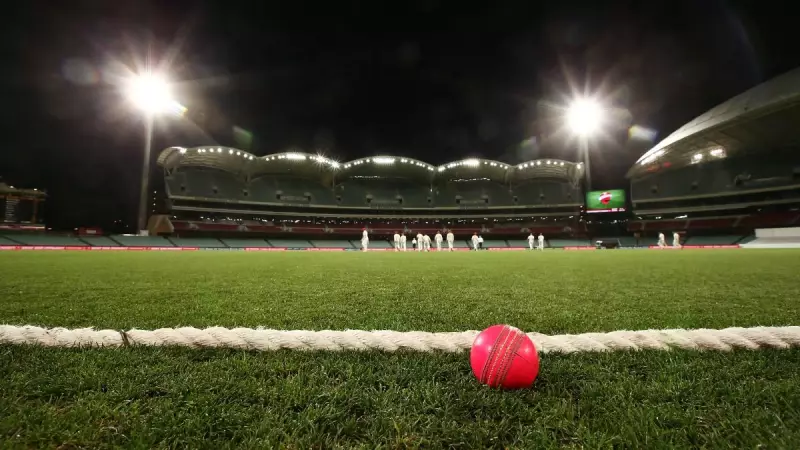
The landscape of international cricket underwent a significant transformation with the introduction of day-night Test matches, a change made possible by one key innovation: the pink ball. While its use in Test cricket is now celebrated, the pink ball's journey began in the domestic arena, where it was first tested under the rigorous conditions of first-class cricket.
The Historic First Match with the Pink Ball
The pink ball made its much-anticipated first-class debut not in an international fixture, but in a domestic championship match in India. This landmark event occurred during the 2016-17 Ranji Trophy season. The specific match was the Group A encounter between Mohun Bagan and Bhowanipore Club, played at the iconic Eden Gardens in Kolkata.
This fixture, held from June 17 to June 20, 2016, was a historic trial. It served as a crucial experiment for the Board of Control for Cricket in India (BCCI) to assess the visibility, durability, and behavior of the pink cricket ball in a multi-day, first-class format before considering its use at the highest level. The successful conduct of this match provided invaluable data and player feedback.

Paving the Way for International Adoption
The trial in Kolkata was a direct precursor to India's first-ever day-night Test match. Bolstered by the learnings from the Ranji Trophy experiment, the BCCI gave the green light for the national team to play under lights. Consequently, India's maiden day-night Test was against Bangladesh at Eden Gardens in November 2019.
This historic Test, which India won convincingly, marked the country's full embrace of the pink-ball format. The move was widely seen as a effort to boost Test match attendance and viewership by allowing play to continue into the evening hours, making the game more accessible to fans after work.
The Science and Strategy Behind the Pink Ball
The adoption of the pink ball was not merely a cosmetic change. It involved extensive research and development to address the specific challenges of night visibility. The traditional red ball used in Test cricket was found to be difficult to see under floodlights, while the white ball used in limited-overs cricket lacked the durability required for 80 overs.
The pink ball was engineered as the solution. It is coated with a special pink lacquer and often has a more pronounced seam to aid swing bowlers, especially during the twilight period. Its introduction has added a new strategic layer to Test cricket, with teams carefully planning their bowling attacks and batting approaches around the ball's behavior at different times of the day.
From that pioneering first-class match in 2016, the pink ball has become an established part of the cricketing calendar. It represents a successful fusion of tradition and innovation, ensuring the venerable Test format remains engaging and viable in the modern sporting world. The experiment that began at Eden Gardens has truly illuminated the future of the longest form of the game.