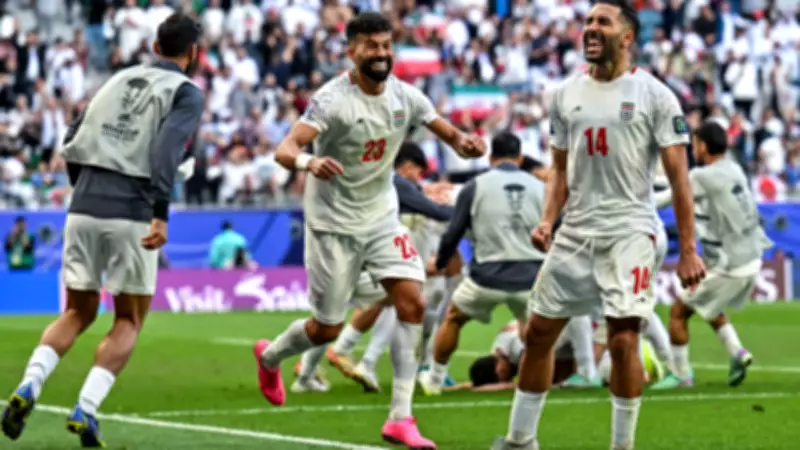
Iran Announces Withdrawal from 2026 FIFA World Cup Amid Political Turmoil
Significant uncertainty has emerged regarding the participation of the Iran national football team in the upcoming FIFA World Cup 2026, following a major political crisis in the Middle East. Iran's sports minister has now officially declared that the country will be unable to compete in the prestigious international tournament.
Political Crisis and Security Concerns Force Decision
The announcement comes in the wake of reported military strikes by the United States and Israel that resulted in the death of Iran's supreme leader, Ayatollah Ali Khamenei. Iran's sports minister, Ahmad Donyamali, stated unequivocally that following what he described as the assassination of their leader by the US government, Iran could not participate in the World Cup under any circumstances.
Donyamali emphasized multiple critical factors in his decision:

- The safety and security of Iranian citizens cannot be guaranteed
- The necessary conditions for the team to compete effectively do not exist
- Ongoing hostile actions by the United States against Iran have created an untenable situation
The minister further explained that these actions have led to multiple conflicts in recent months and have resulted in the deaths of thousands of Iranian people. Given this volatile environment, Iranian officials determined that participation in an event hosted by the United States was impossible.
World Cup Preparations and Political Complications
The 2026 FIFA World Cup is scheduled to be jointly hosted by the United States, Canada, and Mexico, with Iran having already qualified for the expanded 48-team competition. The team was slated to play group-stage matches against New Zealand and Belgium in Inglewood, California, and against Egypt in Seattle.
Interestingly, FIFA president Gianni Infantino recently revealed that former US president Donald Trump had assured that Iran would still be welcome to compete in the tournament. During discussions about World Cup preparations, Trump reportedly reiterated that the Iranian national team would be permitted to participate in the US-hosted event.
Historical Precedent and Regional Implications
This situation bears resemblance to the 2023 FIFA U-20 World Cup incident when Indonesia refused to host the Israel national football team. FIFA responded by removing Indonesia as host shortly before the tournament began and relocating the event to Argentina.
The ongoing Middle East conflict, now entering its twelfth day, has seen what observers describe as the heaviest strikes by US and Israeli forces on Iranian targets, with Tehran ruling out any possibility of ceasefire. Iran has claimed it targeted Israeli military intelligence and naval bases, while fresh explosions were reported in Dubai.
Regional tensions have escalated further with Iran issuing warnings to major US technology firms including Google, Amazon, Microsoft, and Nvidia, labeling them as legitimate targets in the ongoing conflict.
The withdrawal represents a significant development in international sports diplomacy and highlights how geopolitical conflicts can directly impact major sporting events. With Iran's absence confirmed, tournament organizers must now adjust their plans for the 2026 competition while the broader implications for Middle East relations and international football continue to unfold.