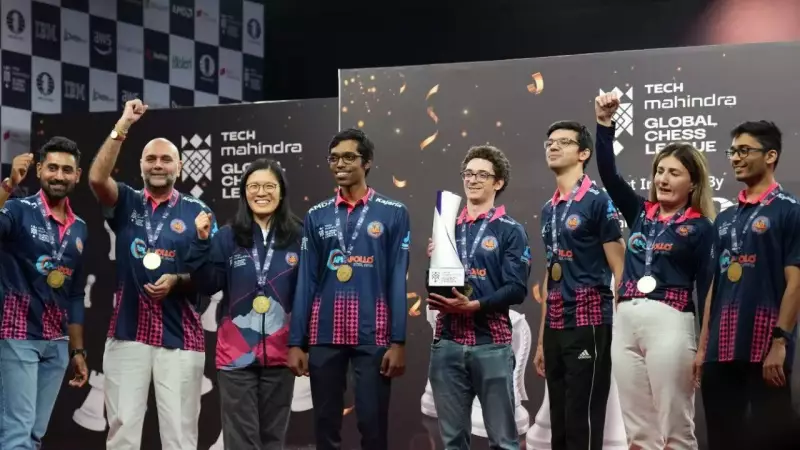
In a stunning display of team depth, the SG Pipers clinched the Global Chess League (GCL) Season 3 title, overcoming the dominance of two-time defending champions Continental Kings. The victory, however, came with an unexpected twist: the team's celebrated top trio, all qualified for the prestigious Candidates 2026 tournament, were not the primary architects of the win.
The Burden of Expectation on Top Boards
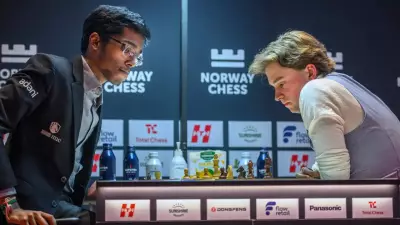
The Pipers entered the league as formidable favorites on paper, boasting a lineup featuring Praggnanandhaa Rameshbabu, Anish Giri, and Fabiano Caruana. They were the only side with three Grandmasters already slated for the Candidates. This pedigree, however, created an unforeseen psychological hurdle.
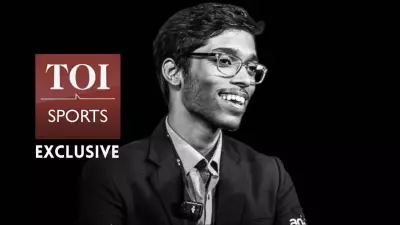
Team coach Grandmaster Pravin Thipsay disclosed in an exclusive interaction that the presumed advantage backfired initially. "Naturally, there was this feeling that it should be quite easy to win the tournament. That confidence, at times, turned into overconfidence," Thipsay explained. He identified a clear "psychological imbalance" on the top three boards, where a mix of supreme self-confidence and the pressure to deliver dominant positions led to panic and forced attempts to win from equal situations.

"The most dangerous moment was when even a draw would do. Some games were lost only because they were searching for a win, even in equal positions, even with White," Thipsay recalled. Consequently, the scoring burden shifted dramatically. Nino Batsiashvili (22 points), Hou Yifan (21 points), and Leon Mendonca (18 points) emerged as the team's most effective performers. Among the top trio, Fabiano Caruana led with 11 points, followed by Praggnanandhaa (10.5) and Anish Giri (10).
A Narrow Escape and a Tactical Reset
The Pipers' path to the final was fraught with tension. In their final league match, they suffered a 6–11 defeat to the Alaskan Knights. Both Pipers and Ganges Grandmasters finished with 15 match points, but the Pipers scraped through to the final by a mere one game point, 84 to 83. Thipsay revealed a casual attitude almost cost them dearly, as players calculated they needed only six points to qualify, leading to risky play.
Post-qualification, Thipsay implemented a crucial reset. "I told them very clearly that whatever happened in the preliminaries is over. Tomorrow, we start with 0–0," he stated. He reframed the final as a direct match, advising them to prepare "one game with White, one game with Black," mirroring Candidates preparation. This mental shift proved instantaneous. "At that point, I think it clicked," Thipsay remarked.
Coaching Candidates: Privacy, Concepts, and Snacks
Managing three elite players required a nuanced, individual approach. Thipsay avoided public critique, discussing strategic errors only in private, one-on-one sessions. He also addressed a fundamental modern chess problem: over-reliance on engine preparation. "The computer gives you the best move, but it doesn't really tell you why... That is where the problem comes," he noted.
His solution was to urge his stars to play "concept-wise," trusting their superior understanding even with second-best moves. He was fortunate, he said, that the players were humble and receptive, with no clashing egos. Sometimes, the intervention was surprisingly simple. Thipsay noticed players were competing in late games on an empty stomach after a 2 PM lunch. "I told them that we will eat before the game. And we won both games that day," he shared.
By the finals, the top trio had found their equilibrium, heeding Thipsay's final piece of advice: "be yourself." The result was a balanced and decisive performance, with the team scoring 2–4 with Black and a dominant 4.5–1.5 with White, sealing a title win built on collective resilience rather than individual star power alone.