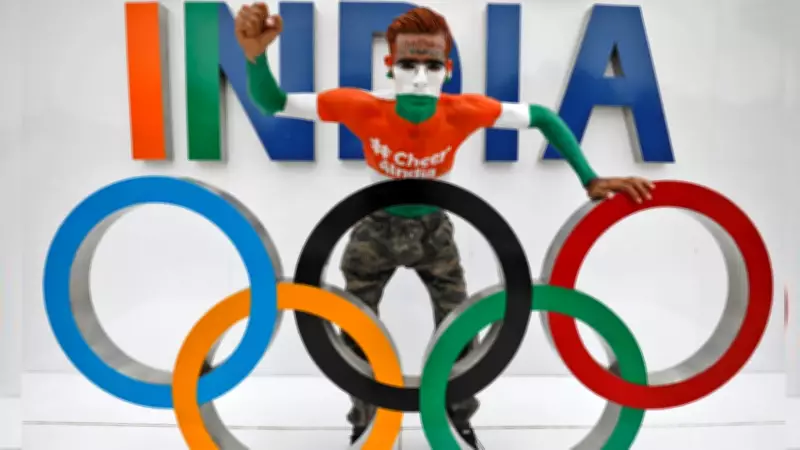
Polish Olympic Expert Stresses India's Need for Sports Ecosystem Capacity for 2036 Olympics Bid
India must develop comprehensive sports ecosystem capacity to be seriously considered for hosting the 2036 Olympic Games, according to Polish Olympic Studies and Research Centre Director Grzegorz Botwina. The expert emphasized this crucial requirement during his virtual address at the second International Olympic Research Conference held at Rashtriya Raksha University in Gandhinagar.
Implementation of Sports Governance Act 2025 Crucial
Botwina highlighted the significance of India's proposed Sports Governance Act, 2025, which seeks to address a broad range of problems and establish organizational frameworks within the country's sports infrastructure. "The Act is well designed and provides solutions to a broad range of problems and organizational frameworks," he acknowledged during his presentation.
However, the Polish expert cautioned that legislation alone would not be sufficient to transform India's sports landscape. "If we only focus on having the legal grounding for the reform, it's not going to magically happen. What is important is the implementation, providing the education, and the support," Botwina stressed. He pointed out that resistance to change and lack of trained personnel represent common challenges faced by nations globally when implementing sports governance reforms.

Building Credible Sports Infrastructure
Botwina explained that strong governance structures form the essential foundation for building a credible sports ecosystem capable of hosting mega-events like the Olympics. "India is bidding for the 2036 Olympic Games, which is a very large endeavor, and to be considered for such an event... you have to have this capacity, which is a sport ecosystem capacity. It is not a very narrow area that we are considering, but it is rather broad," he elaborated.
The expert outlined how various countries have responded to governance challenges through different frameworks and reforms:
- European nations, Australia, and Canada have developed specific governance approaches
- Many countries have implemented codes of good governance in response to pressure for reform
- Some nations have linked governance reforms with education and support for sports federations
Broader Vision Beyond 2036 Olympics
During the conference's inaugural session on Tuesday, International Olympic Academy Director Dr. Makis Asimakopoulos encouraged Indian stakeholders to think beyond just hosting the 2036 Olympic Games. He urged them to "create a vision such as Gujarat 2050, think bigger and use the Games as a vehicle to get there and not the Games as the final destination."
Addressing Corruption in Sports
Wolfgang Maennig, Chair of Economic Policy at the University of Hamburg, presented insights on corruption in sports from economic and historical perspectives. He discussed corruption instances ranging from ancient Olympic Games to recent mega sporting events, noting that "corruption has affected multiple stages of sport, including bidding processes, officiation, and commercial contracts."
Maennig cited specific cases from Olympic host cities including:
- Salt Lake City
- Rio de Janeiro
- Tokyo
He observed that even when corruption gets uncovered years later, it continues to cast shadows over Games that were otherwise successful. While acknowledging that the majority of athletes and officials act ethically, Maennig warned that "a small number of corrupt practices were sufficient to damage public trust and national reputation."
Conference Focus on Sustainable Olympic Ecosystem
The four-day conference, organized by the BCORE Research Centre in collaboration with Rashtriya Raksha University, focuses on education, research, and governance for developing a sustainable Olympic ecosystem. The event brings together academicians, policymakers, and sports administrators to discuss critical issues including:

- Governance reforms in sports
- Policy development and implementation
- Anti-doping measures and regulations
- Transparency in sports administration
- Eradication of corruption in sporting events
The discussions at Gandhinagar highlighted the comprehensive reforms and capacity building India must undertake to position itself as a credible contender for hosting the 2036 Olympic Games, moving beyond legislation to practical implementation and ecosystem development.