

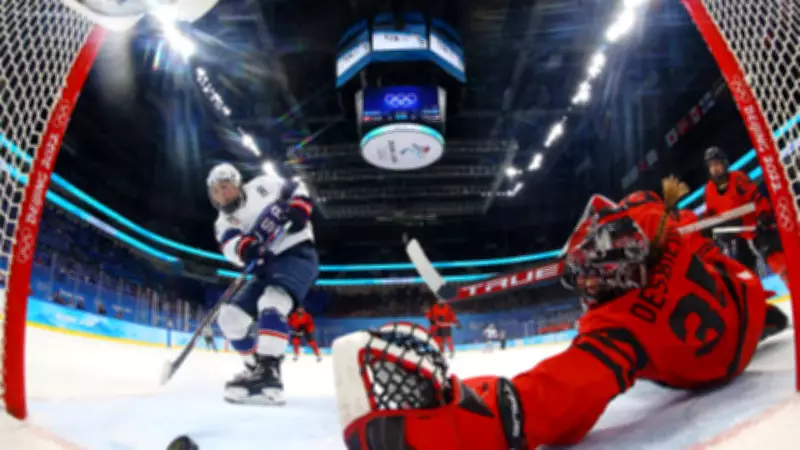
Ice Hockey: A Winter Olympics Spectacle
Ice hockey consistently ranks among the most-watched and anticipated sports at the Winter Olympic Games. The sheer speed, physicality, and national pride on display captivate a global audience every four years. The men's tournament, in particular, commands massive viewership and generates intense international rivalries that become the talk of the sporting world.
A Legacy of Champions: Recent Olympic Gold Medalists
The podium for men's ice hockey has seen familiar hockey powers rise to the occasion in recent editions. Finland etched its name in history with a gold medal performance, showcasing their formidable Nordic style. The team competing as Olympic Athletes from Russia also secured the top honor during a unique period in the sport's Olympic journey. However, the nation with the most storied Olympic hockey legacy remains Canada.
Canada's triumph at the 2010 Vancouver Games is etched in memory, featuring a dramatic final victory over arch-rivals the United States on home ice. This win solidified their status as a perennial contender. Interestingly, despite being a traditional powerhouse with deep talent pools, the United States men's team has not clinched the Olympic gold medal since the legendary 1980 "Miracle on Ice" at Lake Placid. This lengthy drought adds a layer of compelling narrative to every Games.

Looking Ahead: Favorites for Milano Cortina 2026
As the world turns its attention to Italy, early predictions are already taking shape. With their rich history and returning talent, Canada is widely considered the early favorite to claim the men's gold medal once again. The United States, armed with a strong program and the motivation to end their long wait, is positioned as a very close second, promising another potential classic showdown between the North American giants.
In the women's hockey arena, the dynamics present a different story. The United States enters the 2026 Games with considerable momentum and a squad determined to build on their recent successes, setting the stage for another thrilling chapter in their rivalry with Canada.
The Milano Cortina 2026 Olympic Hockey Schedule
The Olympic ice hockey tournaments are meticulously scheduled, offering fans weeks of high-stakes action. Here is the complete competition calendar for the upcoming Games.
Women's Ice Hockey Tournament Schedule
The women's competition kicks off the hockey festivities. The preliminary round, where teams jockey for seeding, will run from February 5 to February 10, 2026. Following this group stage, the intensity rises with the knockout phase.
- Quarterfinals: Scheduled for February 13 and 14.
- Semifinals: The penultimate matches will be played on February 16.
- Medal Games: The tournament culminates on February 19. The day will begin with the bronze medal match, followed by the highly anticipated gold medal game later that same evening.
Men's Ice Hockey Tournament Schedule
The men's event begins shortly after the women's preliminaries conclude. Their preliminary rounds are set for February 11 to February 15. The path to the podium then involves a unique playoff round for teams that do not secure direct quarterfinal berths.
- Playoff Qualification Round: Takes place on February 17 for teams finishing outside the top automatic qualification spots.
- Quarterfinals: The elite eight face off on February 18.
- Semifinals: The final four battle for a place in the gold medal game on February 20.
- Bronze Medal Game: Contested on February 21.
- Gold Medal Match: The grand finale of the Olympic ice hockey tournament is scheduled for February 22, 2026.
All ice hockey matches during the 2026 Winter Olympics will be hosted in Milan, Italy. The primary venues are the Milano Rho Ice Hockey Arena and the Milano Santagiulia Ice Hockey Arena. These state-of-the-art facilities will be the battlegrounds for both the men's and women's tournaments, creating a centralized hub for hockey fans.

Olympic Ice Hockey: A Rich Historical Tapestry
The sport's Olympic journey is fascinating. Men's ice hockey first appeared on the Olympic program at the 1920 Summer Olympics in Antwerp. It made its permanent move to the Winter Games at the inaugural 1924 Chamonix Olympics, where it quickly became a cornerstone event.
Women's ice hockey had a longer wait for its Olympic moment. It finally made its celebrated debut at the 1998 Nagano Winter Games, marking a significant step forward for gender equality in winter sports and adding a dynamic new competition to the Olympic roster.
Understanding the Game: Olympic Rules vs. NHL
A common question among fans is how Olympic ice hockey differs from the professional National Hockey League (NHL) style. While the core objective remains the same, there are distinct variations.
Olympic hockey is played on an international-sized rink, which is wider than the standard NHL rink. This extra space influences gameplay, often allowing for more open, speed-based strategies. The basic format is familiar: each team fields six players on the ice, including the goalkeeper. A standard game lasts 60 minutes, divided into three 20-minute periods.
If the score is tied at the end of regulation, the Olympic tournament employs overtime periods and, if necessary, a shootout to determine a winner, especially in knockout matches. Regarding team composition, men's national squads are permitted to include up to 25 players, while women's teams can name a roster of 23 players, allowing for strategic depth and specialization.
