Japan's Olympic Shooting Paradox: A Nation of Champions Held Back by Law
While Japan has consistently ranked among the top nations in the Olympic medal tally for decades, boasting legendary athletes across gymnastics, wrestling, judo, and athletics, one sport remains conspicuously absent from its list of triumphs: shooting. Since the 1996 Atlanta Games, Japan has secured 231 Olympic medals, yet not a single one has come from shooting events.
A Legacy Interrupted: The Last Medal Was in 1992
The nation's last Olympic shooting medal was a silver at the 1992 Barcelona Games. This marked the sixth and final shooting medal Japan has ever won from a total of 618 Olympic medals to date. This stark anomaly in an otherwise stellar Olympic record has a clear and profound explanation: Japan's extremely stringent gun control legislation.
"Our gun laws are the biggest reason why we have not been able to get the medal," stated Kiichiro Matsumaru, former president of the Japan Shooting Sports Federation and a member of the international shooting federation (ISSF). The regulations are so strict that they create nearly insurmountable barriers for athletes trying to train and compete at the highest level.

The Daunting Path to a License
Under Japanese law, it is exceptionally difficult for a civilian to obtain a gun license. Applicants must be over 18 years old. For minors wishing to pursue the sport, the process involves an exhaustive background investigation conducted by police detectives.
Pistol shooter Satoko Yamada, a participant in the Tokyo Games, detailed the intense scrutiny: "The police check the background of the child’s family, the extended families, relatives, and everyone they are related to. If they find even one person with a criminal record, even remotely connected to the applicant, they don’t issue the license." Authorities also rigorously assess the physical and mental health of all applicants.
Restrictions Extend to Coaching and Equipment
The challenges do not end with licensing. Coaches are prohibited from handling a shooter's firearm. "If there is some problem with the rifle or pistol, the shooter has to go to a certified gunsmith to get it checked, serviced, or repaired. We as coaches are not allowed to help the shooters with their guns," explained Japan’s rifle coach Kim Woo-young.
This forces athletes to navigate logistical hurdles that their international competitors do not face, disrupting training consistency and technical support.
Improvised Training with Laser Rifles
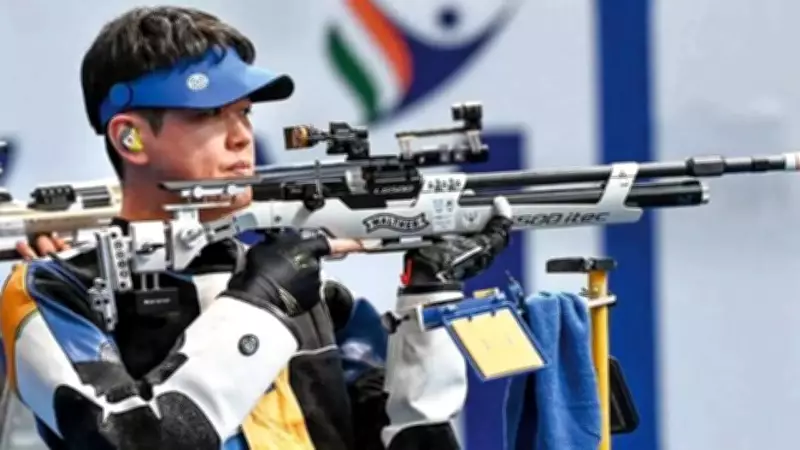
The difficulty in accessing real firearms has led to unique training adaptations, particularly for younger athletes. "For that reason, it is very difficult to own or use the air rifle for Japanese high school students. So most of them use laser rifles," Satoko Yamada added. She revealed her own extreme measure: "I joined the army after completing 18 years just to train for the 25m pistol events."
These laser rifles function like advanced toys, where a light beam hits the target and scores are calculated electronically. This practice of relying on laser-based training equipment is believed to be almost exclusive to Japan, highlighting the unique constraints its shooters operate under.
While Japan celebrates Olympic legends like gymnast Sawao Kato, wrestler Kaori Icho, judoka Tadahiro Nomura, and hammer thrower Koji Murofushi, its shooting athletes continue to compete against a backdrop of formidable legal obstacles. The nation's medal drought in shooting stands as a direct consequence of its prioritization of stringent gun control over competitive sporting convenience, creating a fascinating case study in the intersection of policy, safety, and elite athletic performance.