Roger Federer's Financial Triumph and Personal Image Under Scrutiny
Roger Federer's accomplishments extend far beyond the tennis court, showcasing an extraordinary rate of success in both sports and business. According to Forbes, the Swiss tennis legend attained billionaire status in August 2025 and subsequently featured on the 2026 Forbes Billionaires List with an estimated net worth of $1.1 billion. This remarkable financial achievement highlights his strategic prowess beyond athletic competitions.
Federer's Wealth Accumulation Through Endorsements and Investments
During his illustrious professional tennis career, Federer amassed approximately $131 million in prize winnings. However, his primary financial success stemmed from lucrative endorsement deals and savvy investment activities. His brand partnerships included collaborations with major global companies such as Rolex, Uniqlo, Mercedes-Benz, Lindt, and Wilson, which significantly bolstered his earnings and public profile.
One of Federer's most notable business ventures was his investment in the Swiss shoe company On. In 2019, he acquired a 3 percent stake in the firm, which later experienced rapid growth in the global sports market. Today, On is valued at nearly $20 billion according to financial reports, underscoring Federer's acumen in identifying and capitalizing on profitable opportunities outside tennis.

Contrasting Personalities: Federer vs. Nadal at Roland Garros
While Federer has cultivated an image as a calm and graceful champion, winning 20 Grand Slam titles and earning widespread respect for his polite demeanor, recent comments from a long-time French Open official have sparked debate about his personal interactions. Gilles Jourdan, who worked closely on the redevelopment of Stade Roland Garros and has been associated with the tournament since the late 1970s, shared a contrasting perspective on Federer compared to Rafael Nadal.
In an interview with the French sports newspaper L’Équipe, Jourdan expressed that Nadal left a stronger personal impression due to his open and natural engagement with staff and others at the venue. He stated, "Nadal was more likeable than Federer. Our feeling was that Federer was only concerned with himself. He didn’t give anything. He didn’t give his time. He was polite, but nothing more." Jourdan further suggested that Federer often appeared focused on financial aspects, thinking extensively about business opportunities and long-term projects.
Jourdan added, "He thought a lot about money, a lot. There was no interaction. He wasn’t mean or rude. But we used to say that he wasn’t the ideal son-in-law after all. Nadal was authentic." These remarks have ignited discussions among tennis fans, contrasting Federer's business-oriented approach with Nadal's perceived genuineness.
Nadal's Deep Connection with the French Open
Rafael Nadal's bond with Roland Garros is exceptionally special, as the Spanish star has won the French Open 14 times, the most in the tournament's history. This longstanding relationship has fostered close connections with many event staff, and his footprint is permanently placed at Court Philippe-Chatrier, honoring his dominance on the clay courts in Paris. In contrast, Federer achieved only one French Open title in 2009, and later in his career, he sometimes skipped the clay-court season to prepare for Wimbledon, where he secured eight titles.
Enduring Legacy of Tennis Rivalry
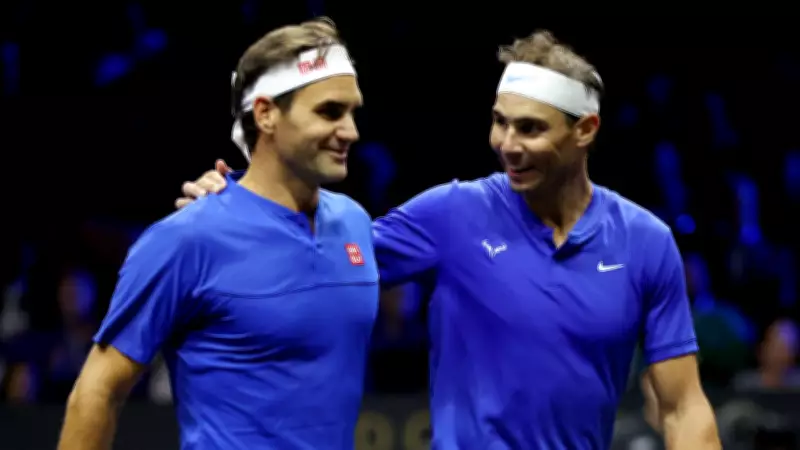
Despite differing opinions on their personalities, Roger Federer and Rafael Nadal remain two of the most pivotal figures in tennis history. Their fierce rivalry defined an entire era of the sport, producing unforgettable matches such as the 2008 Wimbledon final and the 2017 Australian Open final. Federer's reputation as one of tennis's most respected athletes continues to hold strong, with fans and players often praising his sportsmanship and composed presence on the tour.
The intersection of Federer's billionaire status and the personality debate underscores the multifaceted nature of modern sports icons, where financial success and personal perceptions intertwine to shape public discourse.