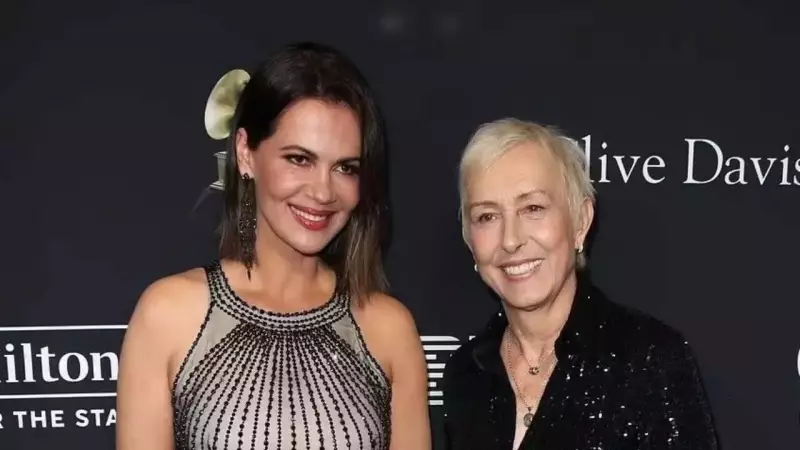
Tennis icon Martina Navratilova, renowned for her forthright views, has ignited a fierce international debate after publicly endorsing sanctions against American corporations operating in Venezuela. Her intervention into foreign policy, following recent US military action in the South American nation, has drawn sharp criticism and support, highlighting the volatile intersection of global sports stardom and geopolitical conflicts.
Navratilova's Stance and the Immediate Backlash
In January 2026, shortly after US forces captured Venezuelan President Nicolás Maduro on narco-terrorism charges, Navratilova voiced strong opinions online. She replied "love it" to a post by journalist Lauren Windsor advocating for International Criminal Court sanctions on US oil companies accused of taking Venezuelan oil. Elaborating further, the 18-time Grand Slam champion asserted that the United States was "holding a country hostage while pillaging its natural resources."
She also warned that Venezuela might not be the last such case, pointing to potential future targets like Greenland and Nigeria. The reaction was swift and polarized. Critics accused her of overstepping her domain, with some referencing her 1975 defection from communist Czechoslovakia to question her stance against action targeting Maduro's socialist government. Supporters, however, praised her for challenging US power abroad.

Why Venezuela's Oil Wealth Fuels the Conflict
Central to this dispute is Venezuela's immense petroleum wealth. The nation sits on the largest proven oil reserves in the world, estimated at a staggering 300 billion barrels. This constitutes roughly one-fifth of global reserves, surpassing both Saudi Arabia and the United States. However, most of this resource is heavy crude, requiring sophisticated technology for extraction and refining—infrastructure that has deteriorated due to years of mismanagement and international sanctions.
Former US President Donald Trump has framed the situation differently. He argues that American companies originally built Venezuela's oil industry before assets worth billions were seized by Maduro's government. Trump has stated that US firms will return to rebuild production and restore exports. Reports indicate the US could potentially block about 1.1 million barrels per day of Venezuelan oil from reaching international markets.
A Divided Response and Navratilova's Political Contradictions
The US intervention itself has split opinion. Following the detention of Maduro and his wife, Trump stated the US would oversee Venezuela until a transfer of power. Many Venezuelan exiles in Miami celebrated the move as a step toward freedom. Conversely, figures like Kamala Harris described the intervention as unlawful, while some Democrats offered cautious support.
Navratilova's position underscores her complex political profile, which often defies simple categorization. While she remains one of Donald Trump's most outspoken critics, with anti-Trump posts pinned to her social media profile, she frequently aligns with conservative viewpoints on issues like women's sports, including her support for athlete Riley Gaines. This contradiction was highlighted in the online discourse surrounding her Venezuela comments.
As the debate rages on, Martina Navratilova's forthright commentary demonstrates how swiftly the worlds of sports, politics, and international resource struggles can collide, forcing a global audience to confront uncomfortable questions about power, intervention, and corporate accountability.