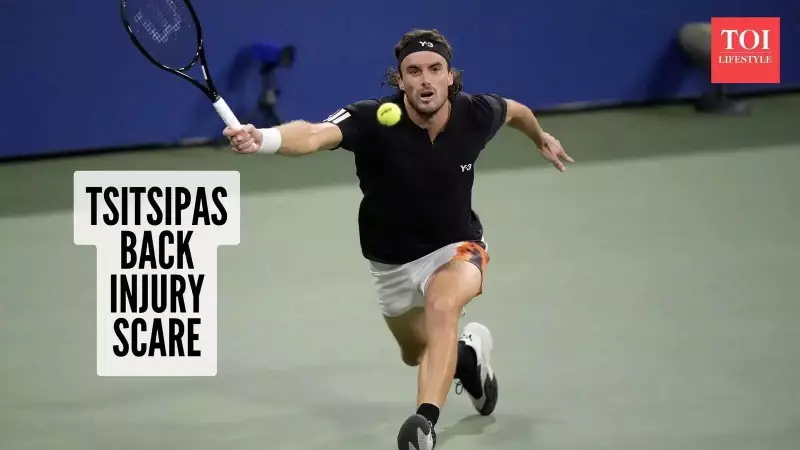
In a shocking revelation, Greek tennis sensation Stefanos Tsitsipas has detailed a severe physical and mental crisis in 2025, driven by a debilitating back injury that threatened to end his career. Known for his fluid movement and endurance in long rallies, Tsitsipas faced a stark reality where he was unable to walk for two days following a match.
The Breaking Point at the US Open
The crisis reached its peak after the second-round loss to Germany's Daniel Altmaier at the US Open in August 2025. The match itself was a battle, but the aftermath was far worse. Tsitsipas has now disclosed that the pain escalated so sharply post-match that he could not walk for two full days. This extreme physical limitation forced the athlete into confronting the previously unthinkable: thoughts of an early retirement from professional tennis.
This moment of intense vulnerability was not an isolated incident but the culmination of a prolonged struggle. Tsitsipas revealed that the persistent back pain had been haunting him for six to eight months prior. Every match became an uncertain ordeal, with the primary fear being whether he could physically complete the contest, a doubt he admits can be heavier for an elite athlete than the prospect of defeat itself.

A Stunning Fall in the Rankings
The severity of the situation is underscored by Tsitsipas's dramatic slide in the ATP rankings. From the pinnacle of being world No. 3 and contesting Grand Slam finals at the 2021 French Open and the 2023 Australian Open, his career was derailed. By the latter part of 2025, his activity was severely limited—he played only two Davis Cup matches for Greece—and his ranking plummeted to No. 36. This decline was a direct consequence of the injury, a battle for survival rather than a loss of form.
The Mental Battle: Fear of Pain, Not Losing
What haunted Tsitsipas most during this period was not the slipping ranking points or missed trophies. The central, frightening question was whether the searing pain would return in the middle of a match. He admitted to constantly asking himself if he could play another match without being crippled by pain. This specific fear, he explained, has the power to erode an athlete's confidence faster than any formidable opponent on the other side of the net, highlighting how injuries test the mind as profoundly as the body.
The Road to Recovery and a Cautious Comeback
A turning point came through dedicated medical care and a meticulously planned recovery regimen. A significant milestone was completing five weeks of off-season training entirely without pain. For Tsitsipas, this pain-free block was a monumental victory, offering a rare mental peace and the reassurance that his body was finally responding.
Looking ahead, the Greek star is scheduled to represent his country at the United Cup in early January, serving as a tune-up for the 2026 Australian Open. His goal for the new season is modest yet profoundly powerful: to finish matches without the constant worry of pain flaring up. His belief is slowly being rebuilt, brick by brick, on the foundation of careful work, patience, and the crucial pain-free pre-season he has just endured.
Disclaimer: This article is for general informational purposes only and is not a substitute for professional medical advice, diagnosis, or treatment. Always seek the advice of a qualified healthcare provider with any questions regarding a medical condition or injury.