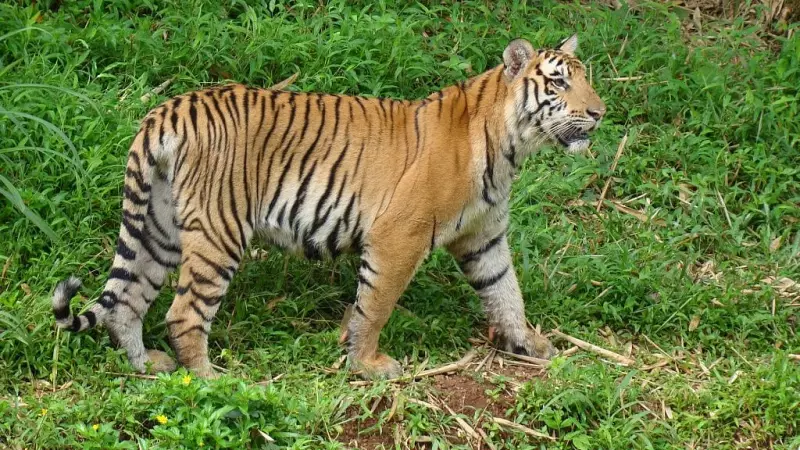
An elderly tigress has been given a new lease on life after wildlife officials successfully rescued her from Nagarahole National Park and transferred her to a specialised facility. The big cat, now under professional care at the Bannerghatta Biological Park rescue centre, faced a critical survival challenge in the wild.
Rescue Operation and Critical Health Assessment
Forest department personnel conducted the rescue operation after monitoring the tigress's deteriorating condition. A thorough veterinary examination revealed the primary reason for her inability to survive independently: all four of her canine teeth were completely worn out. This severe dental condition, often a sign of advanced age in wild tigers, rendered her incapable of hunting natural prey effectively within her forest habitat.
Why Release Was Not an Option
Officials made the difficult decision not to release the tigress back into Nagarahole forest due to the direct threat her condition posed. With compromised hunting ability, she would have been forced to seek easier targets to avoid starvation. This would have significantly increased the risk of her preying on domestic cattle in villages bordering the forest.

Such human-animal conflict scenarios are dangerous for both the local communities and the tiger's safety. The translocation to Bannerghatta, therefore, serves as a permanent welfare solution, ensuring her survival while preventing potential conflict.
A New Home at Bannerghatta
The tigress arrived at the Bannerghatta rescue centre, a facility equipped to handle such special-needs animals. Here, she will receive lifelong care, including a managed diet that accommodates her dental issues and regular health monitoring. The rescue underscores the ongoing challenges in managing India's aging tiger population and the protocols in place for animals that can no longer thrive in the wild.
The operation was confirmed by officials on 28 December 2025. It highlights the proactive measures taken by the Karnataka forest department to balance ecosystem health with individual animal welfare, ensuring every tiger, even those past their prime, receives a dignified future.