

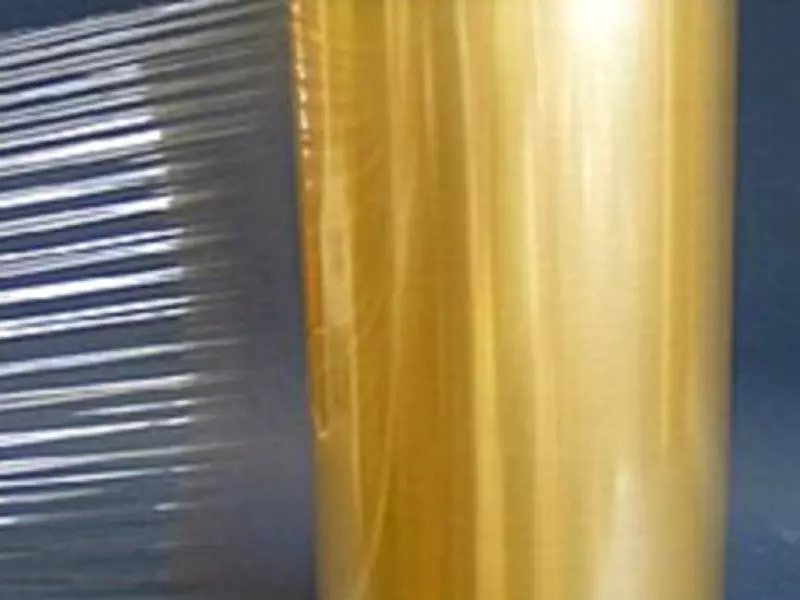
The story of modern plastic wrap did not begin with a brilliant kitchen invention. Instead, it originated from a laboratory cleanup mishap in 1933. An employee at Dow Chemical was examining a piece of glassware that proved impossible to clean. A stubborn, sticky residue had bonded to the inside of a beaker. Rather than discarding the glassware, the research team decided to investigate the strange material. This messy lab accident would eventually transform how food is stored in homes worldwide.
The First Clue Was a Cleanup Issue
It all started with a simple failure. Scientists closely examined the persistent deposit and processed it into an unusual greenish film. Dow later marketed the polymer under the trade name 'Saran'. In the 1930s, the chemical industry was still learning how to classify new plastic materials according to their intended use. Anything that could form a thin sheet or resist moisture was of tremendous industrial value.
The early Saran film was not suitable for the kitchen. The first version was very green and had a strong odor, so the inventors did not attempt to use it for food. Instead, they applied it as a tough industrial coating. This gave the development team ample time to experiment with the polymer's capabilities before considering selling it to everyday consumers.

The Significance of the Green Film
The real appeal of the material was its functionality, not just the novelty of a thin plastic film. As explained in a peer-reviewed article published in the journal Molecules, cling films typically contain materials such as polyvinylidene chloride (PVDC), polyvinyl chloride (PVC), or polyethylene. Among these, PVDC is noted for its exceptionally strong barrier properties against external elements.
These chemical barriers are crucial because food can spoil rapidly if oxygen, moisture, and unwanted odors can permeate the wrapping material. The early Saran film excelled in this regard. It formed a tight seal that excluded air, making it far superior at preserving fresh food compared to the wax papers or cloth wraps available at the time. The material had a very practical quality: it performed a demanding job better than almost anything else, blocking oxygen and sealing in moisture.
Ralph Wiley accidentally discovered polyvinylidene chloride polymer in 1933. Image Credit: Wikimedia Commons
Industrial Coating for Kitchen Shelves
The transition from lab accident to household essential was gradual. An analysis of history from Harvard Business School highlights how transparent films transformed consumer shopping and food storage in the mid-20th century. Changing consumer habits created a strong market for a moisture-resistant polymer. A lightweight material that could keep food covered, clearly visible, and fresh longer appealed to grocery stores and busy families alike.
However, significant scientific effort was required to improve its appearance before the product could reach consumer shelves. The film's odor and color made it unattractive for household use. Chemical researchers purified the polymer to remove its original color and foul smell, making it more suitable for home use.
A Useful Material with Technical Constraints
The fully refined consumer version appeared in 1949, when Dow introduced Saran Wrap, and Saran film finally became available as a commercial cling-wrap product from Dow, according to a historical packaging review. This delay was typical of many new materials. Products often start as laboratory oddities that require years of testing before becoming everyday habits.
But the material was not entirely flawless. A toxicology study indexed in PubMed states that polymerized vinylidene chloride was very effective for flexible food packaging. However, the use of PVDC can be limited because it can dehydrochlorinate at higher temperatures. Due to this property, manufacturers restricted its use and later reformulated or replaced it with other materials as safety and manufacturing needs evolved.
Plastic wrap today seems completely ordinary. Yet its story serves as a reminder that household staples are rarely born from a single flash of genius. An accident, years of refinement, and a changing grocery market turned a stubborn piece of laboratory grime into a kitchen staple.






