NEW DELHI: For years, a weekend ride to Agra or Mathura was a simple decision for Sandeep Gupta. The 52-year-old confectionery business owner from RK Puram would check his motorcycle's fuel level and go. His petrol bike, purchased in 2007, served him for nearly 15 years across Delhi and neighboring cities. Distance was never a concern.
Three years ago, he switched to an electric scooter. While it reduced commuting costs, it changed his travel mindset. "Inside Delhi, it works perfectly," Gupta said. "But when someone suggests going beyond NCR, I hesitate."
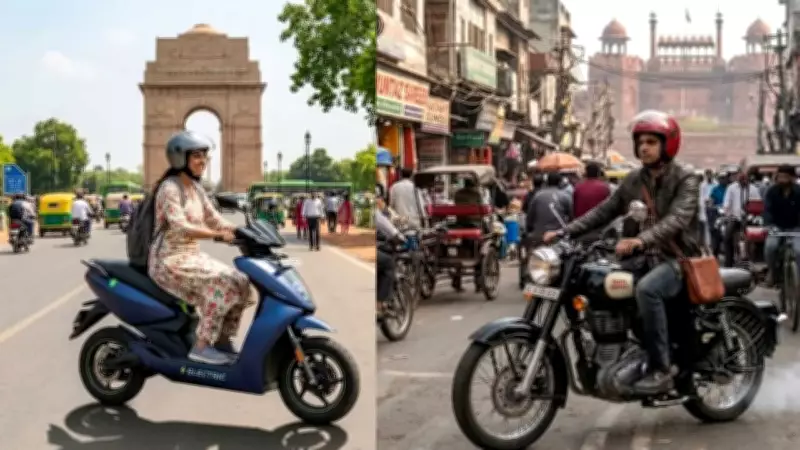
His dilemma reflects a larger debate as Delhi prepares for a major mobility transition. The Draft EV Policy 2.0, 2026-30, proposes that from April 1, 2028, only electric two-wheelers can be registered. Petrol and CNG motorcycles would disappear from the new vehicle market. Fleet aggregators are already barred from adding new petrol or diesel vehicles, and all commercial two-wheelers must go electric by 2030. The policy aims to accelerate cleaner transport, but raises questions about readiness.

For Gupta, the switch was economic. "Every few months, there was something to spend on, like PUC. Forgetting to renew pollution certificates led to fines. Neighbors borrowed the motorcycle, and rising petrol prices affected the budget. News about banning vehicles not meeting emission norms added pressure."
After buying an electric scooter in 2023, his charging bills dropped. "Charging for an hour to an hour-and-a-half gives 100 km range. Pickup is good, noise is minimal. For city use, it works well." Yet long journeys cause anxiety. While petrol bike mechanics are everywhere, EVs need authorized service centers. Gupta faced a battery malfunction during monsoon waterlogging. "I got it fixed, but mechanics are hard to find."
Registration data reflects this. Despite incentives since 2020, petrol motorcycles dominate. In 2025, petrol and petrol-E20 motorcycles accounted for 91.3% of two-wheeler registrations, while electric two-wheelers represented 8.7%. Only 21,530 EVs were registered compared to over 2.2 lakh petrol vehicles. The EV segment peaked at 9.3% in 2023 with subsidies, then moderated.
EV visibility is strongest among gig workers. Mohammad Sajid rents an electric scooter for Rs 255 daily to deliver parcels. Lower running costs help him work across platforms without fuel price worries. But the scooter is only for work. "For personal use, I still need a petrol bike," he said. For many delivery riders, EVs are tools of employment, not complete replacements.
A senior Delhi government official said, "The market follows regulations. The transition is two years away. We have given enough time." Transport minister Pankaj Singh added that meetings with manufacturers have led to new bike models for upcoming auto expos. "All stakeholders are positive, with investment in EV R&D." The government plans 8,000 new charging stations by year-end, many under PM's e-drive scheme. However, Delhi has 8,998 EV charging points against a requirement of 36,177, a shortfall of 27,179.
Some transitions are smooth. Software engineer Jugnu Singh, commuting from Noida to Ghaziabad, bought an electric scooter for practicality. "I already had a car and my husband has a bike. Refueling three vehicles would be a headache. The scooter cost Rs 1.2 lakh, more than a petrol scooty, but electricity costs Rs 12 for 90 km versus Rs 200 for petrol." Fast-charging at work and home reduces anxiety. A 10-minute charge provides a top-up; full charge takes an hour. She sees it as an ideal commuter.
These decisions are driven by everyday calculations of money, convenience, and practicality, not government targets or environmental messaging. For urban professionals, economics are compelling. Policymakers hope households will replace at least one conventional vehicle with an EV.
To accelerate this, the draft policy proposes subsidies for electric two-wheelers with ex-factory price below Rs 2.2 lakh: Rs 10,000 per kWh in the first year, capped at Rs 30,000, with lower incentives later. Scrapping older BS-IV and below two-wheelers gives an additional Rs 10,000 incentive.

Bike expert Krishanu Kona, who rode 50,338 km across 25 states in 2015-16, noted the EV market is tilted toward scooters, with little innovation in motorcycles. "Newly launched bikes are for city commuting. For Ladakh, I'd prefer a petrol bike." Shweta Chithrode, biker and AutoUpshot founder, said, "New brands are entering, but range anxiety persists. For electric superbikes, charging infrastructure on highways and fast charging are essential. An hour-long charge during a long ride is a dampener." She completed a 300 km ride in the Western Ghats on an electric motorcycle after extensive planning, but casual riders still prefer petrol.
A manufacturer, speaking anonymously, said, "Electric scooters dominate because their design accommodates battery packs under the floorboard and seat. Manufacturers focused on scooters, reducing costs and accelerating innovation. Scooters suit short commutes where EVs save on fuel and maintenance." Creating e-motorcycles matching mid-sized petrol bikes in speed and range requires complex engineering and higher costs. Some popular brands plan to enter the segment.
Delhi's 2028 deadline aims to reshape one of India's largest two-wheeler markets. But registration figures show nine out of ten new two-wheelers run on conventional fuel. The next two years will determine if that ratio can be reversed.