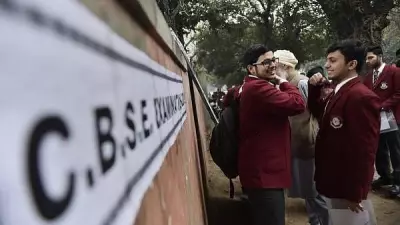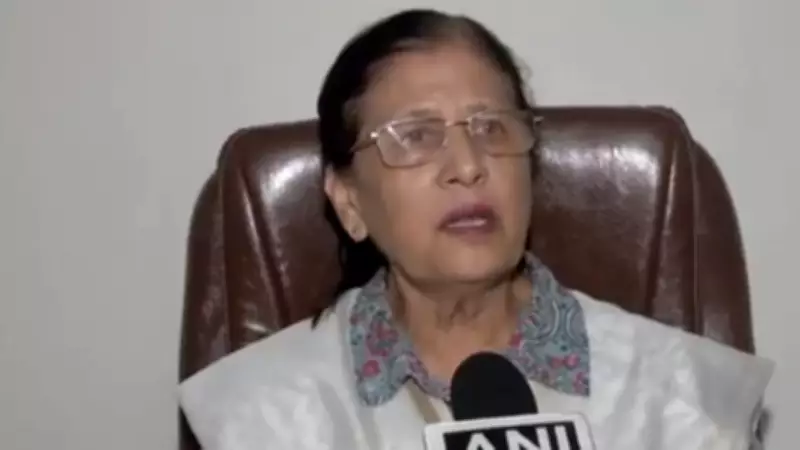
A former Maharashtra minister has approached the Supreme Court challenging the Central Board of Secondary Education's (CBSE) three-language rule for Class 9 students. Dr Fauzia Khan, an educationist and former minister in the Maharashtra government, filed the plea arguing that the CBSE's May 15 circular is arbitrary and unreasonable.
Background of the Case
The CBSE had issued a circular on May 15 mandating the implementation of the three-language formula for students in Class 9 from the academic year 2026-27. The directive requires students to study three languages, including at least two from a specified list of Indian languages. Dr Khan contends that this move violates the principles of federalism and linguistic diversity, as it imposes a uniform policy without considering regional variations.
Key Arguments in the Plea
Dr Khan's plea highlights several concerns:

- The circular is arbitrary and lacks proper consultation with state governments and educational stakeholders.
- It infringes upon the rights of states to decide their own language policies under the Constitution.
- The rule imposes an unnecessary burden on students, especially those from non-Hindi speaking regions.
- It undermines the three-language formula's original spirit, which was meant to promote multilingualism without compulsion.
The petitioner also argues that the CBSE's directive contradicts the National Education Policy (NEP) 2020, which emphasizes flexibility in language learning. The NEP recommends a three-language formula but allows states and institutions to adapt it based on local needs.
Legal and Educational Implications
This case has significant implications for India's education system. The Supreme Court's decision could set a precedent for how language policies are implemented across states. Educational experts are divided: some support the CBSE's move as a step towards national integration, while others see it as an imposition that could alienate linguistic minorities.
Dr Khan, who has a background in education, has been vocal about the need for inclusive language policies. She previously served as the Minister for Minority Affairs and Education in Maharashtra. Her plea seeks to quash the circular and direct the CBSE to reconsider the rule after broader consultations.
Next Steps
The Supreme Court is expected to hear the case in the coming weeks. The CBSE has not yet filed a response. Meanwhile, several other states and educational bodies are closely watching the proceedings, as they may also be affected by the outcome.
This legal challenge comes amid ongoing debates about language in education. The three-language formula has been a contentious issue since its inception, with periodic protests and legal battles. The current case adds another layer to this complex discourse.