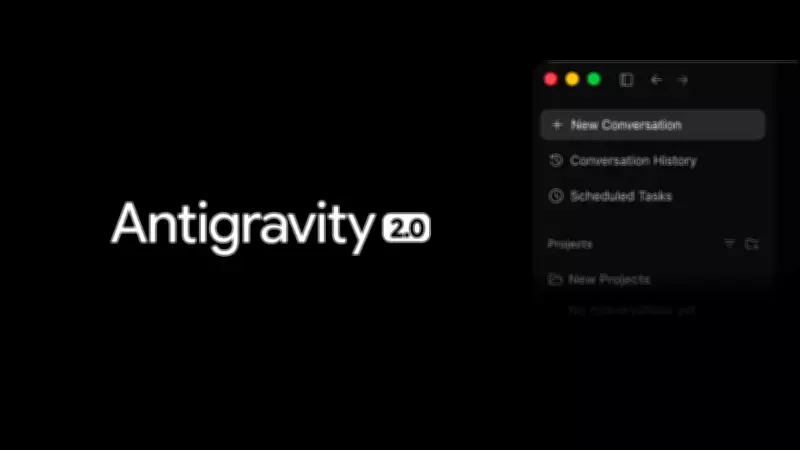
At Google I/O 2026, the company announced Antigravity 2.0, a significant departure from its predecessor. No longer an IDE bolted onto AI, Antigravity 2.0 is a standalone desktop application built entirely around agents. This move is Google's most direct response to Claude Code and OpenAI Codex, two tools that have gained strong developer followings over the past year.
Key Features and Performance
Antigravity 2.0 launches today on macOS, Linux, and Windows, powered by a new model called Gemini 3.5 Flash. Google highlights its speed: 289 output tokens per second on Artificial Analysis, compared to 67 for Claude Opus 4.7 and 71 for GPT-5.5. Beyond speed, Google claims 3.5 Flash also outperforms its own Gemini 3.1 Pro on coding and agentic benchmarks.
New Agent Layer
The main agent can now create subagents on the fly, run them in parallel, and keep its own context window uncluttered. Tasks run asynchronously, preventing stalls during background compilation. JSON hooks allow developers to intercept and shape agent behavior without writing wrappers. A new Scheduled Tasks layer adds cron functionality, enabling agents to fire on a timer instead of waiting for invocation.

To demonstrate, Antigravity head Varun Mohan showed the agents building an operating system from scratch for under $1,000 in tokens, then coding a Doom clone to run on it. New slash commands clarify usage: /goal runs to completion without checking in, /grill-me makes the agent ask clarifying questions before touching a file, and /browser is an explicit on-switch because agents still cannot reliably decide when to open a webpage. Voice input transcribes live instead of sending audio to the model. Agents are no longer tied to a single repo; conversations now live inside projects that span folders and carry their own permissions.
Expanded Stack
Antigravity 2.0 introduces a new CLI, replacing the Gemini CLI outright, requiring migration of existing terminal workflows. An SDK enables developers to build custom agents, with deeper hooks into AI Studio, Firebase, and Android, plus a dedicated AI Studio Android app.
Pricing Restructuring
Pricing has been revamped. A new $100 AI Ultra tier sits between the $20 Pro plan and the top tier, offering 5x the Antigravity limits of Pro. The flagship Ultra drops from $250 to $200 with 20x Pro limits. New and existing Ultra subscribers receive $100 in bonus credits through May 25. Existing Antigravity IDE users will automatically upgrade to 2.0 on their next update.
This article was originally published by the TOI Tech Desk, a dedicated team of journalists delivering the latest technology news, including gadget launches, reviews, trends, and analysis.