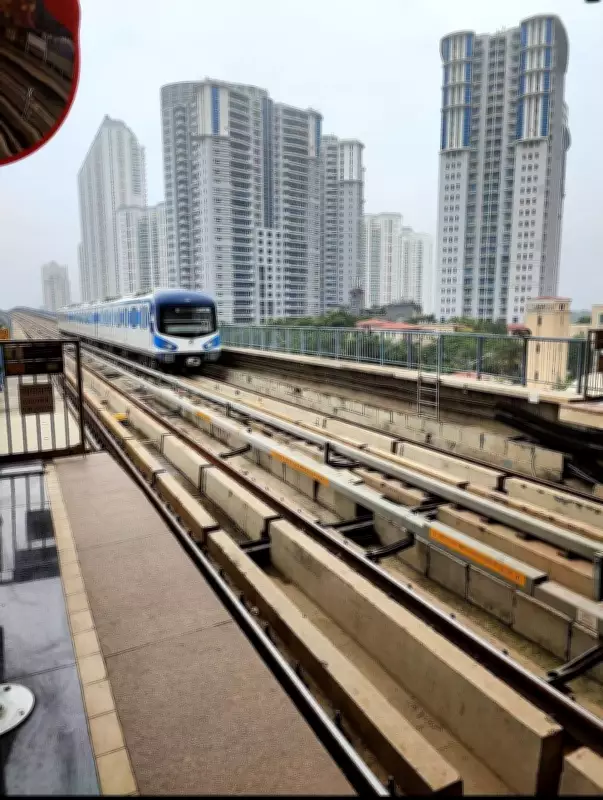
The Gurugram Rapid Metro recorded approximately 80.81 lakh passenger journeys during the first five months of 2026, marking a 9.4 percent increase in ridership compared to 73.81 lakh passengers carried in the same period of 2025, according to data presented at a recent board meeting of the Haryana Mass Rapid Transport Corporation (HMRTC).
Financial turnaround achieved
HMRTC reported an operational surplus of Rs 9.18 crore for the January–May 2026 period, a notable reversal from the Rs 1.98 crore deficit recorded during the corresponding months of the previous year. Officials attributed the financial improvement to a sharp increase in non-fare revenue, which more than doubled to Rs 16.16 crore from Rs 6.42 crore in 2025.
Drivers of ridership growth
The rise in passenger numbers was driven by enhanced connectivity, smoother interchanges with the larger Delhi Metro network, and increasing road congestion in Gurugram. These factors have encouraged more commuters to opt for the rapid rail system, which serves the city's dense corporate and residential hubs.

Non-fare revenue sources
Non-fare income surged due to advertising rights, commercial utilisation of metro assets, and station-based business activities. This diversification of revenue streams has been key to achieving the operational surplus, according to HMRTC officials.
Behavioural shift toward mass transit
The steady upward momentum in usage signals a broader behavioural shift among residents, who increasingly rely on the metro for punctual and predictable travel. The system is becoming a core mobility artery in Gurugram, supporting sustainable urban transport goals.