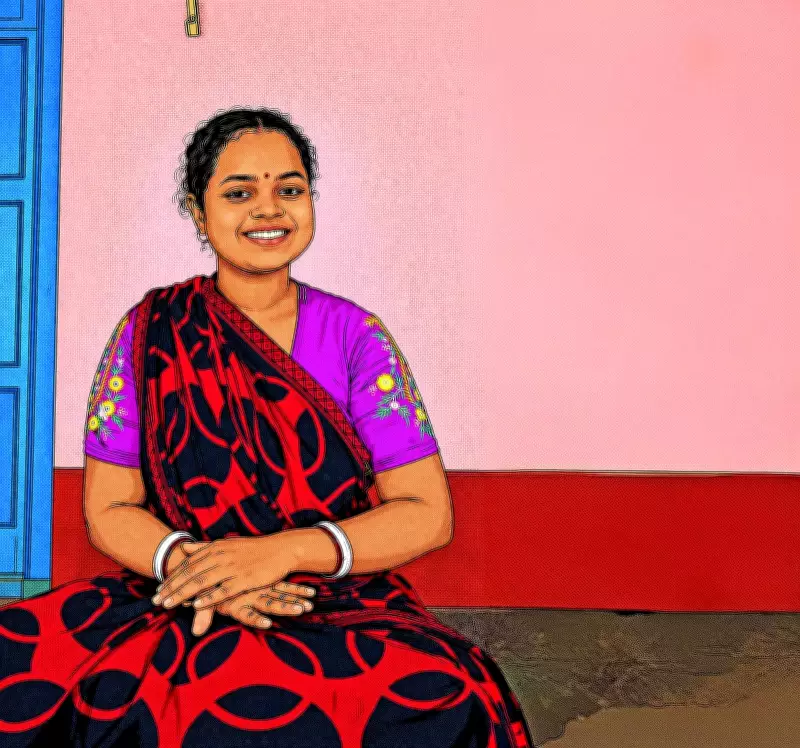
When a homemaker from rural East Medinipur, speaking about Franz Kafka and Sylvia Plath while chopping vegetables in a 40-year-old house, collides with Instagram virality, influencer scrutiny, film-industry attention, and now even top-line brand collaborations, it rarely remains just content. In Pujarini Pradhan's case, it has turned into a full-blown cultural moment — one that began with questions around authenticity but has quickly spiralled into a larger, ongoing conversation about class, credibility, and who gets to occupy intellectual space online. As reactions continue to build, with more names getting added across sides, the narrative is steadily shifting in her favour, revealing a deeper discomfort with access, visibility, and who is considered believable in India's digital space.
The Creator Before the Controversy
Before the backlash, Pujarini Pradhan was already a fast-rising voice online, a homemaker from a modest lower-middle-class household in rural East Medinipur, creating simple, unfiltered reels from her home, often without ring lights or elaborate production. Dressed in everyday sarees or salwar, sometimes chopping vegetables on a boti, she spoke in calm, fluent English about literature, cinema, caste, feminism, and her lived experiences, referencing not just Kafka and Plath but also Khaled Hosseini, Stanley Kubrick, David Lynch and Munshi Premchand. Self-taught in both language and digital skills, she had been active since early social media days but saw a sharp rise through 2025–26, building a following of over 6.7 lakh on @lifeofpujaa, with her appeal rooted in a contrast that many found refreshing but others would soon begin to question.
The Spark: Allegations, Aesthetics and the Industry Plant Tag
The controversy began around March 28–29, when creators like Niharika Jain, Aishwarya Subramanyam and Otherwarya posted reels questioning her authenticity under the lens of critical thinking, with accusations ranging from calling her an industry plant to suggesting her content was too curated to be organic. Her growing production quality, rapid follower rise, and especially her entry into top-line brand collaborations were cited as red flags, while some voices went further to frame her content as poverty porn, arguing that her background was being aestheticised. As the discourse spread across platforms, engagement from industry figures like Kiran Rao, Samantha Ruth Prabhu and Parvathy Thiruvothu, including likes on critical posts, added to its visibility, even as more names continued to enter the conversation, keeping it fluid and escalating.

The Riposte: They Want to See Suffering in Every Video
On March 30, Pujarini responded with a detailed video that quickly went viral, now clocking over 158K likes and 5,000+ comments, where she calmly addressed each allegation. Stating, You can understand that I am doing everything on my own, because that is the truth… an agency had earlier tried to take advantage of me, while clarifying that she only began working with her current agency on January 27 and that they handle brand deals, not content. Adding, I don't have a team at home either. I do everything by myself, and pushing back on assumptions about money and visibility, Before this, I didn't even know that money could come in so regularly. While firmly noting, If I wanted to hide that I have a manager, I wouldn't mention them publicly. The line that stood out was her observation that once she began earning consistently, she was seen as dangerous, a point that has since triggered a wider debate on transparency in the creator ecosystem, with many rooting for her, alongside her broader reflection: This is not just about me… it's about anyone from a limited background trying to build something on their own… everything is available online today, you can learn anything if you want to.

The Shift: Industry Reactions, Online Support and an Evolving Narrative
Following her response, the discourse expanded further, with support coming in from across the creative ecosystem, including Vikramaditya Motwane, Guneet Monga, Nikhil Taneja and Archana Puran Singh. Kusha Kapila notably backed her with a comment along the lines of, your agency around here act too smart, but you're already smarter than them, reflecting the tone of support emerging in comment sections, where sentiment has largely flipped, with many calling out the criticism as elitist and rooted in discomfort rather than proof. Even as opposing takes, including poverty porn arguments, continue to circulate and more voices keep joining in, what has emerged is not just support for one creator but a larger rejection of the idea that intellect, articulation, and success must come from a certain class, turning Pujarini Pradhan's story into an ongoing snapshot of how digital India negotiates access, credibility, and power.