History is not always loud or obvious. Sometimes it is a newspaper hitting a doorstep, a law quietly signed, a spacecraft blasting off, or even a car tumbling into a ditch on a back road in Texas. But those little moments leave marks on politics, science, culture, and society. June 10 is one such date that has witnessed a wide array of events across nearly two centuries.
From sporting firsts and historic declarations of war to groundbreaking advances in equality, dramatic criminal episodes, religious milestones, and humanity's quest to explore Mars, June 10 has repeatedly found itself at the crossroads of history. Let us take a look at some of the significant events that happened on this day and why they still matter.
1829: Oxford and Cambridge Start a Classic Rivalry
Long before modern sports rivalries dominated television screens, on June 10, 1829, two of Britain's most prestigious universities — Oxford and Cambridge — met on the River Thames for a contest that would become legendary. Oxford won the first race. What started as a simple student challenge evolved into one of the world's most famous amateur sporting events, drawing global audiences and becoming a symbol of British sporting tradition.

1847: The Chicago Tribune Is Born
Chicago itself was barely on the map when, on June 10, 1847, the Chicago Tribune started printing. Over the decades, the paper covered the Civil War, industrialization, world wars, political scandals, and technological revolutions. Through wars, scandals, and industrial booms, the Tribune became one of the most influential newspapers in America, helping shape the city and the nation's conversation.
1898: US Marines Land in Cuba
As the Spanish-American War was heating up, American forces took a significant step on June 10, 1898, when US Marines landed at Guantánamo Bay in Cuba. The operation marked one of the earliest overseas military interventions by the United States, helping pave the way for its role as a world power. The fallout led to Spain losing control of several territories, shifting control of Puerto Rico, Guam, and the Philippines, and reshaping the global scene at the turn of the 20th century.
1933: Bonnie and Clyde Crash
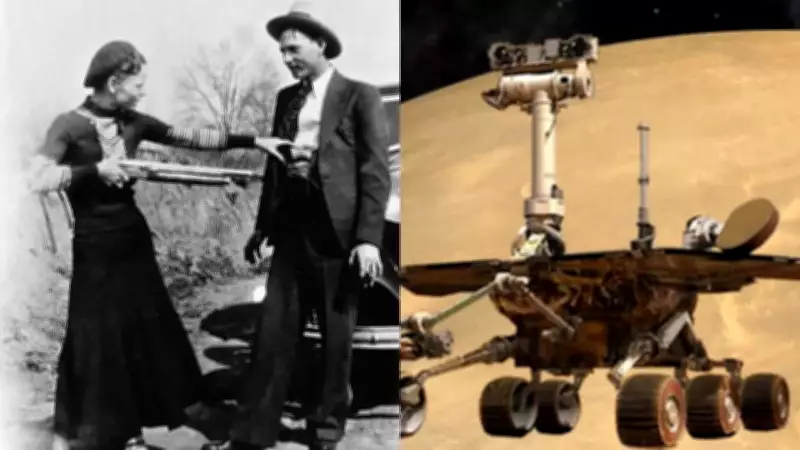
Few outlaw couples have captured the public imagination like Bonnie Parker and Clyde Barrow. On June 10, 1933, while driving near Wellington, Texas, Clyde missed a warning sign near a bridge under construction. The car flipped into a ravine, and Bonnie suffered severe third-degree burns to her right leg. The injuries were so bad that she reportedly struggled to walk for the rest of her life. The accident became a defining episode in the Bonnie and Clyde story, and Parker carried the physical consequences until her death less than a year later.
1933: Mount Rushmore Gets Federal Protection
The same day, US President Franklin D. Roosevelt issued Executive Order 6166, which placed national monuments, including Mount Rushmore, under the administration of the National Park Service. The move ensured that Mount Rushmore and other national monuments would be preserved for generations.
1940: WW2 Spreads Even Further
On June 10, 1940, the Second World War entered a dangerous new phase. Under the leadership of Benito Mussolini, Italy declared war on France and Great Britain, formally joining Nazi Germany's Axis alliance. This decision expanded the conflict across Europe and North Africa and deepened the global dimensions of the war. On the same day, Canada joined the Allied side, adding more fuel to the fire and dragging millions more into the conflict, changing the course of history.
1963: Equal Pay Gets Its Day
Not every historic event involves battles or destruction. On June 10, 1963, US President John F. Kennedy signed the Equal Pay Act into law. It aimed to reduce wage discrimination based on sex, ensuring that men and women doing the same jobs received the same pay. Although the gender pay gap remains an issue today, the law was a huge step in the fight for fairness at work.

1977: Martin Luther King Jr.'s Killer Escapes Prison
History took another dramatic turn on June 10, 1977, when James Earl Ray escaped from Tennessee's Brushy Mountain State Prison. Ray was convicted of killing Martin Luther King Jr., and his escape sparked massive outrage. His freedom was short-lived, as he was caught again three days later, but the escape reignited public attention on one of the most infamous crimes in American history.
2003: Spirit Rover Begins Its Trip to Mars
On a happier note, June 10, 2003, saw the launch of NASA's Spirit Rover from Cape Canaveral, beginning the Mars Exploration Rover mission. Originally intended for just 90 days on Mars, Spirit kept going for years, collecting evidence that water once existed there. The rover's discoveries transformed scientific understanding of the Red Planet and laid the groundwork for future Mars missions, including today's search for signs of ancient life.