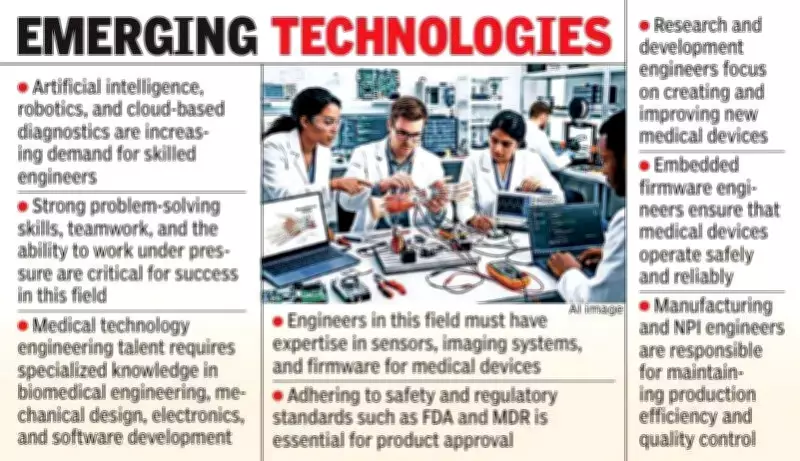
Campus recruitment trends at various engineering colleges in the Visakhapatnam region indicate that medtech has emerged as a significant hiring sector over the past few years. With a growing number of startups and established organisations entering or diversifying into this space, students from diverse disciplines, including computer science, electronics, and mechanical engineering, are being recruited for roles in manufacturing, regulatory affairs, research and development, and medical device software development.
Rise of Medtech in Visakhapatnam
Several startups and companies are operating out of the Andhra Pradesh MedTech Zone in Visakhapatnam, in addition to large-scale industries functioning from their own campuses. According to colleges, the most sought-after skills in this sector include regulatory compliance, artificial intelligence integration, the Internet of Things, and precision manufacturing. Although hiring numbers remain relatively small compared to overall recruitment, industry experts believe that this domain is likely to grow in the coming years.
Combining Tech Expertise and Clinical Knowledge
Engineering talent in medical technology combines technical expertise in mechanical, electronics, and software engineering with clinical knowledge to design, develop, and maintain diagnostic, therapeutic, and patient monitoring devices. Vikas K Srivastava, deputy director of the Venture Development Centre at GITAM Deemed to be University in Visakhapatnam, said the increase in medtech-based companies and startups has been a key factor contributing to recruitment in this sector. He noted that many of these startups, particularly those operating out of incubators such as the Ratan Tata Innovation Hub, Gitam VDC, and similar centres, are actively working in the medical technology domain.

Srivastava explained that startups often begin by recruiting students at the internship level, allowing them to identify and train talent early. This approach benefits both parties: startups gain access to trained talent that can contribute to product development from an early stage, and many interns are later absorbed as full-time employees, creating a steady pipeline of skilled professionals. For instance, one startup founded by a PhD scholar from GITAM University, in collaboration with another alumnus, is now offering jobs to their juniors, including undergraduate and postgraduate candidates.
Visakhapatnam as a Medical Technology Hub
In an email response, Kavita Kurup, chief people officer at Cyient, said Visakhapatnam is fast emerging as a hub for advanced engineering and medical technology, supported by a rapidly maturing ecosystem. She highlighted that institutions like the Andhra Pradesh MedTech Zone have been instrumental in providing access to infrastructure, innovation platforms, and a growing base of specialised talent. As medtech converges with AI and digital technologies, the industry is witnessing a fundamental shift from siloed expertise to deeply integrated, multidisciplinary capability. At Cyient, the focus is on building talent that can operate at this intersection, combining engineering depth with digital fluency and regulatory understanding.
Dr Naveen PNE, associate professor and head of the Centre for Academic Excellence at NSRIT in Visakhapatnam, said students across disciplines are gradually becoming more aware of opportunities in the medtech domain, which is beginning to reflect in campus recruitment trends. Both startups and established organisations are actively exploring talent from engineering and science backgrounds for roles in this sector. Institutions are also strengthening the industry-academia interface to bridge the gap between academic learning and industry requirements. These efforts are expected to help build a stronger pipeline of talent for the medtech sector, with recruitment likely to grow further in the coming years.