

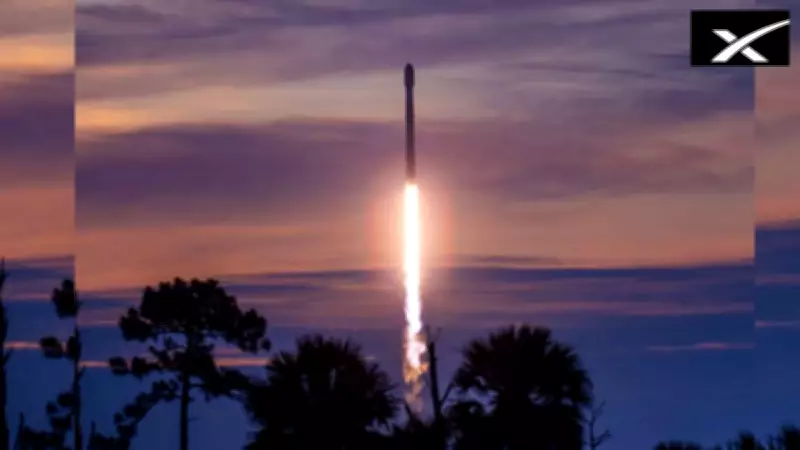
SpaceX has successfully launched 24 additional Starlink satellites into orbit, bringing the total number of active satellites in the constellation to over 10,600. This milestone underscores the rapid expansion of the network, which aims to provide global broadband internet coverage.
Latest Launch Details
The Falcon 9 rocket lifted off from Cape Canaveral Space Force Station in Florida at 9:32 a.m. ET on June 15. The first stage booster, which had been used for multiple previous missions, successfully landed on the droneship "Just Read the Instructions" in the Atlantic Ocean. This marks the 150th landing of a Falcon 9 first stage.
The 24 satellites were deployed into low Earth orbit approximately 65 minutes after liftoff. With this launch, the Starlink constellation now consists of more than 10,600 operational satellites, according to SpaceX. The company has regulatory approval for up to 12,000 satellites, with plans for up to 42,000 in the future.

Impact on Global Connectivity
Starlink has become a critical infrastructure for remote and underserved areas, providing high-speed internet where traditional broadband is unavailable. The service is now available in over 60 countries, with more than 2 million active subscribers. SpaceX continues to improve latency and bandwidth through software updates and hardware upgrades.
The network also supports government and military applications. The U.S. Department of Defense has contracted Starlink for communications, and the service has been used in Ukraine for battlefield connectivity. Additionally, SpaceX is working with NASA and ISRO to provide connectivity for future space missions.
Challenges and Future Plans
Despite its success, Starlink has faced criticism from astronomers due to light pollution and concerns about space debris. SpaceX has implemented measures such as sun visors and darker coatings to reduce reflectivity. The company is also developing laser inter-satellite links to reduce reliance on ground stations.
Looking ahead, SpaceX plans to launch the next-generation Starlink V3 satellites, which will offer higher capacity and lower latency. The company is also testing direct-to-cellphone connectivity, which could provide basic internet access to standard mobile phones in remote areas.
Elon Musk, CEO of SpaceX, stated that the network is on track to achieve full global coverage by 2027. With the continued pace of launches, Starlink is set to become the largest satellite constellation in history, revolutionizing internet access worldwide.






