

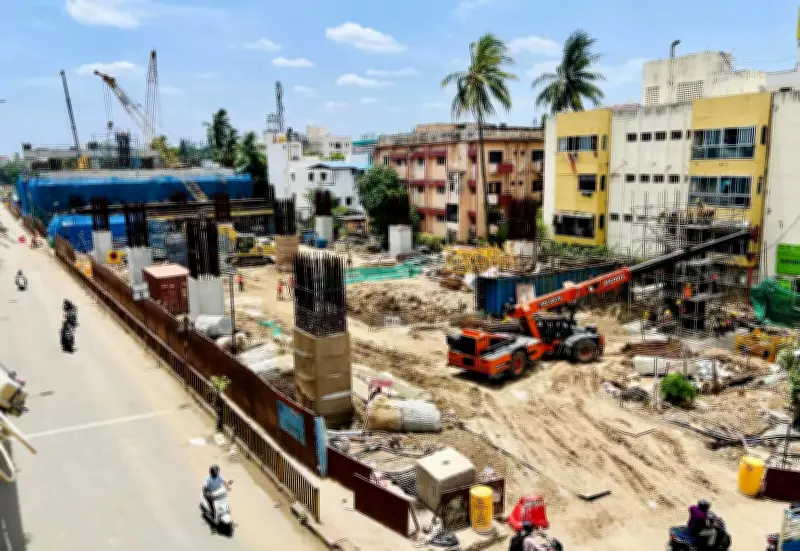
Chennai: In a few years, a commuter at Thirumangalam may be able to finish a meeting, pick up groceries, stop for a meal and board a metro train without stepping out of the same building. Chennai Metro Rail Limited (CMRL) is constructing what could become one of the city’s most ambitious transit-oriented developments — a 3.85-acre integrated complex built around the upcoming Phase-2 Thirumangalam metro station. The project will combine office space, retail outlets and a metro station within four interconnected towers, bringing daily activity and public transport under one roof.
Construction of the elevated station is underway opposite the Anna Nagar West Depot, close to the existing Phase-1 Thirumangalam metro station. The four towers will house retail and office space, with buildings ranging from two to nine floors and up to three basement levels. Thirumangalam is part of Corridor-5 from Madhavaram to Sholinganallur.
Seamless Commute Experience
“We are developing retail and office space integrated with station entry and exit points in several locations. But Thirumangalam will stand out because the station itself will form part of the development, making the commute seamless as passengers may simply switch floors to access trains,” a CMRL official said. Officials said the metro concourse will be located on one level and the platforms directly above it, while multiple floors around the station will accommodate retail and commercial activity. Office spaces are planned on the upper floors, allowing people to work in the same complex through which metro trains operate.

The development will also be the first in Chennai where driverless metro trains pass through a building, drawing comparisons with transit-oriented projects in Kokura, Japan, and Chongqing, China.
Revenue Generation and Urban Impact
The project is part of CMRL’s strategy to generate non-fare revenue through property development to help meet operational expenses and repay project loans. Residents say the additional Phase-2 station and integrated development could reduce dependence on private vehicles in an area known for its residential complexes, shopping districts and commercial activity.
Urban planner S Kamalakannan said such projects should also provide adequate parking and ensure smooth vehicular circulation. “Though metro systems are intended to reduce private vehicle use, some commuters will still arrive by car or bike. The development must be planned to accommodate them without creating congestion,” he said.
Stay updated with the latest Chennai news. Download the TOI App.






