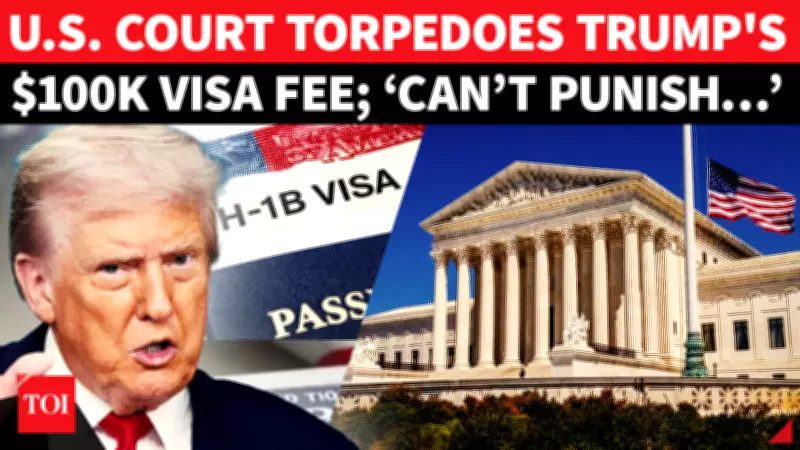
A major legal setback has hit Donald Trump's immigration agenda after a federal judge struck down the controversial $100,000 H-1B visa fee. The court ruled the measure amounted to an unauthorized tax that only Congress can impose. The decision offers relief to U.S. tech, healthcare, and biotech firms that depend on skilled foreign workers.
Court Ruling Details
The judge emphasized that the executive branch cannot levy such fees without legislative approval. The ruling stated, 'The administration cannot allow itself to impose taxes that are the sole domain of Congress.' This marks a significant check on executive power regarding immigration policy.
Impact on Industries
Companies in technology, healthcare, and biotechnology have welcomed the decision. These sectors rely heavily on H-1B visas to fill specialized roles. The fee was seen as a barrier to hiring international talent, potentially harming innovation and competitiveness.

Expected Appeal
The Trump administration is expected to appeal the ruling, potentially escalating the legal battle. Legal experts predict the case could reach the Supreme Court, given its implications for immigration and executive authority.
Broader Implications
The verdict could reshape the future of high-skilled immigration in America. It sets a precedent that may limit future administrations' ability to impose similar fees without congressional approval. This could lead to more stable immigration policies for skilled workers.
As the legal process unfolds, businesses and foreign workers await further developments. The ruling provides temporary relief but underscores the ongoing debate over immigration reform in the United States.