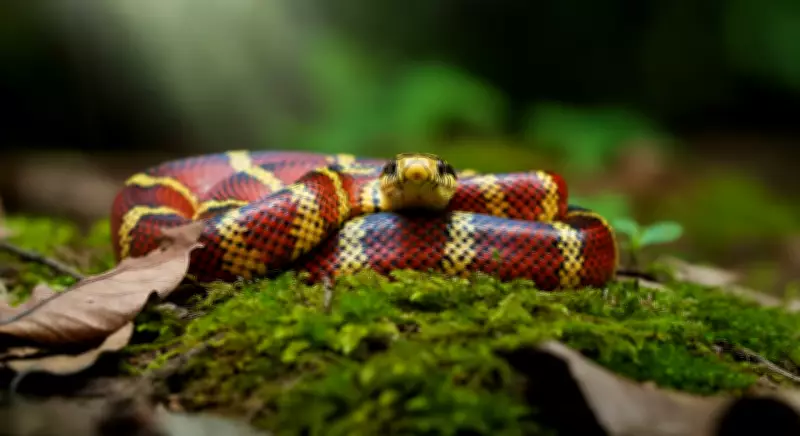
Most people assume a snakebite will be impossible to ignore: sharp pain, visible puncture marks, immediate panic. However, several venomous species break that pattern, delivering bites that are painless, nearly invisible, or both, often with serious consequences. Tiny fixed fangs, mild initial symptoms, or unusual striking mechanics can mean a victim has no idea anything happened until hours later, when more dangerous effects begin to surface. Doctors who treat snakebite in regions where these species are common say this delay is one of the biggest reasons bites turn fatal, since people who feel fine see no reason to rush to a hospital. From nocturnal kraits to side-stabbing burrowing snakes, these are some of the species whose bites are easiest to overlook.
Why Some Venomous Snake Bites Go Completely Unnoticed
A venomous bite is usually expected to hurt immediately, since pain is the body's early warning system. Several snake families have evolved around that assumption instead of working with it. Some have fangs too small or too fixed to leave an obvious puncture wound. Others inject venom that does not trigger the nerve receptors responsible for pain, at least not right away, so swelling, bleeding, or paralysis appear only once the toxin has already spread through the body. A few species have even developed biting mechanics that make the strike itself hard to notice. Recognising these snakes matters because the usual advice, watch for pain and visible marks, simply does not apply to them.
Coral Snake Bites Leave Bite Marks That Are Easy to Miss
Coral snakes have small, fixed fangs and a habit of biting down and holding on briefly rather than striking and releasing. According to Poison Control, this combination means bite marks can be easily missed, and the bite itself may be painless even when venom has been injected. Because symptoms such as slurred speech and breathing difficulty can take hours to appear, anyone who suspects a coral snake bite is advised to seek hospital monitoring immediately rather than waiting to see whether pain or swelling develops.

Boomslang Bites Feel Deceptively Mild at First
The boomslang, a slender, tree-dwelling colubrid found across sub-Saharan Africa, has a reputation built on a single famous case: the 1957 death of herpetologist Karl Schmidt after a bite from a juvenile specimen that barely broke his skin. According to McGill University's Office for Science and Society, Schmidt initially dismissed the bite as minor since it caused little pain, not realising the snake's haemotoxic venom would later trigger uncontrollable internal bleeding. That gap between a mild-feeling bite and its delayed, severe effects remains the defining danger of this species.
Common Krait Bites Are Painless and Often Strike While Victims Sleep
The common krait, found across South Asia, is responsible for a disproportionate share of snakebite deaths in rural India and Sri Lanka, largely because its bite causes no pain and no swelling. Research published on PubMed Central describes how krait bites typically occur at night against people sleeping on the ground, with victims often unaware anything happened until they wake up partially paralysed. By the time neurological symptoms appear, hours of untreated envenomation have usually already passed, which is why doctors consider the krait's painless bite one of its most dangerous traits.
Stiletto Snakes Can Stab Without Even Opening Their Mouths
Stiletto snakes, a group of burrowing African species also called mole vipers, have a uniquely mobile fang that swings sideways out of the corner of a nearly closed mouth. A case report published in the Journal of the Royal Society of Medicine describes how this sideways stabbing motion lets the snake envenomate a person even while it is being gripped firmly behind the head, the exact technique herpetologists use to safely handle other venomous snakes. Because the strike does not require a visible open-mouthed bite, victims are often caught off guard before they realise they have been envenomated.

Sea Snake Bites Often Leave No Pain or Visible Mark
Sea snakes are considered among the most numerous venomous reptiles on Earth, yet most bites go almost unnoticed at the moment they happen. A clinical overview from the National Center for Biotechnology Information notes that sea snakes have small fangs and typically deliver painless bites that may not be recognised until systemic symptoms, including muscle weakness and breathing difficulty, develop later. Fishermen handling nets are most often affected, and because the bite site frequently shows little more than a faint pinprick, many victims initially dismiss the encounter as harmless.