The Era of Instant Misinformation: How Fake News Spreads Faster Than Truth
Three months into 2026, the global news landscape has transformed into a relentless test of credibility. Every few days, a new sensational claim dominates social media timelines, appearing urgent and believable while being shared by millions. As tensions between nations escalate, information now travels at unprecedented speeds, often outpacing verification processes. This phenomenon became particularly evident during recent geopolitical conflicts, where people increasingly turned to videos, screenshots, and forwarded messages rather than traditional headlines for information.
In India, this trend was clearly visible during Operation Sindoor, where dramatic but unverified claims flooded digital platforms. Government fact-checking units like the Press Information Bureau repeatedly intervened, but often only after false content had already reached lakhs of users. This pattern has become the new normal: fake news arrives suddenly and spreads rapidly, while truth typically appears later as corrections that few people actually see.
10 False Stories That Captured Global Attention
This April Fools' Day serves as a timely reminder of the misinformation epidemic. Here are 10 news stories from early 2026 that many people believed but ultimately proved to be completely false.

1. The False Report of Benjamin Netanyahu's Death
During intense hostilities between Israel and Iran in early March, viral rumors claimed that Israeli Prime Minister Benjamin Netanyahu had been killed. Unverified posts, fake images, and AI-generated videos depicting Netanyahu dead or injured circulated widely on platforms including X, Telegram, and WhatsApp. These were often presented as CCTV footage from an alleged Iranian strike on his bunker or office.
Several media outlets initially picked up the claims as breaking news, and speculation grew after Iran-linked publications like Tasnim News Agency amplified the possibility of his death. However, the story quickly unraveled when Netanyahu's office explicitly dismissed the reports as fake news, confirming he was alive and continuing to lead. Fact-checkers at BBC, DW, and other organizations examined the viral content, showing that many videos and photos were AI-generated or manipulated, with no credible official source confirming any attack. Netanyahu himself later posted a video statement declaring, "I'm alive."
2. The Emotional Dog Rescue That Wasn't
A heartwarming video from Changchun, Jilin province in China showed seven dogs walking along a highway, quickly going viral with over 230 million views. The narrative claimed these animals had escaped a dog-meat restaurant or transport truck and were making an emotional journey home, with users and AI-generated posters turning it into a global feel-good rescue story.
Local media and fact-checkers later revealed the truth: the German shepherd in the video was in heat, and the other six dogs had simply followed her instinctively. There was no evidence of escape from captivity or a long trek back to owners.
3. The Misleading Lockdown Speculation
In March, claims circulated that Prime Minister Narendra Modi had hinted at a Covid-style lockdown while addressing Parliament about the West Asia crisis. This triggered widespread searches for "India lockdown again" and similar phrases across the internet.
However, examination of PM Modi's speeches in the Lok Sabha and Rajya Sabha showed the claim was misleading. While discussing the West Asia conflict's impact, the Prime Minister referenced the Covid-19 pandemic only as an example of how India had previously managed a global crisis. He urged citizens to remain prepared and united as they had during the pandemic and warned about potential long-term economic consequences from global disruptions. At no point did he use the word "lockdown."
The confusion appears to have been driven by multiple factors: ongoing supply chain disruptions due to the war, concerns about oil and gas supplies through the Strait of Hormuz, reports of fuel-saving measures in some countries, and public memories of pandemic-era restrictions.

4. The Facial Recognition Misconception
A viral claim suggested police in Essex switched off facial recognition cameras because they were "catching too many Black people." Authorities later clarified that the decision to pause the technology in March 2026 came after a University of Cambridge study flagged potential bias in how the system identified faces.
The controlled study involving 188 participants actually found the cameras were more accurate at identifying Black individuals compared to others and performed better with men than women. This raised concerns about uneven accuracy, prompting a temporary halt so the system could be reviewed and improved. Officials stressed the pause was about addressing potential algorithm bias, not about crime patterns or who was being caught. After evaluation and updates, police said they were preparing to redeploy the technology with revised safeguards.
5. The Canadian Video Misattributed to Iran
A striking video showing a young woman lighting her cigarette with a burning photo of Ali Khamenei went viral, with many claiming it captured defiance on Iranian streets amid anti-government protests. Fact-checks by Reuters and others revealed the video was filmed not in Iran but in Ontario, Canada.
Landmarks visible in the background, including a bank branch and public library, confirmed the location. The woman herself had shared the video on social media, indicating she was living in exile outside Iran. Despite this, the clip spread rapidly with misleading captions, demonstrating how easily powerful visuals can be detached from their actual context.
6. The AI-Generated Epstein Connection
Viral images claiming to show New York Mayor Zohran Mamdani as a child with his mother, filmmaker Mira Nair, and disgraced financier Jeffrey Epstein spread across social media, fueling speculation and outrage. The images gained traction after Mira Nair's name appeared in newly-released Epstein files.
Fact-checks confirmed the images were not real. Analysis using Google's SynthID tool found the visuals were AI-generated, originating from a parody account that creates synthetic content. Nair herself firmly rejected the claims, telling Reuters the images were "completely fabricated and false" and clarifying that neither she nor her son had ever posed for such photographs or knew the individuals shown.
7. Old Footage Presented as Saudi Strike
A dramatic video showing massive flames engulfing what appeared to be an oil facility spread online with claims it captured an Iranian strike on Saudi Arabia's oil facilities amid ongoing conflict. Fact-checks revealed the footage actually showed a fire at Hodeidah port in Yemen and had been circulating online since 2024.
Satellite imagery and earlier reports confirmed the location, matching buildings and burning storage tanks seen in the clip. Despite this, the video was widely reshared with misleading captions, turning old footage into breaking news.
8. Gaming Video Misrepresented as War Footage
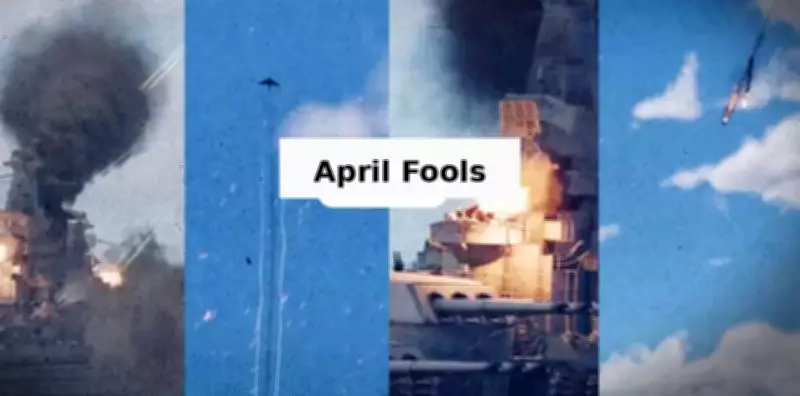
A high-intensity video showing what appeared to be a US warship shooting down an Iranian fighter jet went viral as real footage from the ongoing conflict. The convincing visuals included explosions, combat maneuvers, and a dramatic crash.
The clip was actually from War Thunder, a military simulation game developed by Gaijin Entertainment. The company confirmed the footage matched gameplay from their title. Further analysis showed the scene included outdated military hardware, including a historic US battleship and a World War II-era aircraft, making the claim even less credible.
The Growing Challenge of Digital Verification
These examples highlight a critical challenge in today's information ecosystem: the speed at which misinformation spreads versus the time required for proper verification. As AI-generated content becomes more sophisticated and social media platforms enable rapid sharing, the burden falls on both platforms and users to exercise greater discernment.
Government fact-checking units, independent verification organizations, and media literacy initiatives have become increasingly important in combating this trend. However, the fundamental pattern remains: fake news arrives first and spreads fast, while truth typically follows as an afterthought that reaches far fewer people.
As we navigate this complex information landscape, developing critical thinking skills and verifying sources before sharing content has never been more crucial. The stories that fooled millions in early 2026 serve as a stark reminder that in the digital age, seeing is no longer believing without proper verification.