Online War Erupts Over Charlie Kirk Murder Evidence as Right-Wing Figures Clash
The legal proceedings surrounding the murder of Charlie Kirk have expanded far beyond the courtroom, evolving into a heated and contentious online battle among prominent right-wing commentators. What originated as a technical dispute regarding ballistic evidence has transformed into a full-scale conflict over credibility and narrative control, with some of the most influential voices in conservative media now actively participating in the debate.
The Forensic Evidence Controversy
At the heart of this storm lies a fundamental disagreement about how to interpret the claims concerning the bullet discovered during Charlie Kirk's autopsy. The defense team representing Tyler Robinson, who is facing murder charges, has consistently maintained that the bullet cannot be definitively linked to Robinson's rifle. This crucial legal point, however, has become obscured within a torrent of viral social media posts and emotionally charged comments.
The result is a chaotic information war where opinions, interpretations, and factual evidence are colliding in real time. The courtroom will ultimately determine Tyler Robinson's legal fate, but outside those walls, a parallel battle is unfolding—one shaped by digital influence, competing interpretations, and the formidable power of online narratives.

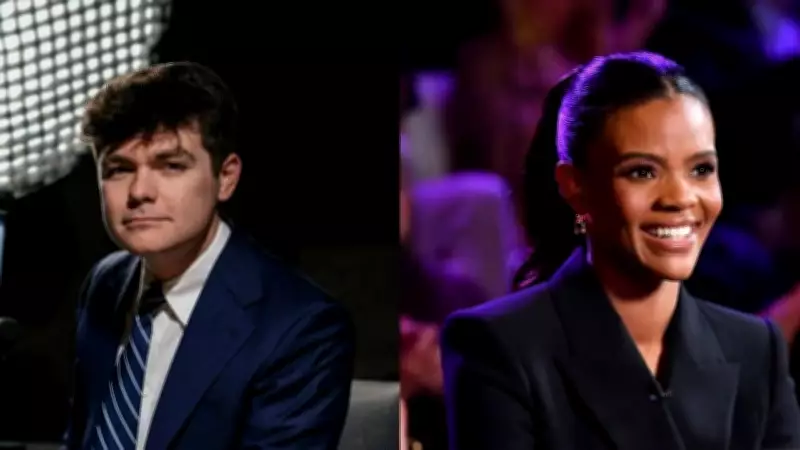
Nick Fuentes Confronts Candace Owens
Nick Fuentes delivered a sharply worded response to claims that had been amplified by fellow commentator Candace Owens. In his reaction, Fuentes stated unequivocally, "Obviously they just lied and the headline misrepresents the information." He further elaborated, "The legal defense for Tyler Robinson, which makes sense, said the bullet couldn't be identified, not that it doesn't match, stupid."
Fuentes' remarks gained significant traction across social media platforms, with his supporters arguing that essential details were being deliberately distorted to serve particular narrative agendas. The legal argument itself remains considerably more nuanced than the simplified versions circulating online.
The Complex Legal Distinction
Robinson's attorneys have emphasized that federal investigators were unable to conclusively match the bullet to the alleged weapon. This distinction—subtle yet legally significant—has become the primary dividing line in the ongoing debate. Critics contend that Candace Owens blurred this critical line while advancing broader theories about the case.
The backlash has extended beyond Nick Fuentes, with commentator Laura Loomer also entering the fray. Loomer accused Owens of crossing ethical boundaries, stating, "Candace Owens is now calling for Tyler Robinson, the man who killed Charlie Kirk, to be acquitted." She continued with stronger condemnation, "She is completely insane and she truly wants to see Charlie's killer walk free because he chose Erika over her. This is pure evil."
The Broader Implications
This controversy highlights several important developments in modern media and legal discourse:
- The increasing influence of online commentary on legal proceedings
- The challenge of maintaining factual precision in emotionally charged cases
- The power dynamics within conservative media ecosystems
- The difficulty of separating legal arguments from political narratives
As the trial continues to unfold, observers are witnessing how digital platforms have become battlegrounds for shaping public perception of justice. The Charlie Kirk case demonstrates how forensic evidence debates can quickly escalate into broader conflicts about credibility, media responsibility, and the intersection of legal processes with digital discourse.