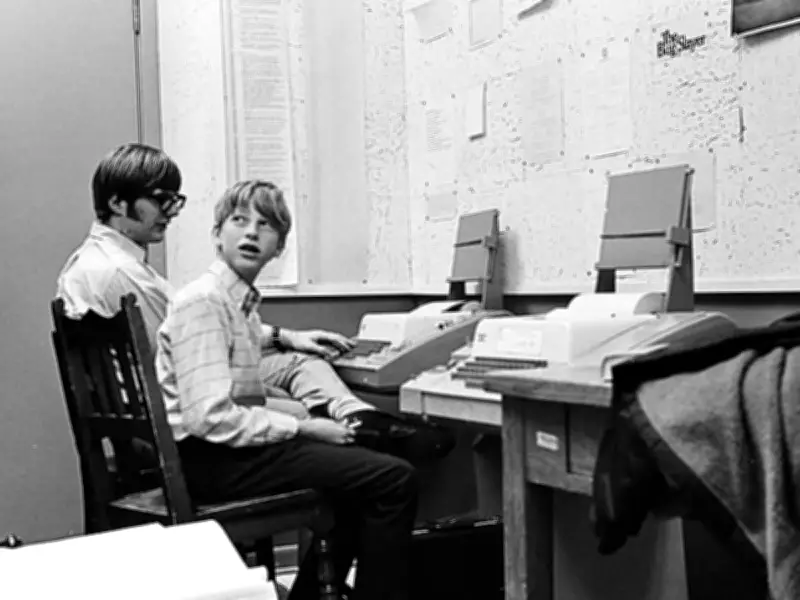
A magazine cover in early 1975 had a profound impact on the evolution of personal computers. Specifically, Paul Allen shared the January issue with his friend Bill Gates, setting the stage for a technological revolution. The cover featured the Altair 8800, considered one of the first and most affordable microcomputers.
Gates later described this moment in an interview with the Harvard Gazette. He recalled how Allen showed him the direction the revolution was taking while they were freezing in the cold. This revelation shocked Gates, compelling him to take immediate action.
Significance of the Altair 8800
Although it may seem unbelievable now, the Altair 8800 had limited capabilities. It required assembly by the consumer and manual data entry. Despite these shortcomings, it demonstrated that computing was becoming accessible to ordinary people.

Back then, buying that magazine became "the most significant purchase of a magazine" in Harvard Square. The Altair 8800 contained the Intel 8080 processor, making it a powerful machine for its time. More importantly, it created a market for computers. People now had the hardware but lacked software to run it.
From Fascination to Purposeful Action
That is where Gates and Allen proved their worth. While others merely admired the machine, they were thinking about how to make something similar possible. According to a 2013 Harvard University article, the magazine cover served as a turning point for Gates' college life. The duo decided to develop a BASIC interpreter specifically for the Altair.
BASIC was an easy-to-use language, but what made this case special was that they aimed to create an interpreter tailored for the Altair. This showed their transition from admiration to action. A simple magazine purchase changed the foundation of Microsoft.
Timing and Preparedness
What made this incident unique was that both Gates and Allen were prepared for the opportunity. They understood programming and had a passion for computers. The Altair did not introduce them to technology; it gave them direction. Innovation often results from a combination of opportunity and preparedness. A person with developed skills can recognize market opportunities. Gates' description illustrates this clearly: the magazine did not teach them programming; it showed them how to apply their skills.
A Small Moment Leading to Big Change
The story is remarkable for its humble beginning. Buying a magazine at a newsstand led to a crucial business decision, one not formally announced at the time. From spotting the magazine cover to designing software, everything happened quickly. Historians consider the mid-1970s computing transition a pivotal moment. Thanks to microprocessors, less bulky computers emerged. As noted on the Computer History Museum website, the Altair 8800's release marked the emergence of the PC industry because it inspired many to develop software. Hardware was useless without programs to manage it. Gates and Allen realized this early.
Microsoft's Origin Story
Developing a BASIC interpreter for the Altair 8800 became the starting point for Microsoft. The company chose its business strategy from the very beginning: instead of designing whole computers, Microsoft focused on creating software products that would run on various platforms.
Where It All Began
A cover story from 1975 didn't just present a novel computer; it signaled a new trend in technology, which two novice coders recognized immediately. Bill Gates and Paul Allen saw potential in an opportunity and acted upon it. They spotted an opening in the industry and exploited it with their software. This event marks a noteworthy moment in history—a tiny, accidental discovery that sparked crucial decisions.