

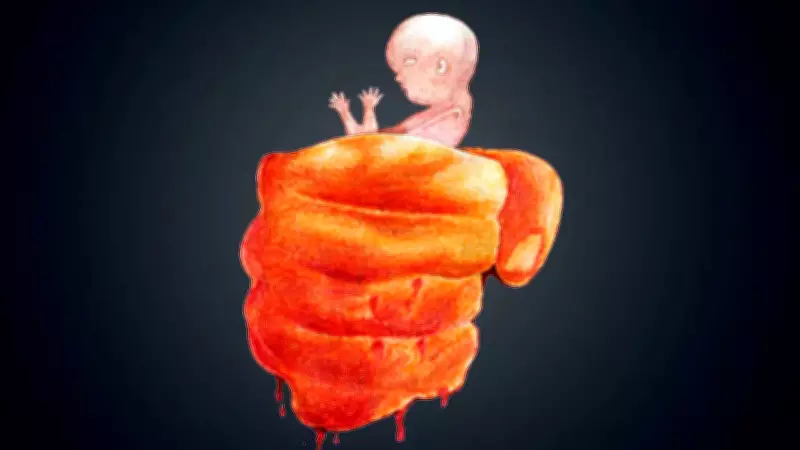
In many parts of India, the birth of a child still carries an unspoken question: Is it a boy? Behind this question lies the weight of cultural expectations, financial anxieties, and patriarchal norms that continue to place sons above daughters.
Alarming Statistics
A study by academics from the King Abdullah University of Science and Technology (KAUST) in Saudi Arabia estimates that 6.8 million fewer female births could be recorded across India by 2030 due to the continued use of sex-selective abortions. In 2025, Haryana reported 1,153 late abortions in just three months, highlighting the ongoing crisis.
The Social Fixation on Sons
Behind the data lies a mindset that often treats the birth of a daughter as a burden and a son as an investment. This skewed preference has led to sex-selective abortions and illegal prenatal testing networks. A mix of cultural pressure, patriarchal norms, and economic anxieties continues to push families toward sex selection, even though it is legally banned under the Pre-Conception and Pre-Natal Diagnostic Techniques (PCPNDT) Act.

Real-Life Tragedies
A long list of cases illustrates the deadly consequences. In a Telangana triple murder case, a 26-year-old pregnant woman and her two daughters were found dead in a swimming pool. The husband claimed accidental drowning, but police and family alleged a different motive: pressure over a third pregnancy and suspicion that the unborn child was female, along with earlier forced abortions. In another case from Kanpur, a woman accused her husband and in-laws of illegal prenatal sex determination, female foeticide, repeated forced abortions, and physical abuse. She married in 2021, and her husband allegedly pressured her for money from her parental home. When she refused, she was repeatedly assaulted, sustaining serious spinal injuries.
Root Causes: The Son Preference
Over the years, studies and police cases have pointed to one core factor: sons are seen as carriers of lineage, performers of last rites, and providers of financial security in old age. This belief system leads to discrimination even before birth. Once a pregnancy is confirmed, pressure to ensure a male child begins early, often with demands for illegal sex determination tests. Despite the ban, sex-selective abortions have continued for decades, with millions of female foetuses aborted. Pressure comes not only from husbands but also from in-laws and extended family, creating an environment where women are forced to undergo illegal procedures.
Studies on patriarchy state that sons are culturally linked with inheritance, lineage continuation, and religious rituals, while daughters are often considered transient members of their natal families after marriage. This reinforces long-term structural bias. Research also highlights that even in urban and economically advanced households, modernisation has not fully dismantled gender bias, with sex-selective practices persisting despite higher incomes and education levels.
Psychological Pressure on Women
Behind many cases of foeticide is intense psychological and social pressure on pregnant women. Dr. Aruna Kalra, a gynaecologist who has conducted over 50,000 deliveries, told TOI that women often are compelled to undergo repeated scans or abortions until a male child is conceived. She described how patients openly express desperation for a son, sometimes even after having multiple daughters.
The Illegal Network
In states such as Haryana, Punjab, Rajasthan, Uttar Pradesh, and Maharashtra, enforcement agencies have repeatedly uncovered a pattern of illegal sex determination and sex-selective abortion networks operating through loosely connected agents, clinics, and intermediaries. The system works in layers: agents target households where pressure for a male child is high, offering solutions for sex determination. Pregnant women are directed to unregistered or complicit diagnostic centres. Once a female foetus is identified, women are pushed toward termination, either through local clinics or interstate referral networks. Abortions are often carried out through private clinics, informal medical practitioners, or travelling disguised medical setups. Payments are frequently routed through intermediaries, making direct tracing difficult.

Mixed Progress
There are signs of progress. Data shows that the sex ratio at birth is slowly improving in states like Haryana and Punjab, attributed to stricter enforcement of the PCPNDT Act, increased inspections of ultrasound centres, and ongoing awareness campaigns. In several districts, these efforts have begun to reflect in better numbers and greater scrutiny of illegal practices. However, the improvement is uneven and fragile. The data still falls short of the natural sex ratio, and cases of coercion, illegal sex determination, and repeated abortions continue to surface. Enforcement can curb supply, but demand driven by son preference remains deeply entrenched.





