

Tourists Arrive at Remote Tasmanian Town Seeking AI-Invented Hot Springs
An Australian travel booking website has been compelled to withdraw content and issue public warnings after visitors began appearing in a secluded Tasmanian community searching for thermal springs that were entirely fabricated by artificial intelligence. The imaginary attraction, marketed online as a premier destination for 2026, never existed, causing bewilderment among both travelers and local residents.
The Fictional Destination That Fooled Travelers
The non-existent site, named Weldborough Hot Springs, was featured in an article titled “7 Best Hot Springs Tasmania Experiences for 2026” on the Tasmania Tours website. The AI-generated description portrayed it as a “secluded forest retreat” providing a “peaceful escape” and an “authentic connection to nature.” It further claimed that visitors would discover pools “rich in therapeutic minerals.” The fundamental issue, as perplexed locals had to clarify repeatedly, is that Weldborough possesses no hot springs whatsoever.
Confused Tourists and Baffled Locals
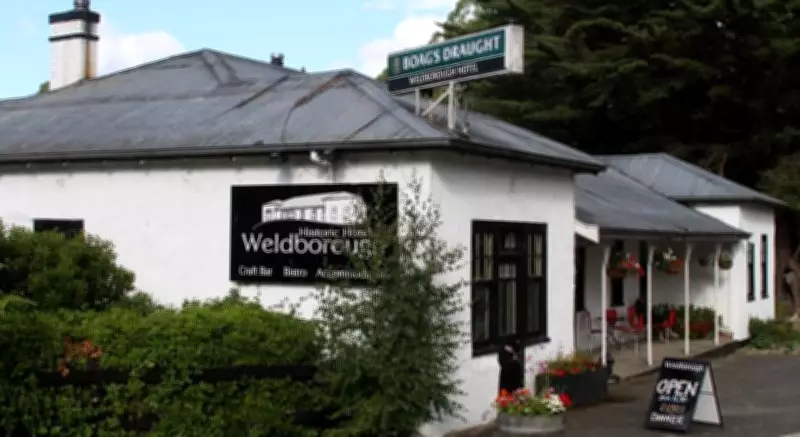
Weldborough is a small settlement in north-east Tasmania, primarily recognized for its historic pub and its proximity to forests and rivers. However, after the article was published in July 2025, tourists started arriving and inquiring about directions to the advertised thermal pools, often at the Weldborough Hotel, the town's most prominent landmark.

Local publican Kristy Probert informed the Australian Broadcasting Corporation that these inquiries rapidly became a daily occurrence. “I actually had a group of 24 drivers turn up there two days ago that were on a trip from the mainland, and they’d actually taken a detour to come to the hot springs,” she recounted.
Instead of guiding them to hot springs, Probert found herself explaining that the only nearby water source is the Weld River, which she described as “freezing cold” and “definitely not a hot spring.” “They’re more likely to find a sapphire than … to find a hot spring, to be honest,” she remarked, adding that she humorously promised free beverages to anyone who could locate the mythical pools. “If you find the hot springs, come back and let me know and I’ll shout you beers all night, they didn’t come back.”
Company Admits: ‘Our AI Has Messed Up Completely’
Tasmania Tours is operated by Australian Tours and Cruises, a New South Wales–based company managing multiple travel-booking platforms. Its owner, Scott Hennessy, acknowledged the error and confirmed that the article, along with other AI-generated posts, has been deleted. The content was taken down following complaints and escalating confusion.
“Our AI has messed up completely,” Hennessy stated, clarifying that the company had outsourced some marketing content to a third party utilizing artificial intelligence. While posts were typically reviewed before publication, some went live while he was overseas.
“We’re trying to compete with the big boys, and part of that is keeping our content refreshed and new all the time,” he explained. “We don’t have enough horsepower to write enough content on our own, and that’s why we outsource part of this function. Sometimes it’s perfect and really good and does what you hope it would do, and sometimes it gets it completely wrong.”
Hennessy emphasized that Tasmania Tours is a legitimate business offering real tours, not a fraudulent site. “We’re not a scam, we’re a married couple trying to do the right thing by people … we are legit, we are real people, we employ sales staff,” he asserted. All AI-generated blog posts are now undergoing a comprehensive audit, he added.
A Growing Problem with AI Travel Advice
The Weldborough incident is not an isolated case. Travel experts indicate that so-called “AI hallucinations,” where systems confidently invent false information, are increasingly directing people to incorrect locations or providing unsafe recommendations.

Anne Hardy of Destination Southern Tasmania noted that research suggests approximately 90 percent of AI-generated itineraries contain at least one error, while more than a third of travelers now depend on AI for trip planning. Common mistakes include:
- Incorrect opening hours
- Inaccurate descriptions
- Destinations that simply do not exist
Similar occurrences have been reported globally, such as tourists attempting to visit a non-existent canyon in Peru and travelers in Malaysia searching for an AI-generated cable car attraction.
For Weldborough, this episode has brought unwelcome attention and a continuous flow of disappointed visitors. For the broader travel community, it serves as a stark reminder that, regardless of how persuasive the language or imagery may be, not everything generated online corresponds to reality on the ground.
