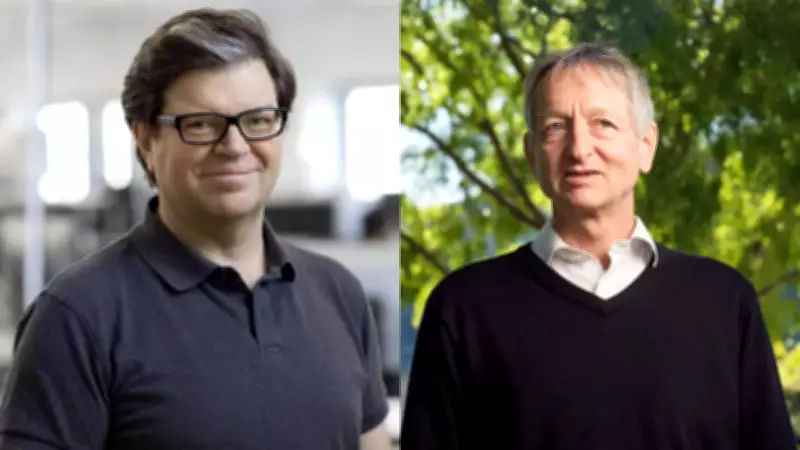
Two of the most influential figures in artificial intelligence (AI) have expressed differing views on the potential for AI-led job cuts. Geoffrey Hinton and Yann LeCun, widely known as the "Godfathers of AI," have taken vastly different stances on how the technology will affect the global labor market.
While Hinton warns of a cycle-breaking collapse in employment, LeCun is adamant that the public should ignore AI experts and CEOs and listen to economists instead.
Hinton warns: 'This time it is different'
Geoffrey Hinton, who left Google to speak more freely about AI risks, argues that the current AI revolution will not follow the patterns of the past. He said that historically, tech revolutions like the introduction of the tractor replaced physical labor but created new jobs in factories and offices. However, Hinton believes AI is a unique threat because it can replace both physical and intellectual labor at the same time.

Hinton's perspective is rooted in the idea that AI systems are capable of performing cognitive tasks that were previously reserved for humans. This includes roles in fields such as law, finance, and technology, where AI can analyze data, generate reports, and even make decisions. According to Hinton, this dual capability sets AI apart from previous technological advancements, potentially leading to widespread unemployment that could disrupt the entire economic structure.
LeCun's counter: 'Don't listen to us'
Yann LeCun, the former chief AI scientist at Meta, has taken a blunt approach to these claims. Despite his "love" for Hinton, LeCun argued that his colleague understands very little about how technological revolutions actually affect the workforce.
"I love Geoff. But he understands even less than [Anthropic CEO] Dario [Amodei] about the effects of technological revolutions on the labor market," LeCun said in a post on X (formerly Twitter). "Again, don't listen to AI scientists, as brilliant as they might be, and even less to AI CEOs, as successful as they might be, for questions of labor economics." Instead, LeCun insists that people should follow the work of labor economists who have spent their careers studying these shifts, such as David Autor and Erik Brynjolfsson.
LeCun's argument is that technological revolutions have historically led to the creation of new jobs, even as old ones are displaced. He believes that AI will follow a similar pattern, with new roles emerging that we cannot yet imagine. By listening to labor economists, who have a deep understanding of these historical patterns, the public can get a more accurate picture of AI's impact on employment.
Previous clash with Amodei
Previously, LeCun blasted Anthropic CEO Dario Amodei, who predicted that AI could wipe out up to 50% of all entry-level jobs in tech, law, consulting, and finance within the next one to five years. Amodei argued that AI is not just a tool for specific tasks but a "general labor substitute for humans."
LeCun's response to Amodei was sharp: "Dario is wrong. He knows absolutely nothing about the effects of technological revolutions on the labor market. Don't listen to him, Sam, Yoshua, Geoff, or me on this topic. Listen to economists who have spent their career studying this."
This exchange highlights the deep divide among AI leaders regarding the technology's potential to disrupt the workforce. While some, like Hinton and Amodei, see AI as an existential threat to employment, others, like LeCun, believe that such fears are overblown and that the market will adapt as it has in the past.
As AI continues to advance, the debate over its impact on jobs is likely to intensify. For now, the two godfathers of AI offer conflicting visions, leaving the public to decide whom to believe.