

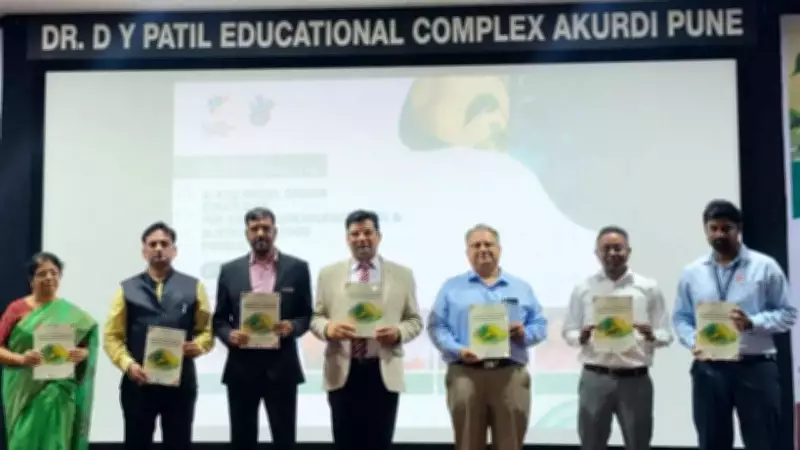
National Conference Examines AI's Expanding Role in Biomanufacturing and Sustainable Food Systems
A significant two-day national conference focusing on the increasing influence of artificial intelligence in biomanufacturing and sustainable food systems was successfully conducted at D Y Patil International University earlier this week. The event assembled a diverse group of experts from academic institutions, industrial sectors, and research organizations to explore innovative approaches and share insights.
Conference Overview and Key Themes
Organized by the School of Biosciences and Bioengineering with sponsorship from the Department of Biotechnology (DBT), the conference was titled “AI & Model-Driven Strategies for Smart Biomanufacturing and Sustainable Food Production.” It took place at the Shantai Auditorium on April 2 and 3, attracting participants from across Maharashtra who engaged in in-depth discussions on how AI technologies are fundamentally transforming manufacturing processes and enhancing food sustainability efforts.
Keynote Addresses and Expert Presentations
Dr. Prashant K. Dhakephalkar, Director of the Agharkar Research Institute, delivered the keynote address, emphasizing the critical concept of “waste to wealth.” He stressed the urgent necessity to convert industrial by-products into valuable resources through advanced smart biomanufacturing techniques, highlighting AI's potential in this transformative process.

Dr. Sandeep Shiromani, Associate Director at the Centre of Excellence in Fermentation, Biocon, presented on the practical applications of AI in the pharmaceutical industry. He detailed how AI can substantially improve operational efficiency and significantly reduce production timelines, leading to faster drug development and cost savings.
Following this, Dr. Krishnakumar S from Gennova Biopharmaceuticals discussed AI-enabled decision-making processes in biologics manufacturing, showcasing how data-driven insights can optimize complex production systems. Dr. Aditi Joglekar, Managing Director of AVCHIT Biosolutions, further elaborated on the role of intelligent automation in accelerating both development and production cycles within the biotech sector.
Second-Day Sessions and Industry Insights
On the second day, Dr. Naveen Kumar, Director of the National Institute of Virology, inaugurated the session, setting the stage for further exploration. Ravin Kumar, Co-founder of Bettrlabs, spoke about how AI can dramatically shorten research and development cycles, enabling faster and more cost-effective innovation across various industries.
Dr. Anuradha Chitnis, Head of Research and Development at Proeon, addressed the growing global demand for plant-based proteins and the pressing need for sustainable food processing systems. She highlighted how AI can help design and implement these systems to meet environmental and nutritional goals.
The concluding technical session was delivered by Dr. Ram Kulkarni of Symbiosis International University, who spoke on genomic strategies in lactic acid bacteria and their vital role in promoting food sustainability through enhanced fermentation and preservation methods.
Additional Activities and Conference Conclusion
In addition to the technical sessions, the conference featured interactive student-focused activities, including quiz and Pictionary competitions, designed to encourage active participation and foster a collaborative learning environment among young researchers. The event also included paper and poster presentations, providing a valuable platform for emerging scientists to showcase their work.
The conference concluded with a valedictory session and prize distribution ceremony. Dr. Ramendra Pandey, Director of the School of Biosciences and Bioengineering, along with Conference Convenor Dr. Babuskin Srinivasan and Co-convenors Dr. Sonal Mahajan and Siddhardh Singh, expressed gratitude to the university management, Vice-Chancellor Prof. (Dr.) Manish Bhalla, and the registrar for their unwavering support.
Organizers noted that the conference delivered valuable insights into real-world applications of AI in biomanufacturing and underscored the imperative for sustainable and innovative solutions to address future global challenges in food production and resource management.






