AI-Generated Singer Lolita Cercel Stirs Controversy in Romania
The sultry, digitally crafted songs of Lolita Cercel, an entirely AI-generated musical artist, have taken Romania by storm, amassing millions of online views and capturing national attention. However, this virtual sensation has ignited fierce debates, drawing sharp criticism from real-life musicians and Roma minority activists who decry the project as a racist cliché and a threat to human creativity.
Rapid Rise of a Virtual Star
Since her debut in late last year, Lolita has achieved what many aspiring artists dream of: television interviews, representation by a top booking agency, and even the endorsement of a cabinet member who used her telegenic, AI-generated image to promote his ministry's initiatives. Her videos, blending folk music with synthetic vocals, have resonated widely, yet this popularity has unearthed deeper societal issues.
The phenomenon has sparked a national conversation in Romania about the role of artificial intelligence in replacing human artists and has forced a reckoning with persistent ethnic stereotypes in a country with a documented history of discrimination against the Roma people.

Criticism from the Roma Community and Real Musicians
Bogdan Burdusel, a 35-year-old Roma activist, told AFP that Lolita represents "a very sexualised" character, describing her as "a non-Roma man's fantasy of what a Roma woman might look like." He criticized the project for reflecting "latent and unaddressed racism" within Romanian society.
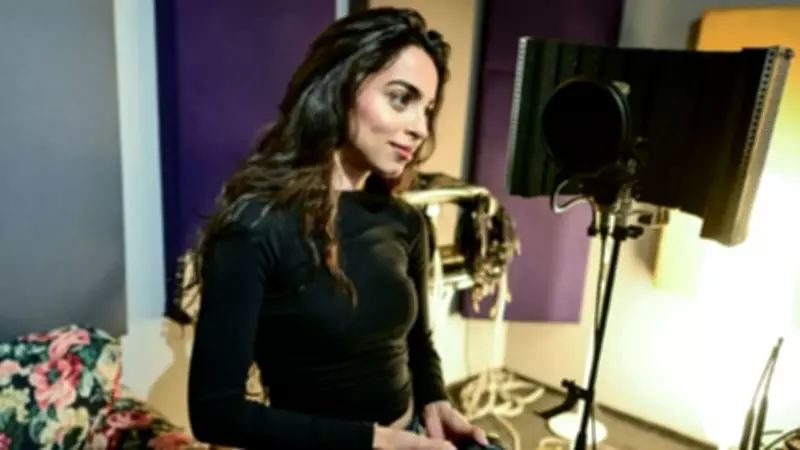
Real-life Roma singer Bianca Mihai, a 25-year-old contestant on the Romanian version of "The Voice" last year, expressed frustration over Lolita's overnight success. "I'm trying to build a career right now, and I feel like there's no room for me," said Mihai, who balances a full-time IT consulting job with studio rehearsals and acting work. She called the AI singer's rapid ascent "unfair," noting that Lolita released five songs in a single month, a feat that would take her months to accomplish.
The Creator's Perspective and Intentions
Behind Lolita is a man who goes by Tom, a 32-year-old visual designer who spoke anonymously. Tom clarified that he did not necessarily intend for his creation to have a specific Roma identity. "She doesn't necessarily belong to a specific culture," he explained. "She reflects the reality of millions of people living in the Balkans. She embodies a Balkan identity more than a Romani one."
Describing his project as "a fusion of Balkan nostalgia and the synthetic future," Tom said he chose folk music traditionally associated with Roma communities for Lolita's songs because it "speaks the truth most bluntly" and represents "a kind of blues of our own." He wrote the lyrics, which focus on themes of "love and everyday struggles," and used AI prompts to generate the music and videos, never anticipating the viral response.
"I didn't mean to offend anyone," Tom stated, appearing shy and uncomfortable with the media scrutiny. In public comments, he has praised AI for "democratising" musical creation, though the backlash suggests a more complex reality.
Ethnic Stereotypes and Historical Context
In one of Lolita's most-viewed songs, the avatar—depicted with teary eyes, wearing a red flower dress and hoop earrings on a train platform—refers to herself as "a cast-out gypsy," questioning her worth compared to a "proper fine lady" with "furs and money." Bianca Mihai criticized this portrayal, saying, "She's exactly the kind of girl we find very easy to accept and exoticise." She added that Lolita's lyrics are "the most cliched things" and that people frequently tell her she resembles the AI singer.
"It's nice to borrow elements from Romani culture, but we don't necessarily like the Romani people. And that hurts," Mihai told AFP. This sentiment is rooted in a painful history: Roma people were enslaved from the 14th to the 19th century in regions including modern-day Romania and Moldova, treated legally as property. Mihai herself only began publicly identifying as Roma around age 18, after her parents, fearing discrimination, advised her to conceal her heritage. During her time on "The Voice," she faced anti-Roma hate speech and even death threats on social media.

Broader Implications of AI in Music
The rise of AI-generated content like Lolita's songs is part of a global trend, with such tracks regularly going viral. The International Federation of the Phonographic Industry (IFPI) has called on the music sector to ensure that AI-generated content appropriately compensates human musicians. Grigore Burloiu, a lecturer in interactive technologies at the National University of Theatre and Film in Bucharest, noted that AI is "really good" at mimicking industry trends and focusing on popular consumption patterns.
"No one woke up overnight and said: 'That's it, I like AI'... AI is all about finding the lowest common denominator," Burloiu told AFP. This efficiency raises concerns about the displacement of human artists and the homogenization of creative expression.
Public Reaction and Future Concerns
Despite the controversy, praise floods Lolita's online channels, with one user comparing her to Romania's Amy Winehouse and another marveling, "Now I understand why people fall in love with AI." Meanwhile, Bianca Mihai watches uneasily, calculating the disparity in effort and recognition. "We can't really compare. It's very hard," she lamented.
The Lolita phenomenon underscores a critical juncture for Romania and the global entertainment industry: as AI continues to democratize creation, it also risks perpetuating harmful stereotypes and marginalizing real human talent. The debate over Lolita Cercel is not just about one virtual singer; it is a reflection of broader tensions between innovation and ethics, between synthetic futures and cultural sensitivities.