

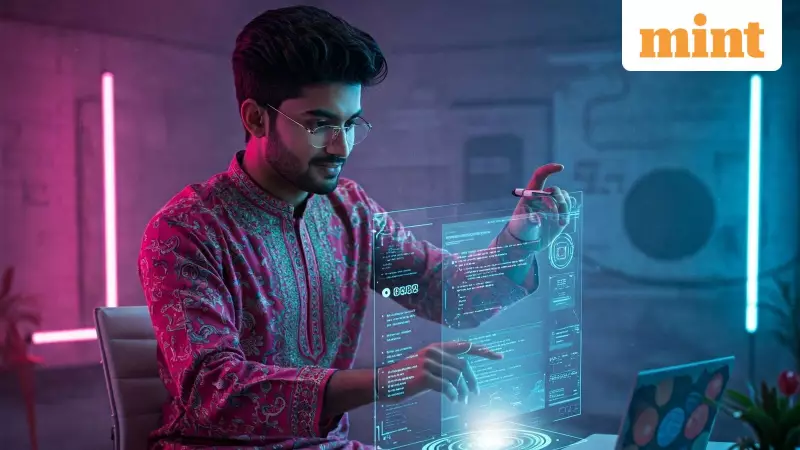
The Rise of Intuitive Programming: What is Vibe Coding?
A new approach to software development called 'vibe coding' is gaining momentum across India's technology landscape, powered by artificial intelligence tools that enable even beginners to create functional applications. This method represents a fundamental shift from traditional software engineering toward a more intuitive, experimental way of building technology.
At its core, vibe coding emphasizes feel and immediate feedback over strict syntax and structured specifications. The approach draws inspiration from creative fields like music and art, where creators often follow their intuition to develop something that 'feels right' without necessarily understanding the underlying technical details.
How Vibe Coding Empowers Non-Technical Innovators
The practical implications of vibe coding are particularly significant for India's entrepreneurial ecosystem. Consider the example of a chartered accountant with no programming background who wants to create a GST compliance platform for small businesses. Using no-code builders and AI assistants, she can now assemble forms, set up tax calculation rules, and generate documents without writing a single line of code.

This represents a dramatic departure from the traditional path where non-technical founders had to either find technical co-founders or spend substantial amounts on development agencies to create initial prototypes. Today, AI-powered tools allow them to vibe-code their way to working minimum viable products within weeks rather than months.
Transforming India's IT Services Industry
Vibe coding's emergence comes at a critical moment for India's $245 billion IT services sector. For decades, the industry has operated on labor arbitrage and process rigor, with engagements typically involving detailed specifications, offshore development cycles, and extensive testing procedures.
However, this established model now faces pressure as clients demand faster turnaround times and more iterative development approaches. Vibe coding could become a competitive differentiator for Indian IT firms willing to embrace cultural shifts that prioritize speed and experimentation over predictability.
The technology also opens new opportunities for India's massive graduate population. Millions of English-speaking, digitally literate graduates who lack formal programming training can now enter tech creation through vibe coding, much like mobile phones helped India bypass landline infrastructure.
While traditionalists may question the approach, vibe coding addresses the urgent need for rapid prototyping and early-stage development that characterizes today's fast-moving digital economy. As the industry evolves, this intuitive method may not replace traditional software engineering entirely but will likely supplement it in powerful ways that could redefine India's position in the global technology landscape.






