

Artists have long leveraged their visibility to resist state violence, a thread of dissent that spans decades and resurges with each conflict. When Donald Trump threatened war with Iran, figures like Sean Penn, Jack White, Mark Ruffalo, and George Clooney spoke out. This moment is not unique; during the Vietnam War, opposition coalesced into a cohesive counterculture movement. Jane Fonda and Donald Sutherland engaged in political theater, while John Lennon's 'Give Peace a Chance' and Jimi Hendrix's distorted 'Star-Spangled Banner' transformed popular media into urgent anti-war manifestos. By the Iraq War, that collective front had fragmented into individual assertions. While groups like the Dixie Chicks faced industry backlash, others like Green Day used punk-rock satire to critique government rhetoric. With social media, the medium shifted, but the artistic impulse to challenge state power persists, albeit decentralized.
The Vietnam War and the Rise of the Counterculture Movement
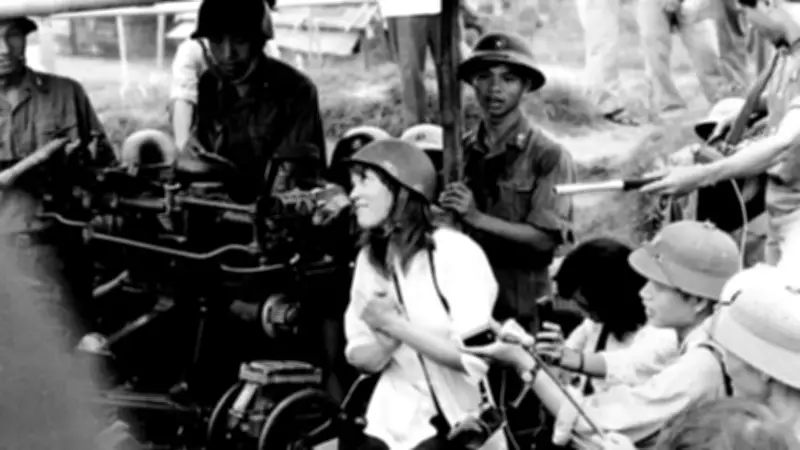
The Vietnam War (1955-75) was a rare moment when opposition reshaped art in unified ways. Protests were visible in cinema, music, and on the streets. Jane Fonda's image sitting in a North Vietnamese anti-aircraft gun became polarizing, earning her the label 'Hanoi Jane.' She later apologized, emphasizing her stance against the government, not soldiers. On 'The Dick Cavett Show,' Fonda expressed solidarity with the Vietnamese, stating, 'Those people have been fighting a long time. I hope people understand they would fight anyone that tries to take away their independence.' Donald Sutherland formed the Free the Army (FTA) tour with Fonda, visiting military camps with anti-war plays. Other prominent figures included Eartha Kitt, Jon Voight, Paul Newman, and Joanne Woodward.
Cinema Shifts Focus to War's Human Consequences
Cinema turned to the moral and psychological effects of war. Francis Ford Coppola's 'Apocalypse Now' (1979) remains an anti-war masterpiece, exploring moral collapse. 'The Deer Hunter' (1978) captured soldiers' trauma, with Christopher Walken's character spiraling into self-destruction. Stanley Kubrick's 'Full Metal Jacket' (1987) exposed dehumanization, exemplified by Private Pyle's breakdown.

Lennon, Hendrix, and the Vietnam Protest
In the 1960s, music was the heartbeat of anti-war rhetoric. Bob Dylan, Joan Baez, and Pete Seeger provided anthems like 'Blowin' in the Wind.' John Lennon bridged pop stardom and radical activism with his Bed-In for Peace, recording 'Give Peace a Chance' as a chant. The movement culminated at Woodstock in 1969, where Jimi Hendrix closed with a distorted 'The Star-Spangled Banner,' using feedback to mimic bombs and sirens.
Iraq War: A Splintered Dissent
During the US invasion of Iraq, artistes gathered again, but dissent was fragmented. The Dixie Chicks faced backlash after lead singer Natalie Maines said she was 'ashamed' President George W. Bush was from Texas, leading to death threats and radio boycotts. Despite fear, celebrities signed a petition against the invasion, including Matt Damon, Gillian Anderson, and David Duchovny. Sean Penn traveled to Baghdad and took out an ad in the Washington Post warning against a 'preemptive strike.' Cinema mirrored dissonance with films like 'The Hurt Locker' and 'Jarhead' focusing on soldiers' lived reality. Green Day's 'American Idiot' emerged as a definitive protest record, challenging the Bush administration.
Voices Outside America
In the UK, directors Ken Loach, Michael Winterbottom, comedian Stephen Fry, and actor Mark Rylance urged Prime Minister Tony Blair not to support the war. George Michael released protest songs 'Shoot the Dog' and 'The Grave.' Massive Attack and Radiohead opposed the war, with Radiohead's 'Hail to the Thief' influenced by frustration. Emma Thompson joined marches. Heath Ledger called out the Australian government, saying, 'This is the first time in history we are an aggressor. It is not a fight for humanity, it is a fight for oil.' He was photographed with Naomi Watts and Joel Edgerton at a protest in Melbourne.

The Modern Crisis: Social Media and Documentaries
In recent conflicts like the Russia-Ukraine War and the Israel-Gaza crisis, actors continue to speak out. Mark Ruffalo, Angelina Jolie, Pedro Pascal, Bella and Gigi Hadid, and Roger Waters have addressed the humanitarian crisis in Gaza. Sean Penn missed an awards ceremony to film his documentary 'Superpower' in Ukraine, documenting the invasion firsthand. His meeting with President Zelenskyy underscored that while the medium has changed from folk songs to documentaries and digital posts, the artistic impulse to challenge conflict remains strong.





