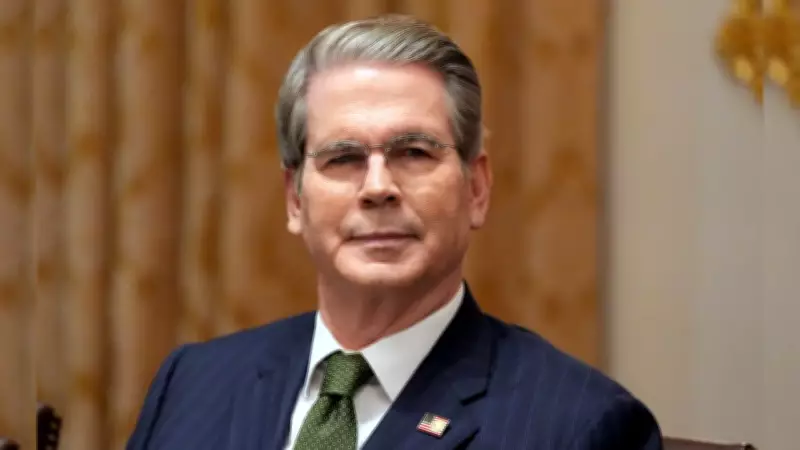
A political battle over the 'future of Artificial Intelligence (AI)' has erupted online between US Treasury Secretary Scott Bessent and Senator Bernie Sanders over plans to include Chinese scientists in a high-profile AI safety forum.
Sanders Announces AI Discussion with Chinese Researchers
Senator Sanders announced he will host a discussion on Wednesday, April 29, featuring top researchers from both the US and China, which caught Bessent's attention. The panel includes figures like MIT's Max Tegmark and experts from Beijing's leading AI institutes. Sanders warned on social media that 'uncontrolled AI poses a severe danger to all of humanity,' arguing that working with China is essential to prevent a global catastrophe.
'Uncontrolled AI poses a severe danger to all of humanity. On Wednesday, I'll be hosting a discussion with leading AI scientists from the US and China about the need for international cooperation against this existential threat. This is an enormously important issue. Join us,' Sanders said in a post on X (formerly Twitter).

Bessent Uses 'Hugo Chavez' Name to Criticize Sanders
Bessent wasted no time firing back, characterizing the invite as a move that undermines American sovereignty and innovation. 'The United States is home to the most talented AI researchers in the world,' Bessent stated, adding, 'Instead of harnessing American innovation, Senator Sanders is inviting foreign nationals to tell the United States how to regulate AI.'
Bessent took a personal jab at the Senator's political history, comparing the move to 'channeling Hugo Chavez to get advice on how to run our economy' – a reference to Sanders' past comments on the former Venezuelan leader. According to Bessent, the 'real threat' isn't just the technology itself, but the risk of letting any nation other than the US set the global rules for how AI is built and governed.
The 'Tech War' Between US and China
The timing of the dispute is critical. The US and China are currently engaged in a rivalry for AI dominance. The Trump administration recently accused China-linked actors of stealing American AI models through a process called 'distillation.' Meanwhile, China is reportedly banning homegrown companies from purchasing US-made technology hardware. Furthermore, Beijing cited national security concerns and has asked local players to not take American investment.
This clash underscores the deep divide between those who advocate for international collaboration to mitigate AI risks and those who prioritize national security and technological leadership. As the US and China continue to vie for supremacy in AI, the outcome of this debate could shape global regulations and the future of the technology.