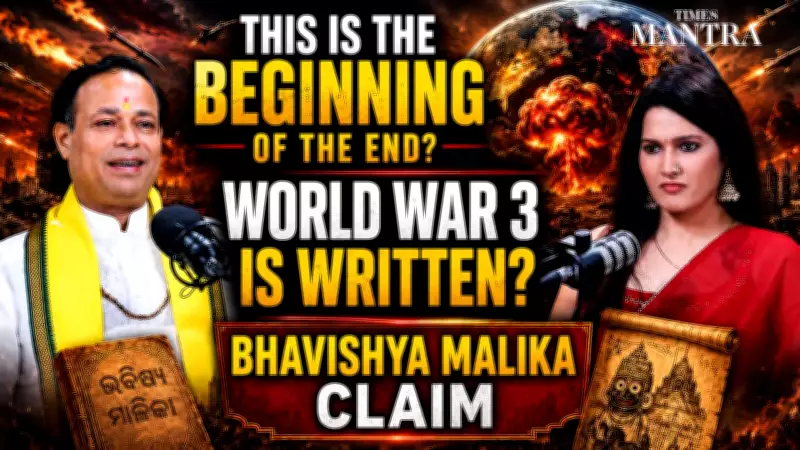
Could ancient prophecies really contain warnings about major global events? In a thought-provoking discussion, Kashinath Mishra examines claims associated with the Bhavishya Malika and its predictions regarding conflict, social change, and the future of humanity. The Bhavishya Malika, a collection of prophetic texts attributed to various sages, has long been a subject of fascination and debate. As global tensions rise and geopolitical shifts occur, many are turning to these ancient writings for clues about what lies ahead.
What Is the Bhavishya Malika?
The Bhavishya Malika is a set of ancient Indian prophecies that purportedly outline future events. These texts are believed to have been written by sages such as Acharya Chanakya, Maharishi Ved Vyas, and others. The predictions cover a wide range of topics, including wars, natural disasters, the rise and fall of empires, and spiritual transformations. While some dismiss them as vague or symbolic, others see them as accurate forecasts of historical and contemporary events.
Why Do These Prophecies Attract Attention?
Whenever major world events unfold, the Bhavishya Malika tends to resurface in public discourse. This is partly because the prophecies are often interpreted in light of current circumstances. For instance, descriptions of a great war, social upheaval, or a global leader are frequently linked to modern figures and conflicts. The allure lies in the possibility that these ancient texts contain hidden knowledge about the future, offering a sense of understanding or preparedness in uncertain times.

Kashinath Mishra, a researcher and commentator on spiritual topics, delves into the claims surrounding the Bhavishya Malika. He explores whether the predictions are based on symbolism, historical patterns, or something more profound. The discussion touches on the idea that prophecies may not be literal but rather allegorical, requiring interpretation through the lens of spirituality and human experience.
World War 3 Predictions
One of the most discussed aspects of the Bhavishya Malika is its alleged prediction of a third world war. According to some interpretations, the texts describe a massive conflict involving multiple nations, leading to widespread destruction but ultimately paving the way for a new era of peace and spiritual awakening. Mishra examines these claims critically, noting that while the prophecies are open to interpretation, they have resonated with many who see parallels in current global tensions.
Social Change and Humanity's Future
Beyond war, the Bhavishya Malika also speaks of significant social changes, including shifts in moral values, technological advancements, and the rise of a more enlightened society. Mishra highlights how these predictions align with contemporary discussions about climate change, digital transformation, and the search for meaning in a fast-paced world. The prophecies suggest that humanity is on the cusp of a major transformation, one that will challenge existing structures and beliefs.
The conversation also addresses the ongoing debate between skeptics and believers. While some argue that the Bhavishya Malika is a product of its time, others maintain that its insights transcend temporal boundaries. Mishra encourages viewers to approach the prophecies with an open mind, recognizing that their value may lie not in literal accuracy but in the questions they provoke about destiny, free will, and the nature of reality.
Watch the Full Discussion
This engaging dialogue covers prophecy, spirituality, history, future predictions, and the enduring fascination with ancient forecasts. Whether you are a believer or a skeptic, the discussion offers a unique perspective on how ancient wisdom continues to inform modern thought. Watch till the end to understand the claims, interpretations, and questions that continue to captivate millions around the world.
For more content on spirituality, predictions, and current events, stay tuned to Times Mantra. Join the conversation and share your thoughts on the Bhavishya Malika and its relevance today.