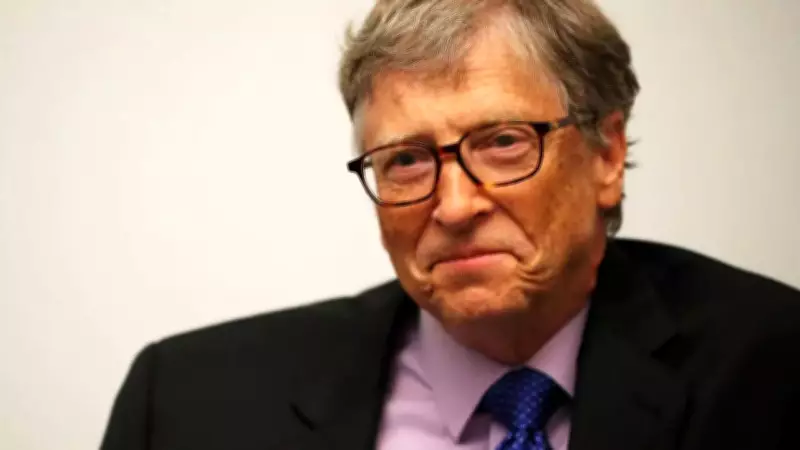
Bill Gates does not typically align with protestors. However, when the Microsoft co-founder appeared on CNBC and declared that the AI industry has no permission to drive up household power bills, his message carried a weight that protestors themselves cannot deliver. He acknowledged the frenzy is real, the economic value is real, and the race against China is real. Yet, none of these factors override the fundamental political contract a hyperscaler signs when it enters a town and requests nine gigawatts. If the siting is wrong, the economics are wrong, or the residents are wrong, the project simply does not get built.
Industry Learns the Hard Way
The industry has already learned this lesson in financial terms. In 2025, 48 projects worth $156 billion were blocked or stalled, and another 20 projects failed in the first quarter of this year. Kevin O'Leary's Utah megacomplex was forced to halve its footprint from 40,000 acres to 20,000 after the state Senate president demanded a 75 percent reduction.
The Old Grid Bargain Is Finished
Gates drew a line with unusual precision. Nuclear power, including the small reactors his own company TerraPower is building, must be located where it is clear that residents are not paying for the upgrade. The post-war American grid expanded because regulated utilities absorbed the cost of new generation and passed it through to ratepayers over decades. That arrangement is now dead.

In March, Amazon, Google, Meta, Microsoft, OpenAI, Oracle, and xAI convened at the White House and signed the Ratepayer Protection Pledge, committing to cover the cost of all new power generation required by their data centers. Gates is now reminding these companies that the signature was the easy part. "We don't have permission to drive up people's electricity costs," he said. This statement reads more like a memo to the boardroom than a soundbite.
Public Opinion Shifts Dramatically
Public opinion has shifted harder and faster than any hyperscaler modeled. A Gallup poll in March found that 70 percent of Americans oppose a data center near their home, which is worse than nuclear power ever polled at its peak. A Public First survey across 15 large economies placed US support at just 26 percent, the lowest in the world. In Festus, Missouri, voters ousted four city council members the week after they approved a $6 billion project.
An Indianapolis councilman who approved a data center found a note saying "NO DATA CENTERS" under his doormat, days after someone fired 13 shots at his front door. This is the climate Satya Nadella addressed at Build last week, when he conceded that Microsoft would now seek community "permission," not just permits.
Gates Breaks the Script on Jobs
On the topic of jobs, Gates deviates from the industry script. He conceded that displacement has not arrived in large numbers yet, but it is coming over the next several years, and pretending otherwise is the worse path. Colleagues warn him that saying this out loud hands China an edge, but he disagrees.
A public already suspicious of AI does not need to be told its fears are imaginary. That is what the buildout is now negotiating against—not signs or slogans, but sentiment.