

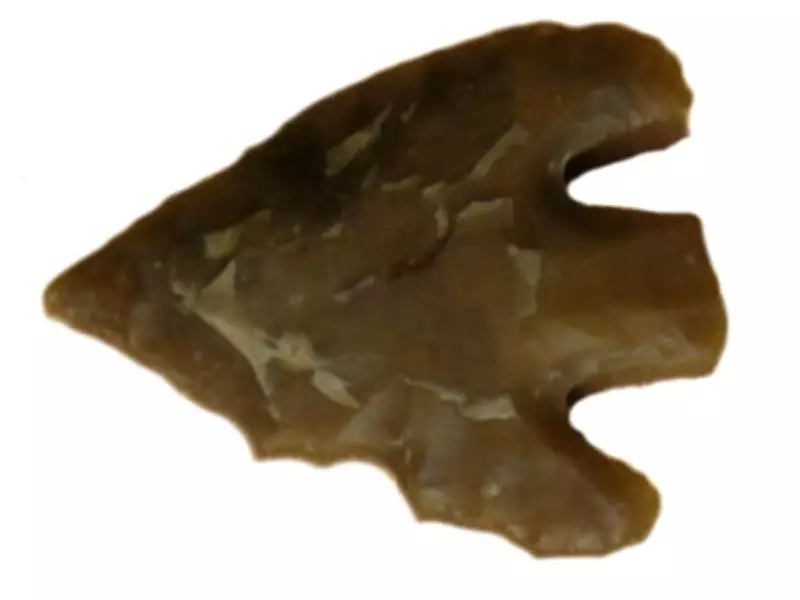
A tiny arrowhead discovered at Mörigen, near Lake Biel in Switzerland, is prompting archaeologists to reconsider the technological capabilities of Bronze Age communities. The 2.9-gram artifact, long stored in a museum, was recently analyzed and found to be made from iron that originated in space, delivered to Earth by a meteorite. This finding, published in the Journal of Archaeological Science in 2023, provides new insight into the era before iron smelting became widespread, when humans extracted iron in extremely small amounts from meteorites.
Iron Before the Iron Age
The conventional history of metallurgy often presents a neat progression from the Stone Age to the Bronze Age and finally the Iron Age. However, the reality was far more complex. Prior to the invention of iron smelting, people occasionally encountered metallic iron in the form of meteorites. Unlike iron found in ores, meteoritic iron does not require smelting, as it already exists in a metallic state and contains abnormally high amounts of nickel. Researchers confirmed the arrowhead's extraterrestrial origin through the presence of nickel-rich metal and trace minerals unique to iron meteorites, along with specific structural characteristics.
This discovery adds to a growing list of ancient objects crafted from meteoric iron. One of the most famous examples is an iron dagger found alongside Tutankhamun, whose blade was determined to be of meteoric origin in a 2016 study published in Meteoritics & Planetary Science.

Non-Destructive Analysis
Another notable aspect of the Mörigen arrowhead study is the methodology used. Instead of taking samples, researchers employed non-destructive analytical techniques such as X-ray microtomography, gamma-ray spectrometry, and muon-based elemental analysis. This approach allowed them to analyze the artifact without causing damage, reflecting a broader trend in heritage science. Modern imaging and particle physics technologies enable museum staff to obtain comprehensive information about valuable items while preserving them intact. For archaeology, this technique represents a major innovation, as specialists no longer have to choose between studying an artifact or keeping it undamaged.
A Clue to Ancient Trade Networks
The arrowhead's history may extend beyond its discovery in Switzerland. According to the research team, it is unlikely that the artifact was made from meteoritic material from the nearby Twannberg meteorite field. Instead, its chemical composition appears most consistent with the Kaali meteorite from present-day Estonia, though the connection remains tentative. This suggests that meteoritic iron may have moved through long-distance Bronze Age exchange networks, implying that unusual resources were traded over vast distances well before the development of significant iron production. Researchers have long known that Bronze Age communities traded items such as amber, copper, tin, and luxury goods across long distances.
More Than a Weapon
The significance of meteoritic iron may not have been purely practical. Rare materials often carry social or symbolic importance. A metal that falls from the sky would have been difficult to obtain, impossible to replicate, and clearly distinct from other materials. Thus, some researchers propose that meteoritic items might have held prestige or symbolic status. While the true purpose of the Mörigen arrowhead—whether as a weapon or a ritual object—remains unclear, its significance is undeniable. It suggests that Bronze Age people were already experimenting with rare metallic iron before iron smelting spread, working with strange materials and appreciating their utility in complex ways. More than 2,800 years after it was made, this small arrowhead provides evidence that early iron use began with meteorites, not furnaces.






