

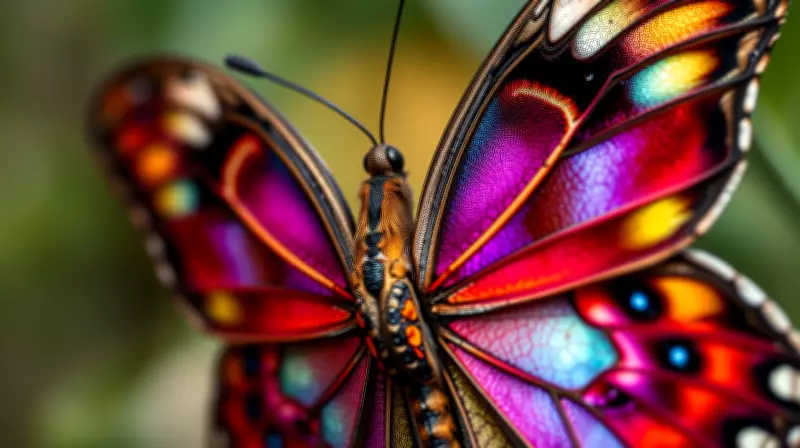
For centuries, the dazzling colours and intricate wing designs of butterflies have fascinated people. These insects display an incredible variety of markings, from the bright warning patterns of tropical species to the subtle camouflage of those that blend into their background. For decades, scientists have sought to answer a deceptively simple question: how do butterflies get their patterns? While it has long been known that genetics plays a role, the exact mechanisms behind these remarkable patterns remained a mystery. Now, new research is helping scientists reconstruct the genetic blueprint of butterfly wing patterns, providing valuable insights into evolution, adaptation, and nature's ability to produce such amazing diversity. The findings reveal that some of the most complex-looking designs in nature can result from surprisingly few genetic changes, accumulated over millions of years.
Butterfly Wing Patterns Are Not Just Beautiful Designs
To the untrained eye, butterfly wing patterns may seem like mere nature art. In reality, they perform several critical functions that directly impact a butterfly's probability of survival. Bright colours are used by many species to warn predators that they are poisonous or unpalatable. Others rely on camouflage to blend in with leaves, tree bark, or flowers. Some butterflies have even evolved to mimic poisonous species, gaining protection through deceptive appearances despite being harmless themselves. These patterns are not accidental; every stripe, spot, and band is produced by a tightly controlled developmental process. As a butterfly develops inside its chrysalis, genetic instructions dictate where pigments will appear and how different wing parts will be arranged. Understanding these instructions has become a central focus of evolutionary biologists.
Scientists Discover Genetic Basis for Butterfly Wing Colours
One of the biggest breakthroughs in recent years has been the study of genes controlling wing development. Scientists have discovered that a small number of genes can have a major impact on colour patterns. Many wing designs are shaped not by thousands of genetic differences, but by changes to key genome regions that act as biological switches. These switches determine when specific genes are turned on and where their effects appear on the wing. This finding has transformed scientific understanding of how butterfly patterns change. Researchers have found that very different-looking species often share many of the same genes; the differences arise from those genes being used slightly differently during development. This insight helps explain how nature produces such remarkable diversity without constantly inventing new genetic tools.

How Evolution Recycles the Same Genetic Kit
One of the most interesting findings is that evolution tends to reuse the same genetic mechanisms repeatedly. Scientists studying the colourful Heliconius butterflies from Central and South America found that similar wing patterns in different species are often controlled by the same DNA regions. In other words, evolution keeps returning to familiar genetic solutions to adapt butterflies to new environments. A paper in Nature demonstrated that large pattern changes between butterfly species can be traced back to a common genetic framework. This exemplifies how evolution tinkers with existing biological pathways rather than reinventing the wheel. These findings show that some genes are hot spots for evolutionary change, as they are already involved in obvious traits like colour and pattern placement, so small changes can produce visible differences for natural selection to exploit.

Butterfly Wing Patterns and Survival Relationship
Wing patterns and survival are interlinked, which is why scientists are so interested in this research. In nature, appearance can mean the difference between life and death. A butterfly whose markings effectively deter predators is more likely to survive and reproduce. Beneficial patterns become more common over generations in a population. A case in point is warning colours: brightly coloured butterflies often indicate they are full of toxic chemicals. Predators learn to avoid them after bad experiences, so those colour patterns are greatly favoured by natural selection. Another interesting example is mimicry, where harmless butterflies evolve to resemble toxic ones, gaining protection without producing defensive chemicals. The success of this strategy depends heavily on the accuracy of the wing pattern. By studying the genes involved, scientists gain a better understanding of how natural selection shapes living things over time.
Why Gene Regulation Is as Important as the Genes Themselves
One important lesson of modern genetics is that having a given gene is only part of the story; how that gene is regulated is equally important. Genes can be switched on and off at different times during development, and they can be activated in certain body parts while remaining inactive in others. This process, called gene regulation, is critical for butterfly wing development. Researchers now understand that many pattern differences between species are due not to different genes, but to species using the same genes in different ways. A gene that produces colour in one part of the wing might be switched off in another species or in a different location. Thus, evolution can generate entirely new patterns without changing the underlying genetic machinery. Gene regulation is one of the most powerful forces generating biological diversity, as small changes in regulation can have large visual effects.
The Implications of Butterfly Genetics for Evolution
Butterflies are useful model organisms for studying evolution because their wing patterns are clear, visible examples of genetic change. Unlike many traits that are difficult to measure, wing markings can be easily observed and compared across species. Butterflies therefore provide an ideal system for studying how genetic variation translates into physical differences. This research is also advancing a larger field called evolutionary developmental biology, or evo-devo. Researchers in this area examine how developmental processes affect evolutionary change and how new traits arise over time. Studies of butterflies continue to reveal that evolution is often more efficient than previously thought. Rather than creating new genes each time a species needs to adapt, natural selection frequently alters existing pathways, generating incredible diversity from a relatively limited set of genetic components.
A New Opening on Nature's Creativity
The search for the origins of butterfly wing patterns has yielded much more than an understanding of colourful markings. It has provided scientists with a powerful example of how genetics and evolution interact to create diversity across the natural world. What appears at first glance to be simple beauty is actually the result of millions of years of evolutionary fine-tuning. Every spot, stripe, and splash of colour reflects a long history of adaptation, survival, and genetic change. In their quest to understand the genetic blueprint for butterfly wings, scientists are discovering principles that extend far beyond insects. The same mechanisms that govern butterfly patterns may help explain how many other complex traits evolve throughout the animal kingdom.





