Chandrayaan-2 Uncovers Buried Ice in Moon's Deepest Shadows
Scientists analyzing data from India's Chandrayaan-2 orbiter have found compelling evidence of ice buried beneath the floors of permanently shadowed craters near the Moon's south pole. The discovery, published in the journal npj Space Exploration, was led by researchers at the Physical Research Laboratory in Ahmedabad, who examined radar signals from the spacecraft's advanced instrument.
Hidden Ice in Extreme Environments
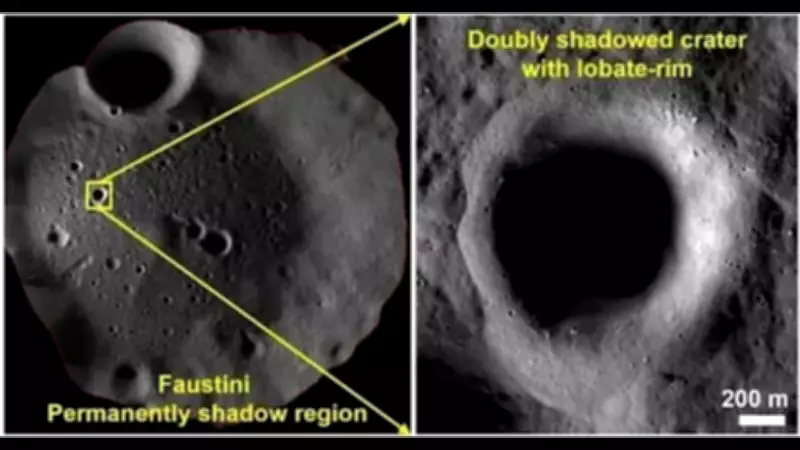
The ice is not exposed on the surface but lies underground, locked within some of the coldest places in the solar system. These craters are so deep and perpetually dark that sunlight has never reached their floors. Some are nested inside other shadowed craters, forming "doubly-shadowed" regions where temperatures plunge to minus 248 degrees Celsius. This extreme cold has preserved the ice for billions of years.
The Chandrayaan-2 spacecraft carries the Dual Frequency Synthetic Aperture Radar (DFSAR), described by ISRO as the first fully-polarimetric SAR to study the Moon. Instead of taking pictures, DFSAR emits microwave signals and analyzes how they reflect off the surface. Ice scatters these signals differently than rock or dust, allowing scientists to identify its presence.

Strongest Evidence in a Small Crater
Among nine craters studied, one small crater, just 1.1 kilometers wide inside the larger Faustini crater, shows the strongest evidence. Its radar signatures are unique, and its rim has an unusual lobed shape, suggesting that an impactor struck icy ground, causing the material to flow outward and freeze. ISRO noted that this "lobate-rim morphology" indicates the impact may have penetrated subsurface ice.
Implications for Future Lunar Missions
Water is heavy and expensive to launch from Earth, so any future crewed base on the Moon will need local resources. Ice can be mined, melted, and purified for drinking water, and split into hydrogen and oxygen for rocket fuel. The Moon's south pole has become a key target for space agencies worldwide, including NASA's Artemis program, China's lunar plans, and India's own missions.
ISRO stated that these findings "have significant implications for future lunar exploration missions, including identification of potential ice-bearing regions for future landing and in-situ resource utilisation activities."