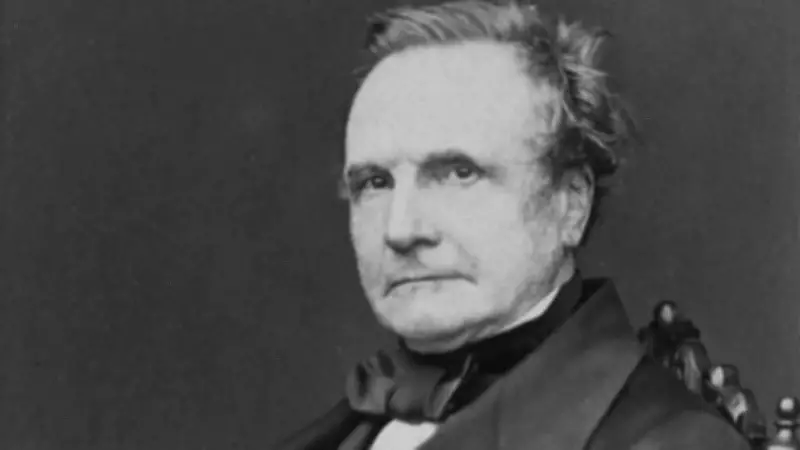
Charles Babbage's Timeless Insight on Invention and Application
The history of science and technology often highlights brilliant inventors whose ideas transform the world. However, every major invention is followed by individuals who improve, apply, and expand these ideas across industries and societies. One of the most meaningful quotes from pioneering mathematician and inventor Charles Babbage captures this deeper truth: “For one person who is blessed with the power of invention, many will always be found who have the capacity of applying principles.” Despite being written in the 19th century, this statement continues to resonate deeply in today's technology-driven world.
Modern inventions such as computers, artificial intelligence, smartphones, and space technology are often created by a small number of inventors, but they become practical because thousands of engineers, researchers, workers, and developers know how to apply science effectively. Charles Babbage himself understood this better than most of his contemporaries.
Who Was Charles Babbage?
Charles Babbage was born in London in 1791 and was one of the most important scientific thinkers of the Industrial Revolution. He was a mathematician, philosopher, engineer, and inventor whose work laid the foundation of modern computing. Babbage is best known for designing the “Difference Engine” and the “Analytical Engine,” mechanical machines intended to automate calculations. Although these devices were never completed during his lifetime due to technical and financial limitations, historians now regard them as early concepts of programmable computers.

The Analytical Engine was revolutionary, featuring many components found in modern computers: a memory system, a processing unit, input devices, and the ability to execute instructions using punched cards. These ideas were far ahead of the technological capabilities of the 1800s. His collaborator Ada Lovelace wrote what is widely considered the first published computer algorithm for Babbage’s Analytical Engine, marking an early milestone in computing history.
Babbage's interests extended beyond machines to economics, manufacturing systems, industrial organization, and mathematics. He often stressed the utility of scientific concepts for improving humanity, and his famous quote about invention and principles reflects this broader worldview.
Meaning of the Quote
The quote emphasizes the difference between inventing something new and making it work. According to Babbage, true inventors are rare—they imagine entirely new concepts. However, once an invention or principle exists, many others can learn to apply, improve, and use it effectively. The quotation also recognizes that innovation is seldom the work of one individual alone. A scientist may conceive a breakthrough idea, but engineers, technicians, makers, teachers, and workers help turn that idea into something society can use.
Today, an individual might develop a technology, but millions of others work to integrate it into everyday life. Consider smartphones: inventors, software developers, hardware engineers, factory workers, designers, marketers, and communication networks all contributed to their success. Babbage's statement is a tribute to both invention and implementation, reminding us that progress depends not only on visionary thinkers but also on those who translate knowledge into practical, meaningful use.
Why This Quote Still Matters
Charles Babbage’s statement, made nearly two centuries ago, remains highly relevant. Today’s world needs people who can make things work together. In fields like artificial intelligence, medicine, robotics, renewable energy, and computing, new developments are only useful if people know how to apply them properly. A scientific advance in a lab does not automatically transform society; it must be tested, improved, produced, distributed, and supported.

This quote also reflects how industries operate today. Large companies require teams that can translate complex ideas effectively, not just inventors. People who can take principles and implement them in real-world environments are essential in modern economies—from software engineers to architects and industrial designers. This balance is also evident in education systems: some students become researchers and inventors, while others focus on implementation, operations, design, analysis, or management. All these roles are part of innovation.
Babbage’s words underscore the value of practical knowledge. They argue that although invention garners attention, application is equally critical for lasting impact.
How Babbage’s Ideas Changed Technology
In the early 1800s, navigation, astronomy, and engineering calculations were often done by hand, leading to frequent errors. Babbage believed machines could perform these tasks more accurately. His Difference Engine was designed to automatically calculate mathematical tables, and the British government initially supported the project due to the need for reliable calculations in navigation and science. Babbage later designed the Analytical Engine, a more complex machine capable of following programmed instructions. Today, historians consider it one of the first blueprints of a general-purpose computer.
Although the technology of his era was not advanced enough to complete the machine, modern researchers have proven that Babbage’s designs were mechanically sound. Many historians regard him as a visionary who foresaw the digital age long before modern electronics existed.
The Connection Between Invention and Teamwork
The strength of Babbage’s quote lies in its acknowledgment of teamwork in human progress. Scientific history often glorifies great inventors, but most major achievements result from many contributors. Airplanes, computers, vaccines, satellites, and the internet all required collaboration among countless experts in different fields. Babbage knew that invention alone cannot fuel progress; once an idea is born, society needs people to understand and apply it. This creates a chain reaction. For example, the evolution of electricity eventually led to lighting systems, communication networks, household appliances, transportation systems, and computers—processes involving millions of people over generations.
Thus, the quote reveals a significant truth about civilization: progress accelerates when ideas move beyond theory into practical action.
Babbage’s Influence on Modern Computing
Babbage’s early ideas formed the basis for principles of modern computer science. His designs, created decades before electronic computers existed, included memory storage, sequential processing, and programmable operations. His work set the stage for generations of scientists and engineers who built the digital systems we use today. His designs and writings are preserved in museums and scientific institutions worldwide as important landmarks in technology history. Engineers who later built modern computers recognized the extraordinary nature of his ideas for the Victorian era.
Babbage’s intellectual interests extended beyond computing to transportation systems, cryptography, economics, and industrial manufacturing. His interdisciplinary approach shaped scientific thought in later times, solidifying his status as one of the most respected figures in technology history.
Why Practical Thinkers Are as Important as Inventors
Another important lesson from Babbage’s quote is the value of practical thinkers. While society often glorifies original inventors, implementation requires discipline, skill, patience, and technical expertise. Many thriving industries rely more on consistent execution than dramatic invention. Builders, programmers, teachers, doctors, engineers, and technicians apply principles daily to solve problems and improve lives. Babbage’s words remind us that practical intelligence is enormously valuable. A society cannot run on ideas alone; it also needs people who can turn ideas into reliable systems. This message continues to resonate in workplaces, schools, research institutions, and industries globally.
Babbage’s View of the Industrial Revolution
Babbage lived during the Industrial Revolution, when machines and manufacturing transformed economies across Europe. Factories, steam engines, and mechanized production revolutionized societies. In this era, invention and application became closely connected. New machinery could only increase output if workers could operate and maintain it. Babbage studied factories and published works on industrial efficiency and organization, guiding future discussions on productivity and manufacturing systems. His famous quote reflects this industrial perspective: invention acts as a catalyst, but real progress occurs when principles are successfully applied at scale.
The Human Side of Babbage’s Philosophy
Although Babbage is best known for his scientific and mathematical work, his writings also demonstrate a deep understanding of human nature and social structures. His words do not dismiss inventors or practical thinkers; rather, they acknowledge the importance of both. He suggests that societies thrive when imagination and application work together rather than in opposition. This perspective remains relevant today, especially in an era of rapid innovation across industries.
Why Charles Babbage Remains Relevant Centuries Later
Many of the ideas Charles Babbage imagined long ago are mirrored in the digital world we live in today. Computers, automation, algorithms, and machine processing all trace back to concepts he explored during the 19th century. But perhaps his most enduring contribution is not only technological but philosophical. His quote about invention and application captures an important reality about human progress that still shapes the modern world. Innovation starts with imagination, but it succeeds because people know how to apply knowledge carefully and effectively. This balance between creativity and practical skill continues to drive scientific advancement, economic growth, and technological development globally. For that reason, Charles Babbage’s words continue to inspire students, engineers, inventors, entrepreneurs, and thinkers generations after they were first written.