Consider what India is in the middle of right now. Electric vehicles are reshaping the automobile industry. Factories are being rebuilt around robotics and intelligent systems. Infrastructure projects of unprecedented scale are redefining what civil engineering demands of its practitioners. Every one of these endeavours depends on engineers, not abstractly and not eventually, but right now, working on problems that did not exist in the form they take today. Chitkara University has been building its engineering programmes around exactly this reality, and the range of what it has put in place is worth understanding clearly before a student makes a decision that will shape the next decade of their working life.
The Changing Face of Engineering
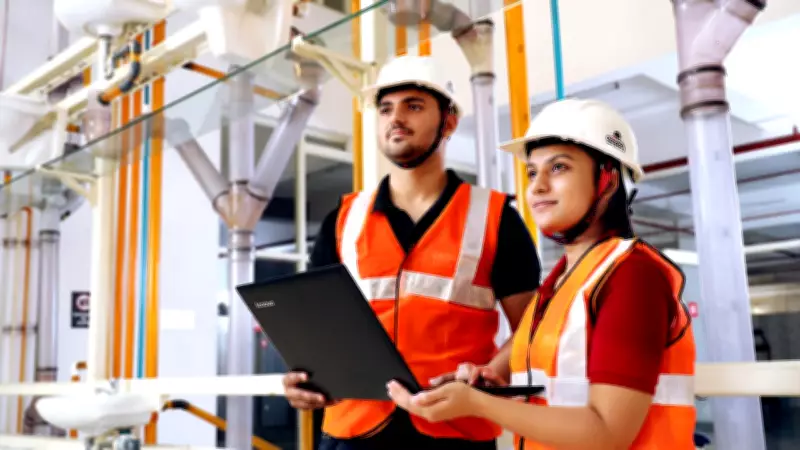
Walk through a modern factory in Germany, Japan, or increasingly in India, and what you see is not what engineering textbooks described a decade ago. Robotic arms that adjust in real time. Production lines that self-diagnose faults before they cause failures. Energy systems that respond to demand rather than simply supply it. This is Industry 4.0 in practice: the integration of automation, robotics, artificial intelligence, and intelligent systems into the physical infrastructure that produces, powers, and connects the world. What this means for engineering students is direct and consequential. The disciplines that were once considered stable and well-defined—mechanical, civil, electrical, automobile—are now converging with digital systems in ways that are generating entirely new kinds of demand. The engineer who understands both how a power grid works and how to automate its load distribution is more valuable than one who knows only one of those things. The professional who can design a building's structure and also model its energy performance using AI-driven tools is working at the frontier of what the construction industry currently needs. This convergence is not incidental. It is the defining characteristic of where engineering is going.
The Physical World Still Needs Engineers Who Understand It
There is a tendency in conversations about careers to treat the digital and the physical as separate domains, with the future belonging entirely to the former. That picture is incomplete. The electric vehicle running silently down a highway did not emerge from code alone. It required mechanical engineers who understood thermal management, electrical engineers who designed the battery systems, and automobile specialists who could integrate those systems into something that moves safely at speed. The smart factory producing that vehicle required mechatronics engineers to design its robotic assembly lines and automation specialists to keep those lines running with minimal human intervention.

Chitkara University's engineering programmes in these disciplines are built for this convergent reality. The B.E. in Mechanical Engineering equips students with core domain depth alongside the option to pursue a Minor in CSE, reflecting precisely the kind of hybrid profile that modern manufacturing and infrastructure companies are actively seeking. The B.E. in Mechanical and Smart Manufacturing goes further, integrating Industry 4.0 principles, smart production systems, and automation directly into the engineering curriculum rather than treating them as additions to a conventional degree.
Electric Vehicles and the Automobile Revolution
India's electric vehicle transition is one of the most significant industrial shifts underway in Asia. The engineering talent required to design, manufacture, and maintain these vehicles is in active demand now, ahead of the curve, not after it. The B.E. in Automobile Engineering with Specialisation in EV and HEV, developed in collaboration with ARAI, the Automotive Research Association of India, is structured for this moment specifically. ARAI is India's premier automotive research body, and a curriculum developed with its involvement is not a theoretical exercise. Students work with the technical frameworks, standards, and systems that the automobile industry actually uses. The collaboration means the programme stays current not because the university periodically updates a syllabus, but because the people shaping the curriculum are already working on what comes next in EV and hybrid technology.

When L&T Helps Design Your Degree
The same principle applies to civil engineering. India's infrastructure ambitions, its smart cities programme, its highway expansion, its focus on sustainable urban development, are creating demand for civil engineers who can do more than calculate loads and specify materials. They need to work with AI-driven structural analysis tools, model building performance across climate variables, and integrate digital systems into physical infrastructure from the design stage. Chitkara University's B.E. in Civil Engineering with Specialisation in AI and ML, developed in collaboration with L&T EduTech, addresses this directly. Larsen and Toubro’s involvement in curriculum development signals that what students learn in this programme is aligned with what one of the country's prominent engineering employers actually needs from its recruits. That alignment matters enormously at the moment a student sits across from a hiring manager.
Electricity, Automation, and the Energy Transition
The global shift toward renewable energy and smart power infrastructure is creating one of the most sustained periods of growth in electrical engineering that the profession has seen in decades. Solar installations, wind farms, smart grid systems, and industrial automation are all drawing from the same talent pool, and that pool is not large enough to meet current demand. Chitkara University's B.E. in Electrical Engineering covers power electronics, industrial automation, instrumentation, and renewable energy systems, with industry partnerships ensuring the curriculum reflects what the sector currently uses. Students can also pursue Electrical Engineering with a Minor in CSE, a combination that positions them at the intersection of power systems and intelligent automation where the most consequential work is now happening.
Mechatronics: The Convergence Discipline
For students drawn to the point where mechanical, electrical, and computing systems fully converge, Mechatronics Engineering is that discipline. Robotics, smart systems, automated manufacturing, and intelligent machines are its territory, and the careers it leads to include roles that barely existed a decade ago.
The Infrastructure Behind the Education
The argument for any engineering programme ultimately rests on what a student can do when they leave it. At Chitkara University, that preparation is supported by over 100 advanced labs, including industry-established facilities with top industry-partners, alongside dedicated robotics, renewable energy, and CAD simulation environments. What distinguishes this infrastructure from a well-equipped campus is what happens inside it. Undergraduate students engage with active research from their first year. Over Rs 107 crore in competitive research grants reflects a faculty working on live engineering problems, not merely teaching about them. The difference in what that produces, in terms of how students think and what they can demonstrate by graduation, is significant.
The Decision in Front of You
The industrial revolution reshaping manufacturing, infrastructure, mobility, and energy is not waiting for the students currently in Class 12 to graduate. It is happening now, and the engineers who will shape its next phase are choosing their programmes today. For students drawn to the physical world, to systems that move and structures that stand and machines that think and grids that power cities, the question is not whether these disciplines have a future. The evidence for that is visible from any highway, any factory floor, any electric vehicle charging point in the country. The question is which programmes will prepare you to work at the frontier of what those disciplines are becoming. Chitkara University's engineering programmes across Mechanical, Mechanical and Smart Manufacturing, Automobile Engineering with ARAI, Civil Engineering with L&T EduTech, Electrical Engineering, and Mechatronics are built around that question. For students making this choice now, that is the right place to begin.
Disclaimer - The above content is non-editorial, and TIL hereby disclaims any and all warranties, expressed or implied, relating to it, and does not guarantee, vouch for or necessarily endorse any of the content.