From Litter to Power: Cigarette Butts Repurposed for Energy Storage
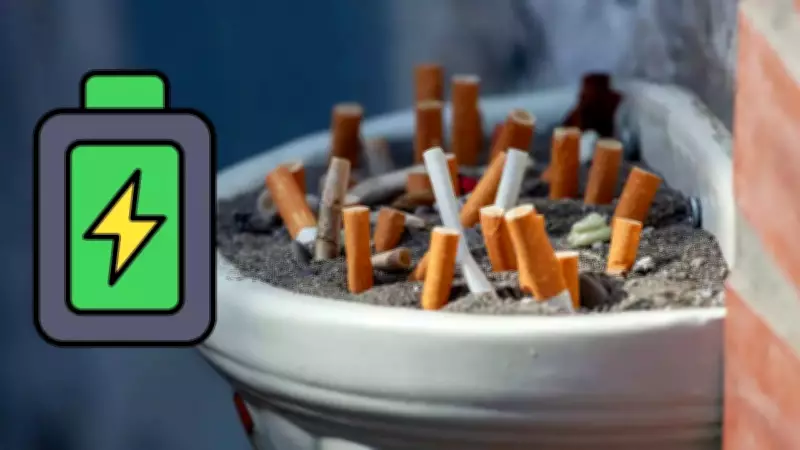
Every year, billions of cigarette butts are discarded across the globe, creating a persistent environmental nuisance. These small items often end up littering streets, polluting beaches, and contaminating rivers, where they can linger for years while slowly leaching toxic chemicals into the environment. Despite their harmful impact, the material composition of cigarette butts is not particularly exotic or rare. Most are manufactured from plant-based polymers, which share similarities with substances already utilized in industrial carbon production processes.
A Novel Approach to Waste Transformation
This commonality has sparked curiosity among researchers, leading them to question whether such a widespread and problematic waste product could be repurposed rather than simply discarded. In a groundbreaking study titled "N,O co-doped hierarchical nanoporous biochar derived from waste cigarette butts for high-performance energy-storage application", scientists have reimagined cigarette butts not as mere litter, but as a valuable raw material. The underlying concept is straightforward yet innovative: since these wastes inherently contain carbon-rich polymers, perhaps they could be transformed into something functional, thereby alleviating their environmental burden.
Understanding Supercapacitors and Their Potential
The research focuses on supercapacitors, which are advanced energy storage units that differ significantly from traditional batteries in several key aspects. For instance, supercapacitors can be charged almost instantaneously, deliver energy at exceptionally high rates, and typically boast a much longer operational lifespan. Unlike batteries that rely on chemical reactions, supercapacitors primarily accumulate energy on the surfaces of their electrodes. Consequently, the physical morphology and structure of the electrode material play a more critical role than its chemical composition in determining performance.

Cigarette butts, composed mainly of cellulose and cellulose acetate—both derived from plant matter—present an intriguing opportunity. In their natural state, these materials are dense and compact, making them poorly suited for energy storage due to insufficient internal surface area for electrical charge accumulation.
The Two-Step Transformation Process
To overcome this limitation, the research team employed a sophisticated two-step heating process. The initial step involved partially converting the waste material into carbon while carefully preserving its overall form. The subsequent step was designed to open up the structure, creating an intricate network of minuscule pores throughout the material. These nanopores are essential as they serve as the primary sites for energy storage.
The most effective sample produced through this innovative process exhibited an exceptionally large internal surface area. To put this into perspective, a single gram of the transformed material contained a surface area comparable to several tennis courts combined. This scale is crucial because a greater surface area directly translates to more space for electrical charge to build up, enhancing storage capacity.
Structural Advantages and Enhanced Performance
Beyond size, the structure proved to be equally important. The material featured a combination of extremely small pores that effectively trap charge and wider channels that facilitate the free movement of ions in and out. This balanced architecture enabled the material to respond rapidly without compromising its storage capacity.
Additionally, trace amounts of nitrogen and oxygen remained embedded in the carbon matrix. These elements subtly altered the surface behavior, improving the spread of electrolytes and enhancing electrical contact. While individually modest, these effects collectively contributed to the overall performance boost.

Rigorous Testing and Impressive Results
When integrated into supercapacitors for testing, the cigarette-butt-derived carbon demonstrated consistent and robust performance. It stored a substantial amount of charge and showed minimal signs of degradation, even after undergoing an impressive 10,000 charge-discharge cycles. Such endurance is vital for devices intended to operate continuously over extended periods, ensuring reliability and longevity.
When assembled into a complete supercapacitor unit, the material delivered energy and power levels on par with those achieved using commercial activated carbon. This achievement is significant not because it sets new records, but because it meets established performance benchmarks using an unconventional and problematic waste source, highlighting its practical viability.
Broader Implications and Environmental Impact
The true importance of this research extends beyond mere performance metrics. It demonstrates that a waste material typically viewed as a nuisance can be effectively converted into something functional and valuable. Cigarette butts are produced globally in enormous quantities and pose significant management challenges. Discovering a practical use for them reframes their perception from persistent litter to a potential resource, offering a dual benefit of waste reduction and material innovation.
More broadly, this study reflects a growing trend in materials science toward sustainability. Many forms of waste already contain useful building blocks, and with appropriate processing, they can be redirected into technologies that mitigate pollution and support cleaner energy systems. In essence, this research illustrates that one of the most common types of litter can be repurposed into an efficient energy storage material, representing a quiet yet meaningful shift in the intersection of waste management and technological advancement.