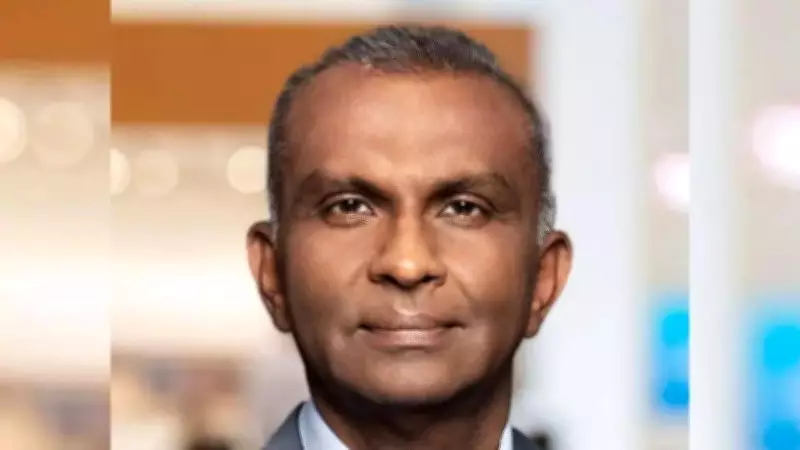
MUMBAI: Vis Raghavan, head of banking and executive vice chair of Citi, was in India for its annual India conference, which unites all businesses and 1,000 corporates. It is part of a global push to bring buy/sell side participants, policymakers, and decision-makers onto one platform. Raghavan is credited as a seasoned investment banker and dealmaker for building and leading the banking franchise at Citi and earlier at JP Morgan. In an interview with TOI, he speaks about what it takes for India to attract foreign capital.
Impact of West Asia Conflict
It's almost 100 days now since the West Asia conflict. What is the impact you are seeing? It varies by region. In the United States, the market is very much 'risk-on.' We've seen a flurry of deals across sectors, especially in tech and AI-data centre financing and AI infrastructure rollout have dominated. We have also seen major M&A activity. Citi has been involved in three of the largest deals in Q1 this year including Paramount acquiring Warner Bros, where Citi advised and helped finance a $54 billion bridge. There was also McCormick acquiring Unilever's Foods business in a $45 billion deal. Coming to India, sentiment is largely domestically driven. Retail and domestic institutional participation are strong. However, FDI interest is muted due to two main factors: energy dependency and oil prices, and uncertainty over India's position in the AI-driven global economy.
Reasons for Muted FDI
Are those the main reasons why FDI is not coming to India? Yes, broadly. Capital seeks alpha, and currently the biggest alpha opportunities are perceived to be in AI. Even in the US, markets are somewhat polarised-AI and tech stocks have surged, while the rest of the economy has performed more moderately. This has created a two-tier market. Chip stocks, for instance, have been major beneficiaries, directing capital towards places like Taiwan. This reallocation of capital has led to softer FDI flows into India.

Rising Global Yields
Yields have been rising globally, especially in the US. Are companies prepared for this, and are higher yields here to stay? That depends on inflation trends across regions. The key drivers are trade friction, tariffs, and energy prices. There's a growing view that yields may stay higher for longer. This is a concern for sovereigns, especially in the West, given their large debt burdens. The trajectory will depend heavily on macro conditions and geopolitical developments, particularly their impact on energy markets.
So businesses and households can live with it? Corporates are in strong shape-healthy balance sheets, controlled leverage, solid valuations (especially in the US). They can absorb or pass through costs. Households are holding up so far-consumption remains steady, employment is strong, and equity markets support sentiment. But caution is rising.
What India Should Do to Attract Foreign Capital
What should India do to attract foreign capital? The macro needs to stabilise-and likely will. Alongside, India must better articulate its position as a major winner in a post-AI world. That narrative is emerging, but not strongly enough. We're already seeing companies at the frontier-building across energy/AI ecosystems, designing solutions for India while serving global demand, and operating out of India. The cost advantage is clear: a unit of compute produced in India is far cheaper than in the US or other economies. That creates a strong economic case for India as a global compute hub. Yet this advantage is under-communicated. India can be a core node in the global AI architecture-across power, green-energy transition, IP creation, and talent depth. The talent pool is deep; a large share of AI engineers in Silicon Valley are of Indian origin. That capability can be recreated domestically. AI has no borders. Geography is less binding. This opens space for India to participate across the stack-intellectual capability, hardware ecosystem, hyperscaler hosting, and data centres. All of this is viable from India.