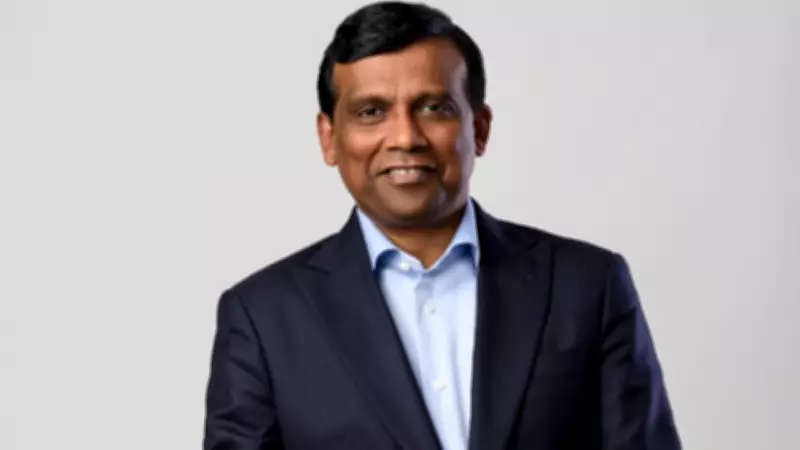
Cognizant CEO Ravi Kumar S. has pushed back against the growing reliance on 'AI tokens' as a measure of productivity, calling the metric misleading and 'a vanity exercise'. Speaking at Fortune's COO Summit in Scottsdale, Arizona, Kumar emphasized that companies should focus on outcomes rather than token consumption, a practice he feels has distorted how the industry evaluates artificial intelligence.
Softening Warnings on Job Displacement
For months, tech leaders including Sam Altman of OpenAI and Dario Amodei of Anthropic warned that entry-level white-collar jobs were at risk of extinction. Recently, both have softened their stance. Kumar, who oversees more than 350,000 employees, dismissed those warnings as exaggerated.
"There was a little bit of fearmongering from reading about the fact that there's going to be a collapse of jobs," he said. "I think there will be more jobs."

Despite restructuring and layoffs, Cognizant hired around 20,000 entry-level graduates last year, and the number is expected to grow in 2026. Many of these roles will align with the company's new AI builder strategy, which introduces positions such as Frontier Certified Engineer and Frontier Business Operator. Kumar stressed that candidates don't need technical backgrounds; history majors, biology graduates, or HR professionals could all qualify if they can work with agentic AI systems.
AI Will Reshape Organizational Structures
Kumar also described a future where AI reshapes organizational structures. Entry-level workers and senior leaders will remain essential, but the middle layers — traditionally filled with managers and analysts — will shrink.
"AIs will be in the middle of a flow. You want to have a ton of jobs in the front, you will have a ton of jobs in the back," he explained. "These are going to be validation and verification jobs, and those are going to be authentication jobs. Now, when you have a flat-earth pyramid, the biggest challenge is the middle layers are going to be leaner."
Tokenmaxxing: A Misguided Metric
As companies like Meta, Amazon, and OpenAI have raced to showcase AI productivity gains, many have leaned on token consumption as a primary measure. Kumar rejected this approach outright.
"For the last two years, how you consumed tokens, how much tokens you consumed was a vanity metric," he said. "I don't think you should equate this to the number of paid hours. I don't think you should equate this to productivity."
Instead, he argued that token usage should be treated as a discipline — something teams deploy strategically based on workflows and business goals, not as a universal yardstick.
Kumar's comments come at a time when the tech industry is grappling with how to measure AI's impact. While some companies tout token consumption as a sign of AI adoption, critics argue it lacks context and can be easily gamed. Cognizant's approach focuses on practical outcomes, such as improved efficiency and new job creation, rather than raw metrics.