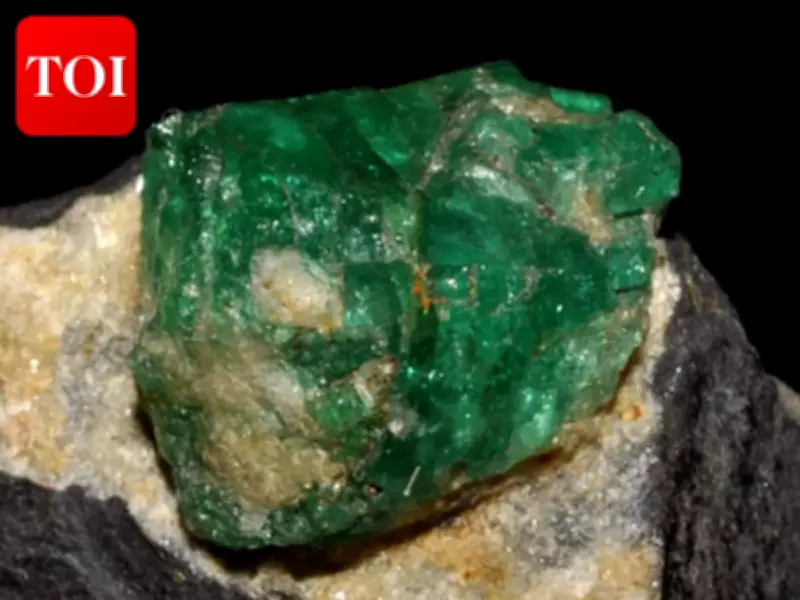
More than a thousand years ago, elite leaders in what is now Panama were buried with unique green gems that originated in Colombia, over 700 kilometers away. Scientific analysis has now identified these stones as Colombian emeralds, according to a study published in Latin American Antiquity.
Emeralds in Elite Burials
Researchers studied five green semi-translucent stones from two major archaeological sites on Panama's Pacific coast: El Caño and Sitio Conte. These sites are known for yielding gold objects, pyrite mirrors, and megalodon teeth. Using portable X-ray fluorescence, infrared spectroscopy, and photoluminescence spectroscopy, the team determined that all five samples were emeralds with chemical compositions matching those from Colombia's Western and Eastern Emerald Belts.
Evidence of Long-Distance Exchange
This finding provides some of the clearest evidence of far-reaching exchange systems in the Isthmo-Colombian area during the first millennium AD. The emeralds likely traveled over 700 kilometers (435 miles) to reach Panama. However, lead author Carlos Mayo Torné of Fundación El Caño and the Technological University of Panama noted that the exchange was probably not direct between Colombian mining groups and Panama's Coclé chiefdoms. Instead, the gems may have passed through a "down-the-line exchange" system, possibly facilitated by coastal and riverine societies.

Local Craftsmanship
The emeralds showed varying treatment before burial. Some arrived as finished or semi-finished artifacts, while others were modified by local artisans, including drilling and cutting. Some drilling attempts caused damage, yet the stones were still buried with elites, indicating high symbolic importance in Coclé society. Emeralds were extremely rare among finds, often used as adornments.
Political and Social Roles
Beyond decoration, these emeralds likely played political and social roles. Prestige objects obtained through long-distance trade were used to form alliances and secure elite status, symbolizing political and economic connections. Interestingly, emeralds and other imported luxury items seem to disappear from central Panamanian archaeological records after around 1000 AD, coinciding with changes in funeral rituals and the abandonment of elite ceremonial centers. Researchers caution against definitive conclusions and call for further studies.
Mapping Ancient Trade Routes
This study provides the first scientific confirmation that emeralds from pre-Columbian Panama originated in Colombia. The authors suggest future research using spatial modeling and archaeological data to explore the networks connecting different peoples. These findings enhance understanding of complex interaction networks in the Americas before European colonization. Tracing the history of a few gems reveals another facet of ancient American interactions.