Discovery of the Cro-Magnon Rock Shelter
In the spring of 1868, construction workers in southwestern France, near the small town of Les Eyzies, were cutting through a hillside to lay railroad tracks for a state-of-the-art locomotive. As they cleared layers of stone, they unexpectedly broke into a cave containing the remains of individuals who had died long ago. The workers uncovered a massive burial floor with several well-preserved human skeletons that had rested in darkness for thousands of years. Unbeknownst to them, they had revealed irrefutable evidence of an entire era in prehistoric Europe. Authorities immediately paused work and summoned scientists, who excavated the skeletons of four adults and one infant. This unique site was named the Cro-Magnon rock shelter, and its extraordinary specimens would forever change the perception of early modern humans.
Erasing the Image of the Brutal Caveman
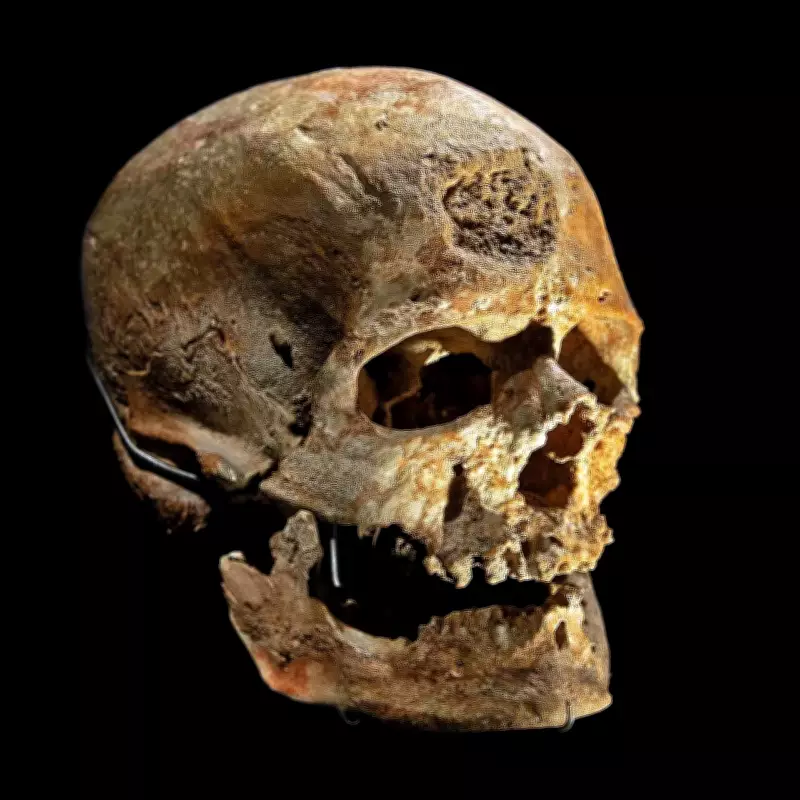
The discovery of these prehistoric people instantly impacted global scientific perception due to the familiar appearance of the ancestors. According to the French Ministry of Culture's report on the Cro-Magnon rock shelter, the skeletons were found with finely crafted animal teeth, seashell pendants, and flint artifacts. Before this groundbreaking finding, 19th-century popular belief and scientific communities unanimously agreed that ancient humans were inferior beings resembling apes, devoid of intelligence or emotion. The flawless state of the bones dispelled these theories. As explained by the Smithsonian Institution's Human Origins Program in 'Cro-Magnon 1,' the main fossilized skull had a high, round skull and a vertical forehead, lacking the prominent brow ridge common among more primitive hominids. It became evident to the academic community that these prehistoric humans had the same physical anatomy as any modern Homo sapiens, demonstrating that ancients were anatomically modern. Advanced technology later revealed insights into their brain structure and evidence of compassionate care for the injured and infirm within their society.
Delving into the Complex Workings of the Ancient Mind
This remarkable science story developed further as the 21st century approached, thanks to technological advancements. Using powerful micro-CT technology, scientists looked inside the human skull and virtually recreated the brain structure that disappeared thousands of years ago. According to a study in Bulletins et Mémoires de la Société d'Anthropologie de Paris, three-dimensional scans showed fascinating differences in the frontal and occipital lobes between ancient and modern brains. This computer model of the brain proved how adaptable the evolution of our own species could be. Moreover, medical analysis showed that the society cared for its vulnerable members, with some surviving serious skull injuries and infections. These valuable remains can be viewed at the National Museum of Natural History in Paris, highlighting the humanity of our ancestors. The realization that during the 19th century, while French engineers worked frantically to lay iron tracks between modern cities, the key to unlocking the secrets of our species had been lying quietly buried under gravel, is awe-inspiring.