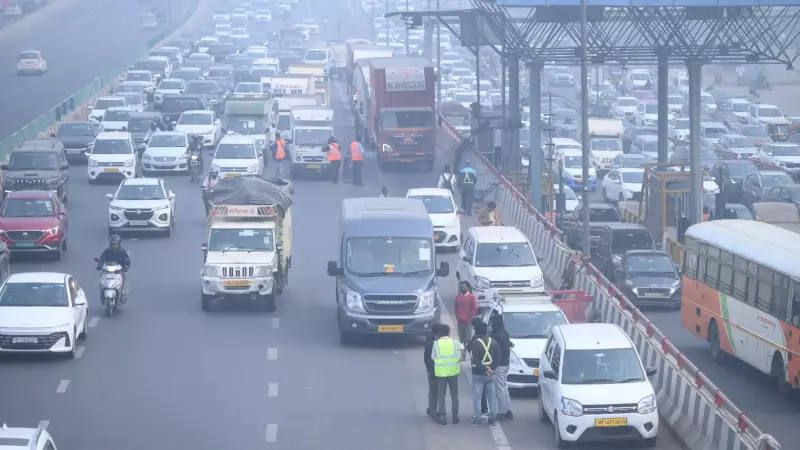
The Delhi government, under Chief Minister Rekha Gupta, is forging a strategic collaboration with the Indian Institute of Technology (IIT) Kanpur to develop an advanced, artificial intelligence-powered data system. This initiative aims to fundamentally transform the capital's fight against toxic air by enabling precise, source-level action instead of broad, reactive measures.
Moving From Blanket Bans to Targeted, Data-Driven Action
Announced on Sunday, December 29, 2025, the proposed partnership seeks to build an AI-enabled Decision Support System (DSS). The core objective is to strengthen Delhi's capacity to identify pollution sources at a hyper-granular level, assess their real-time impact, and facilitate timely, sector-specific interventions. Environment Minister Manjinder Singh Sirsa emphasized the shift in strategy, stating the focus is to move away from blanket restrictions towards targeted action at identified pollution hotspots.
"Under the leadership of CM Rekha Gupta, we are ensuring that Delhi’s fight against pollution must be scientific, sustained and strategic," Sirsa said. "We are moving towards a model where decisions are driven by real-time data, source identification and measurable outcomes, not reactive measures."

Key Features: Hyperlocal Tracking and Dynamic Source Apportionment
The new system is expected to leverage sensor-based monitoring, real-time data analytics, and hyperlocal source apportionment. A pivotal component will be dynamic source apportionment, a scientific process to continuously identify and quantify contributions from various pollution sources. These include road dust, vehicular emissions, industrial activity, biomass burning, and regional factors.
"This evidence will enable agencies to act at the source of pollution, rather than resorting to blanket bans and reactive measures," an official statement elaborated. The government's vision is a 365-day action framework that synergizes technology, governance, and enforcement, all coordinated through data-driven decision-making.
Addressing Gaps in the Current Forecasting System
This development comes against the backdrop of identified limitations in Delhi's existing air quality forecasting apparatus. Currently, the capital relies on the Decision Support System run by the Indian Institute of Tropical Meteorology (IITM), Pune, which includes the Air Quality Early Warning System (AQEWS).
While the AQEWS forecasts air quality three days in advance with over 80% accuracy for high-pollution days, a study by the Council on Energy, Environment, and Water (CEEW) highlighted concerns. The system's reliance on outdated emission inventories and a tendency to under-predict pollutant levels limit its effectiveness. Notably, its ability to detect the most severe pollution episodes remains a challenge.
The study found that in 2023-24, the AQEWS could predict only 1 out of 15 episodes where the Air Quality Index (AQI) exceeded 400. Although performance improved in 2024-25, forecasting 5 out of 14 such episodes, the need for a more robust system is clear. Furthermore, as recently reported, Delhi's winter action plans often proceed without a clear, updated understanding of pollution sources, with the city's clean-air plan not revised for seven years.
On-Ground Enforcement Continues Amid Systemic Overhaul
While planning this technological leap, the Delhi government stated that on-ground enforcement actions continue unabated. In the 24 hours preceding the announcement, agencies inspected over 340 construction and demolition sites, mechanically swept more than 6,000 km of roads, and issued over 7,000 challans for vehicular pollution. The government asserts it is simultaneously acting on vehicular emissions, road dust, industries, and waste management.
The collaboration with IIT Kanpur represents a significant step towards institutionalizing a precise, evidence-based, and proactive model for pollution control in the national capital, aiming to make targeted action the norm rather than the exception.