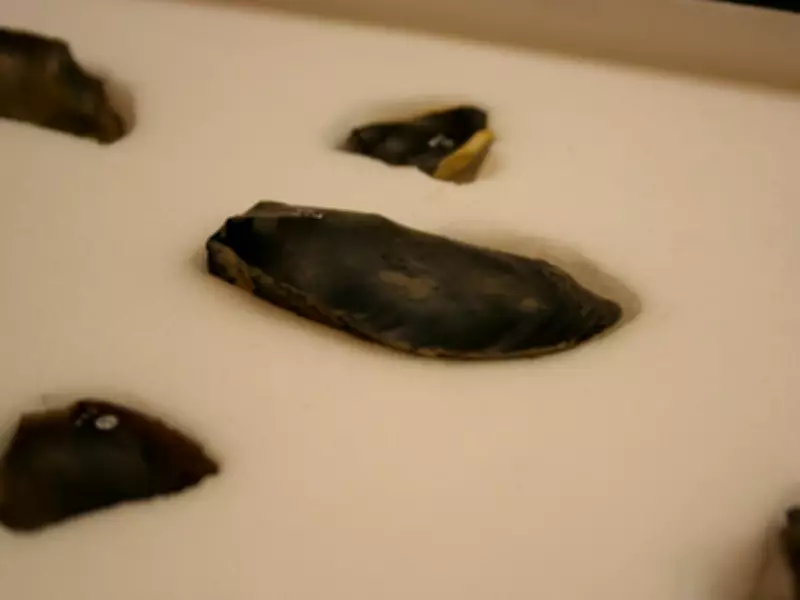
For decades, archaeologists debated the origins of an unusual collection of stone tools found across Europe from the Ice Age. Some attributed them to Neanderthals, while others believed early Homo sapiens were the makers. Breakthroughs in solving this mystery did not occur until 2024, when discoveries at the Ilsenhöhle cave site in Ranis, Germany, provided definitive answers.
Breakthrough at Ilsenhöhle Cave
Scientists traced the mysterious Lincombian-Ranisian-Jerzmanowician (LRJ) tool industry to modern humans, dating it to around 45,000 years ago. This finding also pushed back the secure timeline for modern humans living in northern Europe during the Ice Age. The breakthrough centered on a sparse collection of human remains discovered beside LRJ stone tools at the cave. It had been difficult for archaeologists to identify the makers of these distinctively shaped tools since both Neanderthals and modern humans lived in Europe at the time.
According to a 2024 report in Nature, researchers extracted DNA from bone fragments found at the site. The fossils belonged to Homo sapiens and dated back about 45,000 years. Another revelation was that the LRJ industry could be attributed to modern humans. Similar artifacts had been found across Britain, Poland, and central Europe, but their association with human remains was unclear. A research summary by the Max Planck Institute for Evolutionary Anthropology stated that the findings “reveal for the first time the makers of the LRJ.”

The Role of Ancient DNA
The Ranis site did not contain a large human settlement or complete skeletons. Instead, archaeologists worked with tiny and highly fragmented bones, making traditional identification difficult. As stated in another paper, the investigation indicated sporadic visits by small groups of humans to the site. The landscape was described as a cold steppe, populated with reindeer, horses, and woolly rhinoceroses. Because the material record was limited, genetics became vital. Using ancient DNA, researchers established a direct connection between Homo sapiens and the LRJ tools.
The same paper highlighted thousands of tiny animal bones found in the cave, indicating sporadic use by humans, bears, and hyenas. It was concluded that early Homo sapiens temporarily visited the place, passing through cold northern regions.
Modern Humans Farther North Than Expected
The age of the Ranis remains places them in a critical phase of European prehistory when modern humans and Neanderthals overlapped across the continent. In a separate study, genomes from these people revealed their place in the early lineage of modern humans in Europe and helped determine when and how Neanderthals interbred with humans. Furthermore, the study highlighted the broader geographic significance, noting that Homo sapiens had already reached northern Europe more than 45,000 years ago. This is particularly significant since the earliest evidence of modern humans in Europe was predominantly found in the south and center of the continent. The discovery showed that modern humans had spread farther north during a period when Neanderthals still occupied parts of the continent.
More Than Just Stone Tools
The Ranis discoveries highlight a change in modern archaeology, with more genetic studies being performed alongside traditional excavations. Ranis represents the oldest known evidence of Homo sapiens in northern Europe. The museum noted that the discovery helped solve a long-running mystery surrounding the LRJ industry. At Ranis, researchers applied a range of methods, including traditional archaeology, sediment DNA, isotopic analysis, and zooarchaeology, gaining deeper insights into early human migration patterns across Europe during the Ice Age. Genetic analysis of bone fragments indicates the presence of modern humans in northern Europe, even though Neanderthals lived further south.
Although the Ranis cave contains only a meager number of remains and tools, its significance is far greater. Just a few fragments of DNA provided clues to the identities behind an obscure technology, extended the territory covered by Homo sapiens farther north than ever before, and changed our understanding of our species' migration.