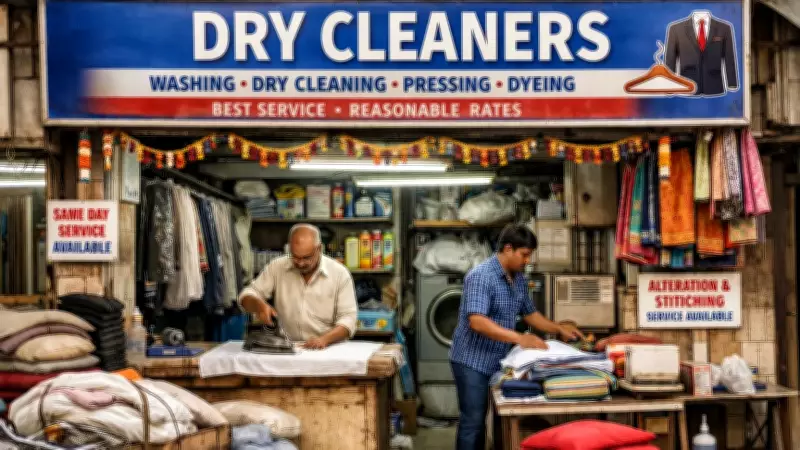
Dry Cleaning Shop's Rs 2.83 Lakh Monthly Revenue Ignites Debate on AI-Proof Careers
In a recent social media revelation that has captivated online audiences, a neighborhood dry cleaning shop in India is reported to earn over Rs 2 lakh in profit monthly, sparking a heated debate about the viability of small, service-based businesses as lucrative and technology-resistant career paths.
Viral Post Details Impressive Earnings
Content creator Nalini Unagar shared on X that a dry-cleaning outlet she frequents generates more than Rs 2 lakh in profit each month, a figure comparable to the salaries of many experienced software engineers. According to her post, the shop is operated by a husband-wife team with assistance from two salaried employees.
Unagar elaborated that the couple provided a breakdown of their monthly finances. On an average day, they iron approximately 350 garments at Rs 10 per item, yielding around Rs 3,500 in revenue. Additionally, they handle about 20 premium items such as suits, lehengas, and expensive sarees, charging Rs 350 each for dry cleaning and pressing, which adds Rs 7,000 daily. This brings the total daily revenue to roughly Rs 10,500.

With the shop open for 27 days a month, taking only three days off, the monthly earnings amount to about Rs 2.83 lakh. Operating from their own property eliminates rent expenses. Regular costs include an electricity bill of around Rs 6,000 and salaries totaling Rs 40,000 for the two helpers. After deducting these expenses, the couple retains a net profit of approximately Rs 2.37 lakh. Unagar noted that while these figures are from the previous month, the owners typically average profits exceeding Rs 2 lakh.
Mixed Reactions and Skepticism Emerge
The post quickly went viral, eliciting diverse responses from users. Many praised such businesses for their stability and resistance to technological disruption. One comment highlighted, "These are some of the jobs that CANNOT be made redundant by AI. Plus look at the perks, nil tax, no boss shouting at you, your schedule is your own and you create a couple of jobs too!" Others echoed this sentiment, emphasizing the potential of small enterprises in conducive environments.
However, skepticism arose regarding the profit calculations. Critics argued that the post overlooked essential costs. One user pointed out, "The salaries of the owners themselves should too be included as part of cost to get the figure of net profit. Lot of other inherent costs too are excluded (water, chemicals, equipments, depreciation, seasonality of business, nominal bad debts)." Another commenter, claiming firsthand experience, disputed the figures, stating that after accounting for high expenses like chemicals, water, and maintenance, real monthly profits are closer to Rs 60,000, with margins around 20–30% even at high volumes.
Broader Implications for Job Market and Entrepreneurship
This discussion underscores broader themes in India's evolving job landscape. As artificial intelligence and automation advance, debates about "AI-proof" jobs gain traction, with service-based roles like dry cleaning being highlighted for their resilience. The viral post has prompted reflections on the earning potential of small businesses, challenging perceptions that traditional careers are less profitable than tech-oriented ones.
Experts suggest that while such earnings may be achievable under optimal conditions, they are not universal. Factors like location, operational efficiency, and market demand play crucial roles. Nonetheless, the conversation has inspired many to reconsider entrepreneurship and local services as viable, sustainable career options in an increasingly digital world.