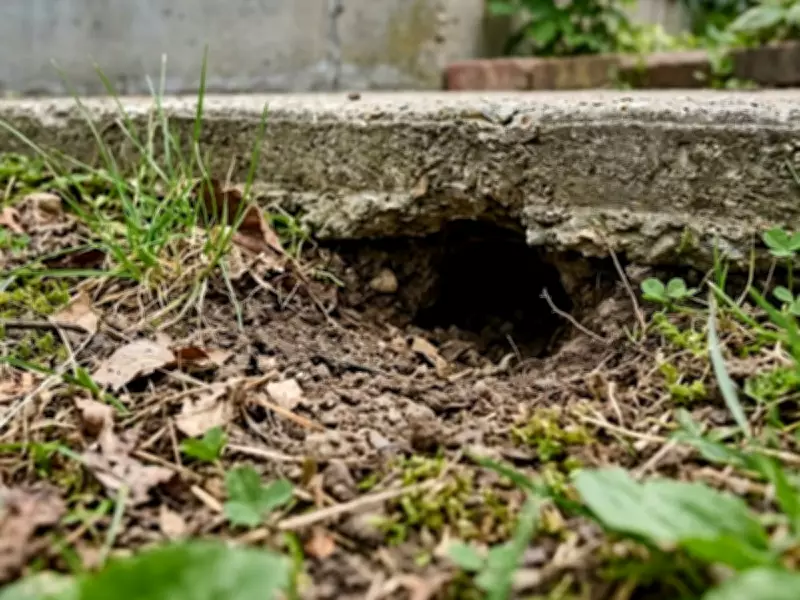
Waking up to a neatly maintained lawn only to discover craters, mounds, and sharp tunnels can be an incredibly painful rite of passage for most homeowners. This is a personal insult to your daily chores. Before you head out to get traps or repellents, it is essential to be aware that not all holes are the same. The identification of the source is the initial and crucial step to getting your green space back. Experts such as Robert Pierce from the University of Missouri recommend that this could be a kind of investigation that involves taking a look at the evidence left behind, rather than focusing on the damages themselves.
Common Misconceptions About Lawn Damage
It is common to blame your most prominent neighbour, maybe a wandering dog or squirrel that is scurrying around. However, the actual architects of your lawn's destruction are usually less obvious. Recognising the subtle distinctions between a volcano created by a mole and a vole's runway could help you save weeks of time and effort. Many homeowners mistakenly attribute all damage to the same culprit, leading to ineffective treatments.
Cracking the Case of the Backyard Burrows
For the first step in your exploration, to begin your investigation, examine the habits of the hole. It is all about location in the world of animals. If you notice the ailment appearing within your flower gardens, you are likely having a different problem, which is digging in the tree line that is shaded at the edges of your yard. The timing of the damage is another major clue. If you see freshly-made mounds of dirt at dawn, you are likely encountering a nighttime visitor such as an armadillo or skunk. In contrast, if you observe some new activity while you drink your afternoon tea, a squirrel or groundhog is likely to be the most probable suspect.

Moles vs. Voles: Key Differences
One of the biggest errors homeowners make is to confuse the activities of voles and moles with those of voles. Although their names are identical, their effect on the garden is completely distinct. Moles are heavy-lifters of the earth. They make raised ridges and sometimes, volcanic-shaped mounds of dirt when they are hunting for grubs and earthworms. Since they are insectivores, they actually help improve the soil's aeration; however, the landscaping is not to your preference. Voles, on the other hand, are rodents of a small size that prefer staying close to the surface. They make narrow tracks approximately one to two inches long in the grass or right beneath the mulch. In contrast to moles, they are herbivores that will devour the root of the perennials you love. An article published by the Journal of Wildlife Management, titled Vole Population Dynamics and Management, is a good example of the way these tiny creatures could easily invade a garden when there is enough foliage to cover their movement. The study demonstrates that the removal of thick grass or heavy mulch tends to be more efficient than traps to control the population of voles.
Reading the Signs Left Behind
The hole is often the most obvious indicator. If you notice a lot of cone-shaped, shallow holes that look as if someone's finger has poked into the ground, you are likely home to a skunk or sleeping raccoon. These animals are grubbing, or digging to find larvae under the soil's surface. Although skunks' digging is typically small and focused, a raccoon could move things to the next level by slickly flipping across large sections of soil using its claws. If the holes appear to be greater than ten inches across, then you may be dealing with a groundhog. Heavy-duty excavators create huge tunnels that can be as long as thirty feet. They are fond of digging under shelters or on porches, where they are safe from dangers. Since they are active throughout the daytime, you will have an increased chance of finding their presence; however, they can be cautious and swift to flee.

Secondary Occupants and Additional Clues
It is also important to remember that a lot of animals are renters rather than builders. Based on research from the Internet Center for Wildlife Damage Management, animals like opossums, snakes, and coyotes are not able to make their own mud holes out of scratch. Instead, they go to abandoned burrows dug by armadillos or groundhogs. If you find an old hole that is recently reactivated, it could not be the original owner who has returned. Finding tracks or droppings close to the location can be the final piece to the puzzle. In particular, armadillos have distinctive three-toed tracks that are clearly clawed. If you can see a footprint that is clear in sandy soil, consult online guides provided by the local cooperative extension office to confirm the animal species. The elimination process, as explained by Professor Honorary Mike Mengak of the University of Georgia, is the only method to make sure the approach chosen is in fact the same as the species you are trying to deter. If you take a deep breath and act as an animal investigator, you could make a difficult garden puzzle into an easy one.