Dutch Prime Minister Raises Alarm Over AI Concentration Risk
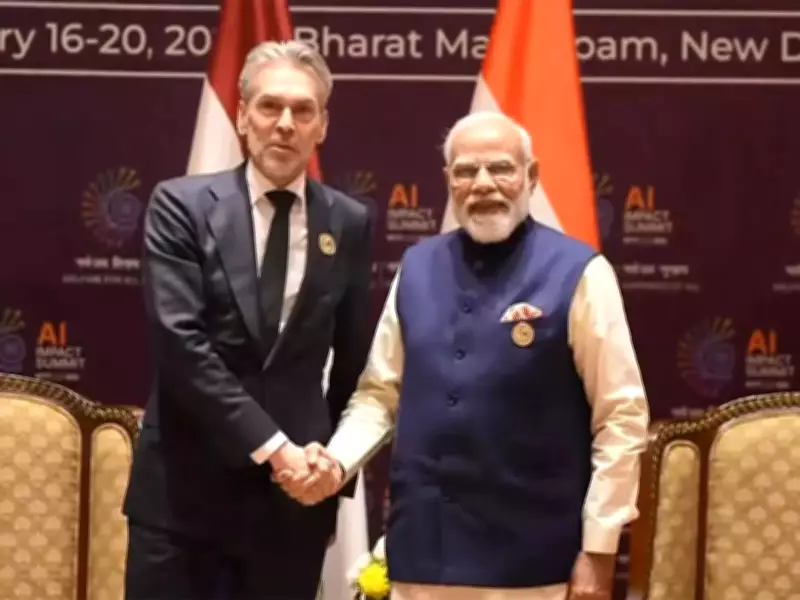
In an exclusive interview with TOI's Sidhartha, outgoing Prime Minister of the Netherlands Dick Schoof has voiced significant concerns regarding the global concentration of artificial intelligence development. Schoof emphasized the urgent need to reduce dependency on a few dominant economies while championing responsible AI practices that prioritize human values.
Concerns Over AI Development Concentration
The Prime Minister articulated clear worries about the current landscape where most AI innovation and development is concentrated in just two nations: the United States and China. "We don't want to be dependent on one or two powerhouses," Schoof stated, highlighting that this was a central theme during recent discussions in India. He stressed the importance of creating Europe's own artificial intelligence capabilities while maintaining strategic partnerships.
"The other theme is that we want responsible AI, not only AI for profit or control, but responsible AI to do with human values of privacy and reliability," Schoof explained, underscoring the dual focus of his concerns.

Europe's Strategic Response and Self-Assessment
Schoof placed the AI discussion within a broader European context of reducing dependency. "In Europe, we have a lot of discussions these days that we don't want to be too dependent on only one company or country. We want to diversify," he noted, pointing to the European Union's new trade agreements, including with India, as part of this strategy.
The Prime Minister acknowledged Europe's technological lag, stating bluntly: "Everybody in Europe agrees that we are lagging behind and we have to step up, especially in high tech, biotech, etc." He revealed that Europe is now actively discussing how to boost innovation funding across critical sectors including renewable energy, AI, high tech, and data centers.
India's Crucial Role in the Global AI Landscape
Schoof identified India as a particularly promising partner in this technological rebalancing. "India is a very interesting partner because it is now stepping up rapidly and successfully in the field of high tech and AI," he observed.
The Prime Minister highlighted specific collaboration opportunities:
- ASML, the Dutch company renowned for lithography machines used in chip manufacturing, has a significant ecosystem in the Netherlands with many Indian professionals
- ASML is currently discussing with the Indian government about using their machines to establish a chip factory in India
- India's substantial talent base presents exceptional partnership potential
Balancing Regulation and Innovation
Addressing the regulatory challenges facing AI development, Schoof cautioned against over-regulation while advocating for essential safeguards. "It's important to balance, or you can very easily over-regulate. But there should be safeguards that AI is reliable," he advised, highlighting the delicate equilibrium needed between fostering innovation and ensuring responsible development.
Geopolitical Context and Energy Dependencies
The interview also touched upon broader geopolitical concerns, particularly regarding Russia's war with Ukraine. Schoof called for systemic pressure on Russia to end the conflict and acknowledged India's unique position. "India has a special relationship with Russia and as PM Narendra Modi said, he wants peace, just as we do. So maybe he can use that special relationship," Schoof suggested, clarifying that pressure should be directed at Russia rather than India.
Regarding energy dependencies, the Prime Minister addressed the complex situation where India purchases oil from Russia while Europe, including the Netherlands, buys processed fuel from India and LNG from Russia. "First, we are in the process of having no energy from Russia at all and probably will reach that point in one or two years," Schoof revealed, while acknowledging that some countries continue using Russian oil. He emphasized that pressure on these nations stems from oil being a primary income source for Russia.

The Dutch leader's comprehensive perspective highlights a growing European consensus about the need for technological sovereignty, responsible AI development, and strategic diversification of partnerships in an increasingly polarized global landscape.